Academic Quality Assurance | Study Abroad – UK
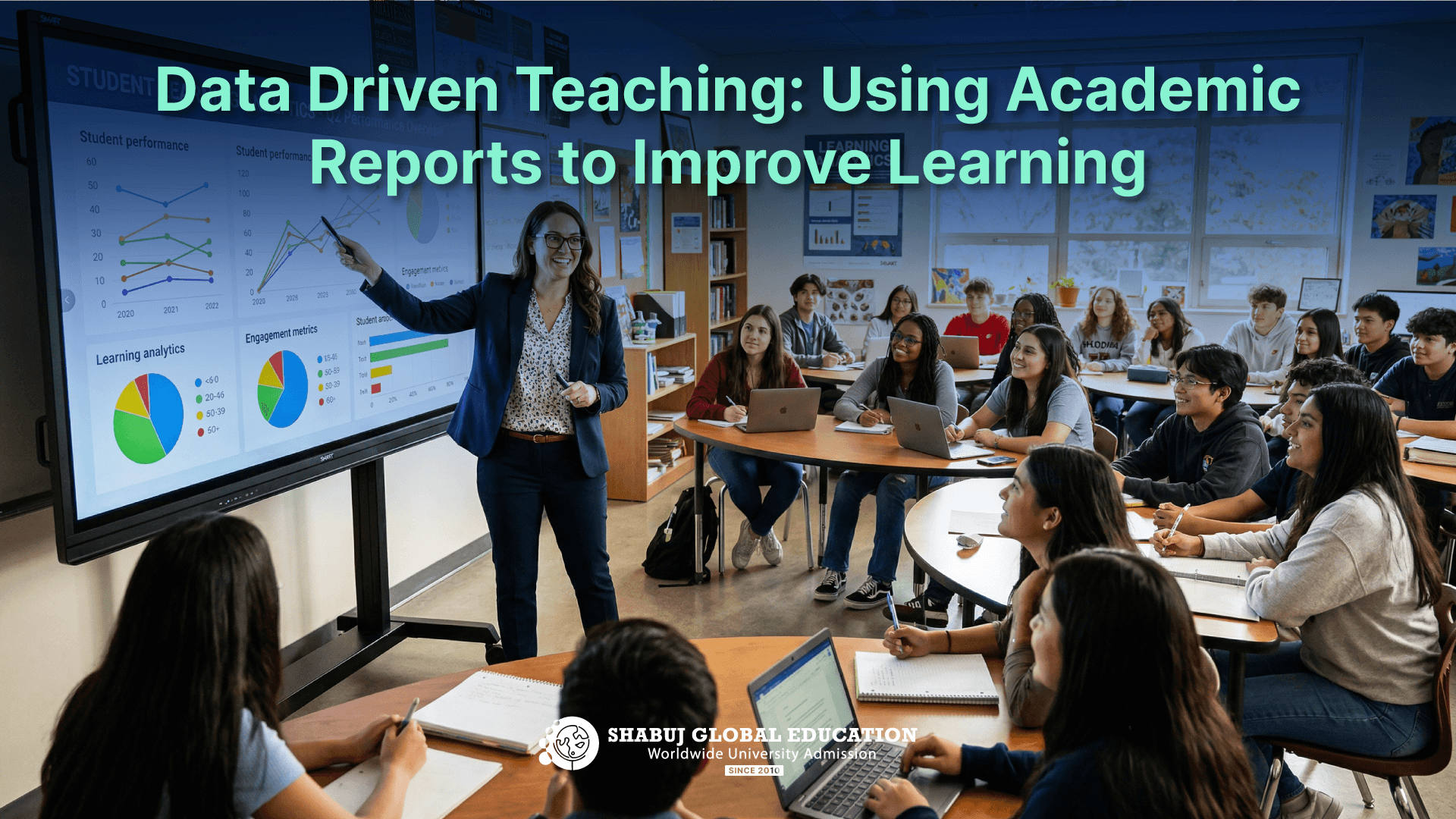
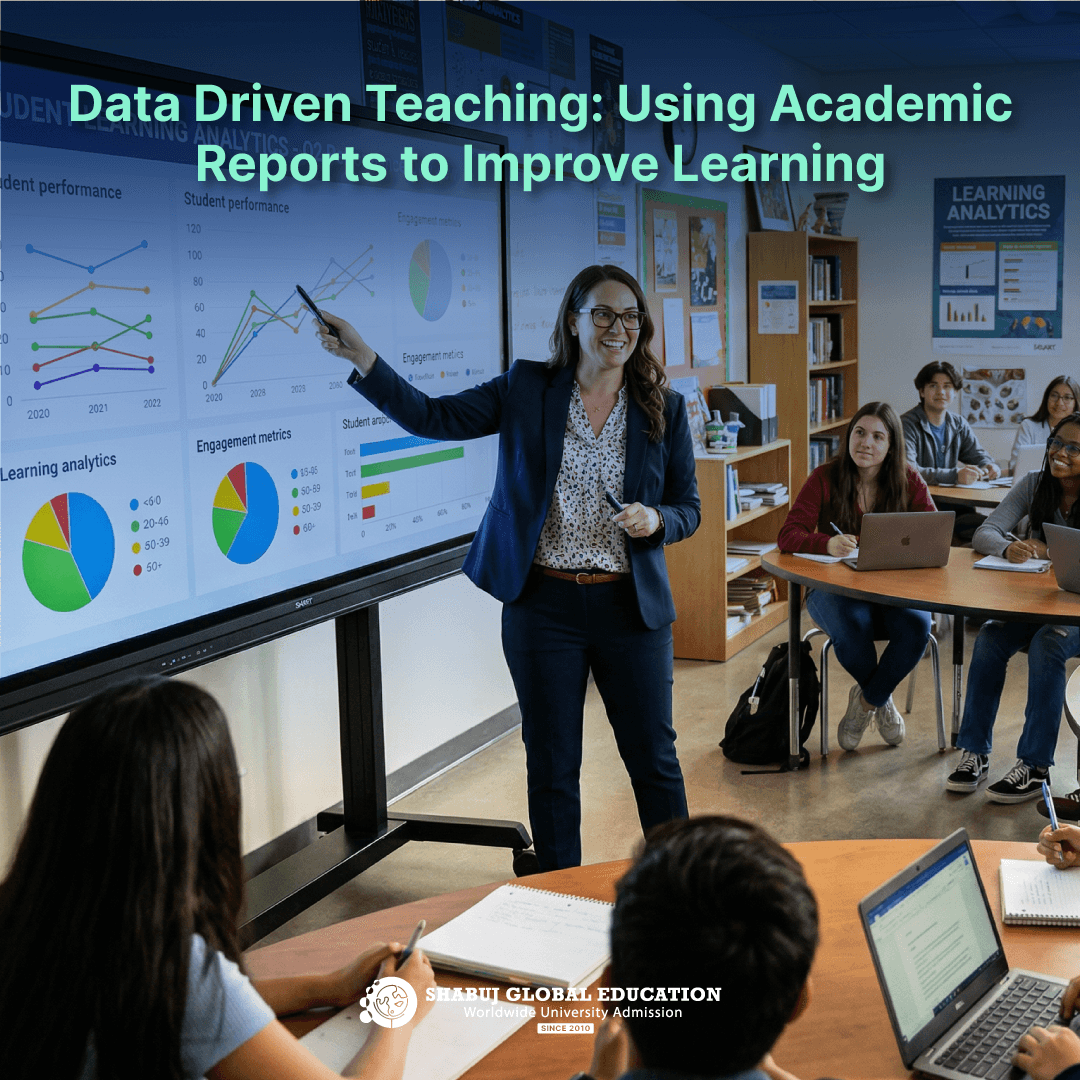
Data Driven Teaching: Using Academic Reports to Improve Learning
2 minutes of reading time
This guide explains how data-driven teaching uses academic reports,...
Summary
This guide explains how data-driven teaching uses academic reports, student feedback, and performance data to improve learning and support better classroom decisions.
Teaching is no longer based only on instinct. Modern classrooms rely on evidence and measurable results rather than assumptions.
When teachers use real performance data, learning becomes more focused, effective, and targeted. This is the foundation of data-driven teaching.
What Data Driven Teaching Really Means
Data driven teaching means using student performance information to guide classroom decisions.
Instead of guessing what students need, teachers rely on:
Performance trends
Assessment results
Learning patterns
This approach helps identify what is working and what is not.
The goal is simple: Use data to make better teaching decisions.
Student Performance Reports in Practice
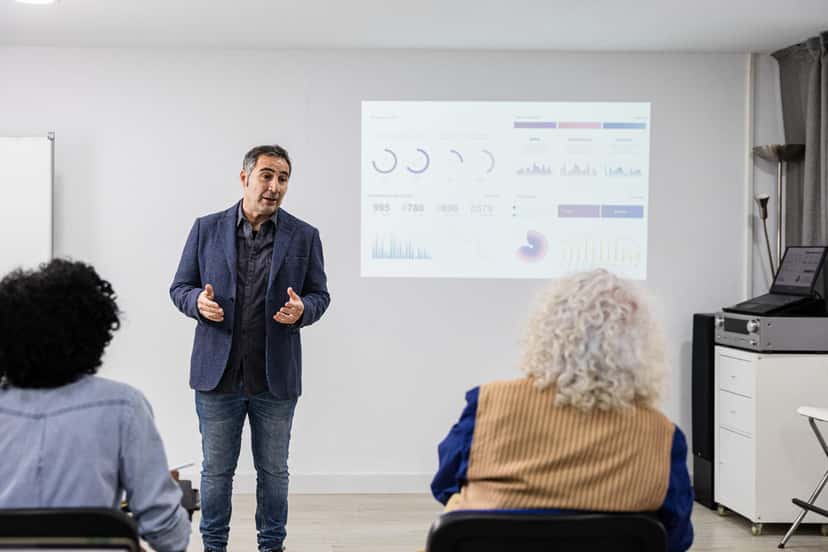
Student reports are the foundation of data driven teaching. They show how learners are performing across different areas.
What reports usually show:
Test scores
Assignment results
Attendance patterns
Subject-wise strengths and weaknesses
These reports turn learning into measurable information.
Turning Reports into Teaching Decisions
This is where real change happens. Data only matters when it leads to action.
Example Scenario:
Step 1: Data Insight
Students perform poorly in writing tasks.
Step 2: Teaching Adjustment
Teacher increases writing practice and reduces theory-heavy sessions.
Step 3: Outcome Change
Students show improved writing clarity and structure in later assessments.
This is the core of data driven teaching in practice. Data → Decision → Improvement.
For a practical perspective on how real classrooms apply data to improve student outcomes, refer to insights shared by Edutopia, which explains how teachers use performance data to refine instruction strategies.
Feedback Analysis from Students and Assessments

Feedback is another powerful layer of information.
It comes from two sources:
Student feedback
Assessment performance data
What feedback can reveal:
Topics students find difficult
Teaching pace issues
Confusing learning materials
Gaps in understanding
How it is used:
Teachers adjust:
Lesson difficulty
Explanation style
Practice activities
If feedback is ignored, the data loses its value and improvement becomes difficult.If used correctly, it directly improves learning outcomes.
Tools That Support Data Driven Teaching
Modern teaching uses simple tools to organize and analyze data.
Common tools include:
Analytics dashboards
Learning management systems
Academic report systems
Grade tracking tools
These tools help teachers:
Spot performance trends quickly
Compare progress over time
Identify weak areas instantly
Without tools, data stays scattered. With tools, it becomes actionable.
Real Classroom Impact of Data Driven Teaching
Let’s break down how data driven teaching changes classroom outcomes in real situations.
Case Example 1: Low Math Scores
Data Insight:
Students struggle with algebra questions.
Teaching Decision:
Teacher revises foundational concepts before moving forward.
Result:
Improved test performance in the next assessment cycle.
Case Example 2: Weak Reading Skills
Data Insight:
Reading comprehension scores are consistently low.
Teaching Decision:
Teacher introduces short reading sessions with guided analysis.
Result:
Better understanding of passage-based questions.
Case Example 3: Uneven Class Performance
Data Insight:
Top students are improving, but average students are falling behind.
Teaching Decision:
Teacher introduces mixed-level practice groups.
Result:
More balanced classroom performance.
Simple Data Flow in Teaching Decisions
Step | What Happens |
Collect Data | Scores, reports, feedback collected |
Analyze Pattern | Identify weak and strong areas |
Decide Action | Adjust teaching methods |
Apply Change | Modify lessons or practice style |
Observe Result | Compare improvement in next cycle |
This cycle is the backbone of data driven teaching.
Why Academic Reports Matter So Much
Academic reports are not just records. They are decision tools.
They help teachers:
Understand student progress clearly
Avoid guessing student needs
Focus on problem areas
Improve learning speed
When reports are ignored, teaching becomes random.
When reports are used, teaching becomes structured.
If you want to understand how structured academic systems support learning environments, you can read: Academic Standards & Quality Assurance Frameworks in Education
Common Mistakes in Using Data
Even when data is available, many teachers misuse it.
Here are common problems:
Looking only at final grades
Ignoring small performance trends
Not updating teaching methods
Overcomplicating simple data
Focusing on numbers without action
Data without action is useless.
Action without data is guesswork.
SGE Support for Students
Understanding how data shapes learning can also help students make better academic decisions.
Shabuj Global Education (SGE) supports students through structured guidance:
Personalized Counseling
We help students choose courses based on academic strengths and goals.
Make informed decisions with expert guidance
Course Selection Guidance
We match students with programs that fit their future career direction.
Avoid wrong academic choices
Application Support
We assist with:
Forms
Documents
Personal statements
Increase admission success chances
Offer Guidance
We help students understand admission offers clearly.
Avoid confusion before acceptance
Visa Support
Step-by-step help for the UK student visa process.
Reduce application risks
Pre-Departure Support
Prepare students for academic life abroad.
Start studies with confidence
Scholarship Guidance
Help with financial planning and funding options.
Reduce study costs effectively
Ongoing Support
Support continues after enrollment.
Stay guided throughout your education journey
Ready to make smarter academic decisions.
Get personalized guidance from Shabuj Global Education and turn your academic data into the right course, country, and career path.
Start your consultation today and avoid costly mistakes in your study abroad journey.
Final Insight
Teaching becomes powerful only when decisions are based on real evidence.
Data driven teaching transforms classrooms from assumption-based learning to evidence-based improvement.
When data is ignored, teaching becomes random.
When data is used correctly, learning becomes consistent and measurable.
The difference is not small. It changes everything.
Explore more
Frequently Ask Question



.png&w=256&q=60)