Academic Quality Assurance | Study Abroad – UK
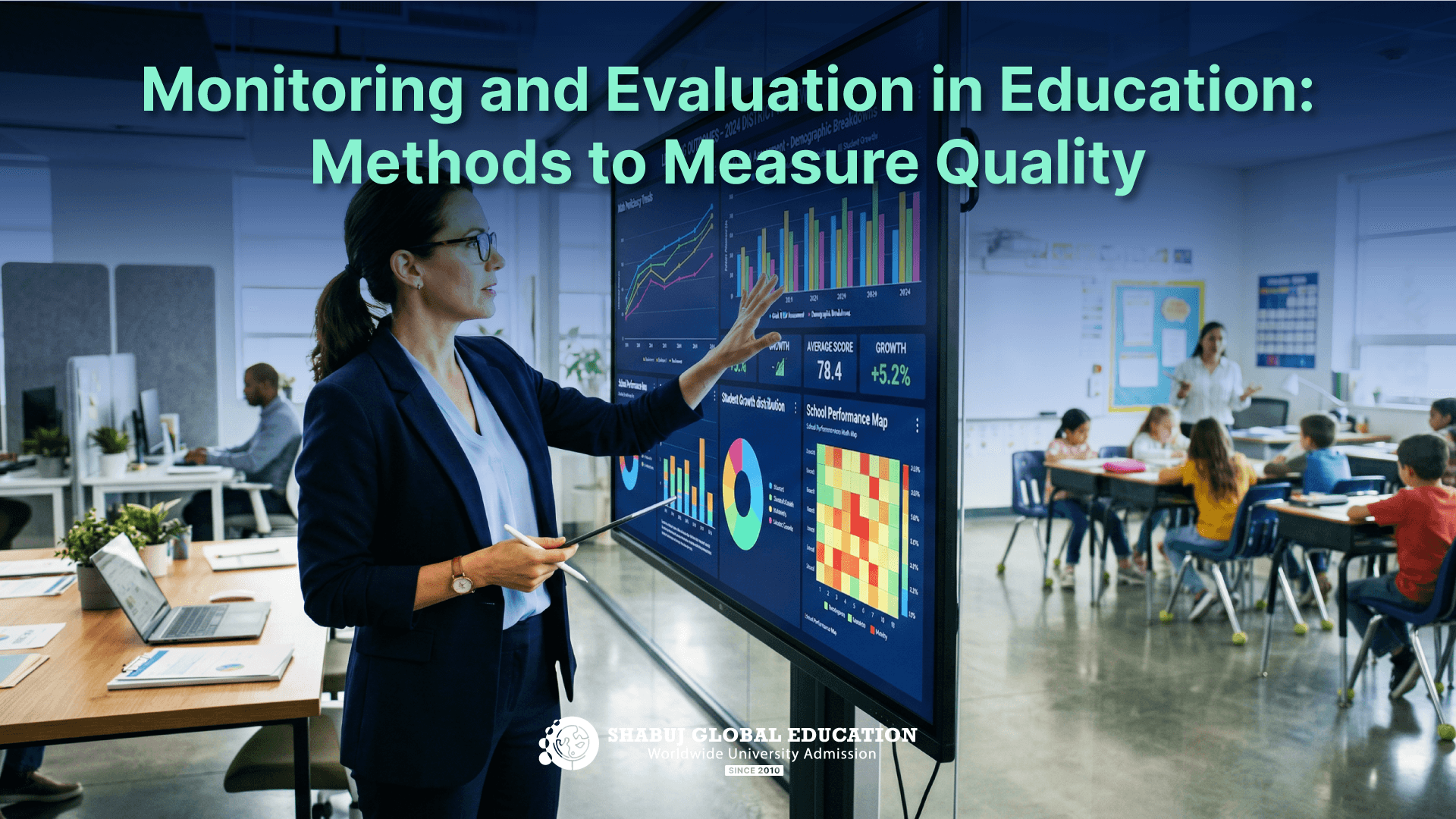
Monitoring and Evaluation in Education: Methods to Measure Quality
2 minutes of reading time
This guide explains how monitoring and evaluation in education are ...
Summary
This guide explains how monitoring and evaluation in education are conducted, highlighting key methods such as assessments, surveys, audits, and classroom observation to effectively measure academic quality.
Education quality is not only about teaching, it is about understanding what delivers real results. Without proper monitoring and evaluation, improvement becomes based on assumptions rather than evidence.
This guide explains how monitoring and evaluation in education help institutions measure academic quality accurately and make informed improvements.
What is Monitoring vs Evaluation?
Before going deeper, get this straight. These two are not the same.
Monitoring means ongoing tracking
It checks what is happening right nowEvaluation means periodic review
It analyzes what has happened over time
Think of monitoring as watching the process, and evaluation as judging the results.
Example:
Monitoring: Tracking student attendance weekly
Evaluation: Reviewing final exam performance at the end of term
Both are essential if you want accurate measurement of education quality.
Types of Evaluation in Education
If you do not understand the different types of monitoring and evaluation, you will confuse the process and end up with inaccurate or meaningless results.
1. Formative Evaluation

This happens during the learning process.
Purpose:
Identify gaps early
Track progress continuously
Common methods:
Quick quizzes
Classroom questions
Short assignments
Why it matters:
It gives real-time feedback, not delayed insights.
2. Summative Evaluation

This happens at the end of a learning period.
Purpose:
Measure overall performance
Provide final results
Examples:
Final exams
End-of-term projects
Standardized tests
Key difference:
Formative is ongoing
Summative is final judgment
You need both. Relying on only one gives incomplete data.
Core Evaluation Methods Used to Measure Quality
Now let’s move into the practical side. These are the key techniques used in monitoring and evaluation in education to measure performance and academic quality effectively.
1. Assessments

Assessments are the most direct way to measure learning.
Types include:
Written exams
Oral tests
Practical tasks
What they measure:
Knowledge retention
Understanding
Skill application
Here is the reality.
Poor assessments produce unreliable data. If the questions are poorly designed, the entire evaluation process loses accuracy and value.
2. Surveys and Feedback
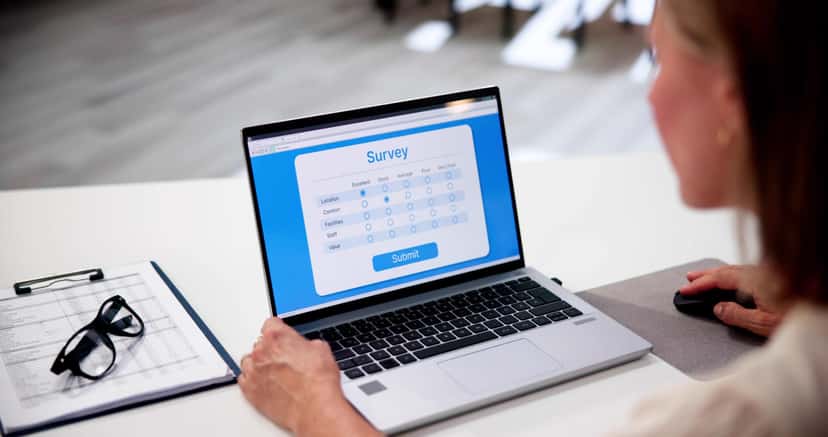
Surveys collect opinions and experiences.
Used for:
Student feedback
Course satisfaction
Learning environment insights
Common tools:
Google Forms
Online questionnaires
Feedback sheets
Important:
Surveys do not measure performance. They measure perception. Do not confuse the two.
3. Academic Audits
Audits are structured reviews of academic processes.
They examine:
Course delivery
Assessment structure
Learning consistency
Audits are more formal and systematic than surveys.
Purpose:
To ensure education is being delivered as expected, not just assumed.
Classroom Observation from an Evaluation Perspective
Observation is one of the most misunderstood techniques.
This is not about judging teachers personally. It is about collecting real classroom data.
What is observed?
Student engagement
Lesson flow
Interaction levels
Time management
Types of Observation
Structured observation
Uses checklists and predefined criteriaUnstructured observation
Open-ended notes and impressions
Why it matters
You cannot measure education quality from reports alone.
Real behavior happens inside the classroom.
Observation fills that gap.
Tools Used for Monitoring and Evaluation
You cannot measure educational performance properly without the right tools. Guesswork does not scale, and unreliable methods lead to poor decisions.
1. Learning Management Systems (LMS)
Examples:
Moodle
Blackboard
Used to track:
Student progress
Assignment completion
Participation
Benefit:
Centralized data in one place.
2. Data Collection Tools
These include:
Online surveys
Digital forms
Feedback systems
They help gather structured data quickly.
3. Academic Reports
Reports provide summarized insights.
Types:
Progress reports
Performance summaries
Attendance records
If you want to understand how standards define education quality, read: Academic Standards & Quality Frameworks Explained Simply.
4. Observation Checklists
Used during classroom observation.
They track:
Engagement levels
Teaching flow
Student response
Simple but powerful when used correctly.
Quick Comparison Table: Monitoring vs Evaluation Tools
Aspect | Monitoring Tools | Evaluation Tools |
Purpose | Track ongoing activity | Analyze results |
Timing | Continuous | Periodic |
Examples | LMS, attendance systems | Exams, audits, reports |
Focus | Process | Outcomes |
Measuring Education Quality in Practice
Institutions such as Bloomsbury Institute London focus on structured academic processes that support consistent tracking of student progress and performance.
Based on official information, students are supported through:
Clear academic structures
Defined assessment processes
Transparent communication of services and expectations
These elements help ensure that education delivery is monitored and reviewed in a structured way.
You can explore more about student support and academic structure here:https://www.bil.ac.uk
Why Measuring Education Quality Matters
Let’s be direct. If you are not measuring, you are guessing.
Monitoring and evaluation in education helps you:
Identify gaps early
Track consistency
Compare performance over time
Make data-based decisions
Without it, education becomes unstructured and unreliable.
For a broader, research-based perspective on how education quality is defined and measured globally, you can refer to frameworks published by organizations such as UNESCO, which outline key indicators used in monitoring and evaluation systems.
Common Mistakes You Should Avoid
Most people get this wrong.
Mixing monitoring with evaluation
Relying only on exams
Ignoring classroom observation
Collecting data but not organizing it
Using poor-quality tools
If you are doing any of these, your results are flawed.
How This Applies to Real Institutions
Institutions like Bloomsbury Institute London use structured systems to track academic quality through:
Continuous monitoring systems
Formal evaluation processes
Data collection tools
This ensures that education quality is measurable, not assumed.
SGE Support for Students
Understanding how education quality is measured is important, but choosing the right path matters just as much.
Shabuj Global Education helps you move from confusion to clear action with:
Personalized counseling based on your academic goals
Smart course and university selection
Complete application support from start to submission
UK student visa guidance with proper documentation
Pre-departure preparation so you know exactly what to expect
You’re not just applying, you’re making a long-term decision. Do it right the first time.
Take Action
If you’re serious about studying in the UK, stop relying on guesswork.
Get expert guidance, avoid costly mistakes, and move forward with a clear plan.
Contact Shabuj Global Education today and start your UK admission process with confidence.
Explore more
Frequently Ask Question