Admissions & Entry Requirements | Bangladeshi Student Guides | International Student Support | Study Abroad – UK
University of Reading Undergraduate Entry Requirements
2 minutes of reading time
Discover the University of Reading undergraduate entry requirements...
Summary
Discover the University of Reading undergraduate entry requirements for international students, including Bangladeshi HSC qualifications, academic grades, subject prerequisites, English language scores, foundation pathways and application preparation.
Apply for a UK Scholarship with Expert Guidance: Contact Us Today
Planning to earn a bachelor's degree in the UK? Understanding the University of Reading Undergraduate Entry Requirements is an important first step. Your eligibility depends on your academic qualifications, grades, chosen subject and English language proficiency.
For students from Bangladesh, completing the Higher Secondary Certificate (HSC) does not automatically guarantee direct entry to every undergraduate course. Some applicants may need an approved foundation or bridging route, while others may qualify through different recognised qualifications.
This guide explains the main requirements, possible study pathways and the key points to check before applying to the University of Reading.
Understanding University of Reading Undergraduate Entry Requirements
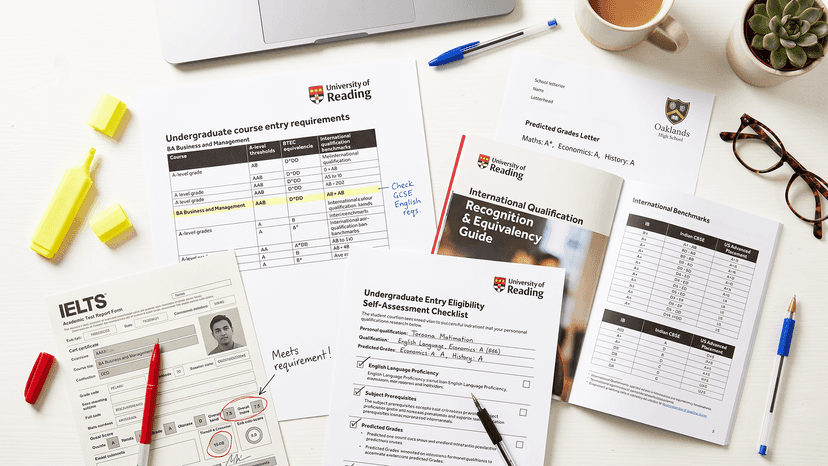
The University of Reading considers a range of UK and international qualifications for undergraduate admission. However, the university does not use one set of grades for every bachelor's degree.
Your required qualifications depend on the course you want to study. Some degrees require strong results in particular subjects, while others focus on your overall academic performance.
Before applying, check these five areas:
Academic qualifications: Whether your school-leaving qualification is accepted for your intended course.
Grades: The minimum grades or points required by the programme.
Subject prerequisites: Whether you must have studied specific subjects before university.
English language proficiency: Whether you meet the course's English language requirements.
Additional conditions: Whether the programme requires an interview, portfolio, test or other evidence.
The university's published entry criteria are the best starting point for assessing your eligibility. Meeting the minimum requirements does not guarantee an offer, because admission decisions depend on the course and the university's assessment of your application.
HSC Requirements and Accepted Qualifications
Bangladeshi students should check the university's country-specific guidance before choosing an undergraduate course. The qualifications accepted for entry can differ from those used in the UK.
Can Bangladeshi Students Apply After HSC?
An HSC certificate is an important academic qualification, but HSC alone should not be assumed to meet the direct-entry requirements for every University of Reading bachelor's degree.
Depending on your qualifications and intended programme, you may need to complete an accepted foundation or bridging programme before progressing to undergraduate study.
Students should check whether their current academic background is suitable for:
Direct entry using an accepted qualification.
An International Foundation Programme.
Another recognised foundation or bridging qualification.
A different approved route listed in the university's country-specific guidance.
The correct route depends on your previous education and the course you plan to study. Do not choose a pathway based only on your HSC GPA or advice intended for another university.
Other Accepted Qualifications
The University of Reading publishes entry criteria for a range of qualifications, including:
UK A levels.
BTEC qualifications.
The International Baccalaureate.
Recognised international school-leaving qualifications.
Approved foundation or other progression qualifications.
Acceptance depends on the qualification, grades and course requirements. A qualification accepted for one degree may not satisfy the requirements for another.
Students who have completed additional study after HSC should include that information when checking eligibility. A recognised qualification may provide a different route into higher education, but the university must assess whether it meets the relevant entry standard.
Direct Entry vs Foundation Pathways
One of the most important decisions for international applicants is whether to apply for direct undergraduate entry or complete a foundation programme first.
Direct entry means that your existing qualifications meet the academic requirements for admission to the bachelor's degree. A foundation pathway provides additional academic preparation before degree-level study.
For students who do not meet the standard direct-entry criteria, a suitable pathway may help them prepare for university-level learning.
What Is an International Foundation Programme?
An International Foundation Programme is designed to prepare eligible international students for further undergraduate study. It can help students develop subject knowledge and academic skills before beginning a bachelor's degree.
The appropriate programme depends on your intended degree. For example, a student planning to study a science-related subject should check that the foundation route provides the relevant academic preparation.
Before choosing a foundation course, check:
Whether the programme accepts your existing qualifications.
Which subjects are available.
The grades required for admission.
The English language requirements.
The progression conditions for your intended bachelor's degree.
Important: Completing a foundation programme does not automatically guarantee admission to a particular degree. Students must satisfy the relevant progression requirements, which may include achieving specified grades and completing required subjects.
Academic Grades and Subject Requirements
The grades required for a bachelor's degree depend on the course. The University of Reading publishes typical offers using qualifications such as A levels, BTEC Extended Diplomas and the International Baccalaureate.
These offers help applicants understand the academic standard expected for a programme. However, equivalent qualifications are assessed according to the university's published criteria.
Examples of Course-Specific Requirements
The following examples show why checking the exact course matters.
Example course | Published typical offer | Additional requirement |
BA History | BBB at A level | History or a humanities-based essay subject |
BSc Finance | ABB at A level | Grade B in Mathematics or one of the specified alternative subjects |
BSc Mathematics | ABC at A level | Grade A in Mathematics, Further Mathematics or Pure Mathematics |
These examples illustrate selected requirements for the university's published courses. They are not HSC grade equivalents or guaranteed offers for Bangladeshi applicants.
Some programmes also specify GCSE-level English or Mathematics, or an accepted international equivalent. Applicants should check whether their qualifications meet these requirements.
Remember: A strong overall GPA does not always replace a missing subject prerequisite. If your chosen degree requires Mathematics, for example, you must confirm that your previous studies meet the university's stated Mathematics requirement.
Need help understanding your options? Shabuj Global Education (SGE) can help you review your academic background and identify the course requirements you should check before applying.
Resource: Learn how UK universities assess international qualifications, academic grades and subject prerequisites in theUCAS Guide to Entry Requirements for UK Courses.
English Language Requirements
International applicants must demonstrate an appropriate level of English for undergraduate study. The required score depends on the university's rules and, in some cases, the programme.
For undergraduate courses, the University of Reading lists the following standard requirements:
IELTS Academic: 6.5 overall, with no component below 5.5.
Test of English for Educational Purposes (TEEP): 6.5, with no component below 5.5.
University of Reading pre-sessional English: A pass or high pass, depending on the course.
These are published standard requirements, but applicants should confirm the conditions for their specific programme. Other English qualifications may be accepted if they appear on the university's approved list.
What If You Do Not Meet the English Requirement?
If your current English result is below the required level, you may have options. The university advises applicants to share their latest IELTS or equivalent result so that the appropriate route can be considered.
An eligible student may be able to take a pre-sessional English programme before starting the degree. However, the available route depends on the course, your current English level and the university's conditions.
Do not assume that every English test is accepted or that a particular score will qualify you for every course. Check the requirements before booking a test or submitting your application.
What to Check Before Applying
Before submitting your application, review the University of Reading Undergraduate Entry Requirements for your chosen course and intended year of entry.
Use this checklist to organise your preparation:
Confirm that your HSC or other qualification is accepted for your intended route.
Check the required grades and any compulsory subjects.
Confirm whether you qualify for direct entry or need a foundation or bridging programme.
Review the English language requirements and accepted tests.
Prepare your academic transcripts, certificates and other requested documents.
Check the application deadline and any additional course conditions.
Most undergraduate applications are submitted through UCAS, including applications for courses with an integrated foundation year. The university advises applicants to check the current UCAS deadline because application dates can vary.
For more details about the overall academic requirements, read our parent guide: University of Reading Entry Requirements: Key Information.
For official information, the university's country-specific Bangladesh guidance explains the qualifications it accepts, while its undergraduate entry requirements page provides details about typical offers and subject prerequisites.
Support for Bangladeshi Students via SGE
Choosing a university course is easier when you understand how your qualifications match its requirements. Shabuj Global Education (SGE) supports Bangladeshi students planning to study in the UK.
Our guidance can help you:
Choose a suitable course: Explore programmes that match your academic background and future plans.
Understand eligibility: Review the published academic and English language criteria.
Prepare your application: Get help checking documents and organising application information.
Plan your next steps: Understand the admission process and prepare for your UK study journey.
The University of Reading makes the final admission decision. SGE can guide you through the process but cannot guarantee admission, a scholarship or a visa.
Start Your Application Planning
The University of Reading Undergraduate Entry Requirements depend on your qualifications, grades, chosen subject and English language ability. For Bangladeshi students, checking the accepted HSC route and whether a foundation or bridging programme is needed is especially important.
Start by identifying your preferred course and checking its official entry criteria. If you need help understanding your options, contact Shabuj Global Education (SGE) for guidance on your UK study application.
Ready to start your UK journey? Complete the SGE enquiry form to discuss your plans and next steps.
Explore more
Frequently Ask Question