Admissions & Entry Requirements | Bangladeshi Student Guides | International Student Support | Study Abroad – UK
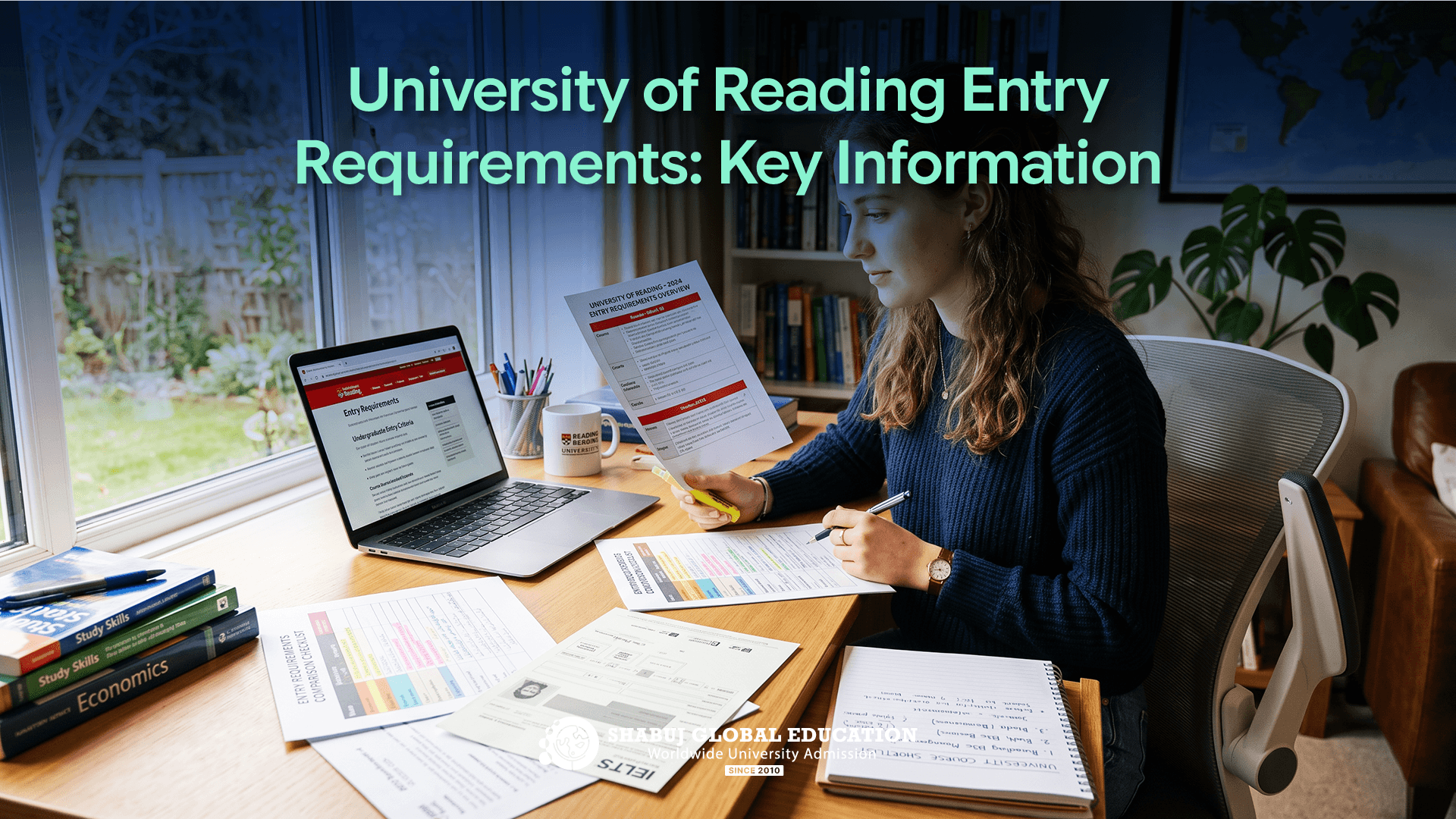
University of Reading Entry Requirements: Key Information
2 minutes of reading time
Learn about the University of Reading entry requirements for underg...
Summary
Learn about the University of Reading entry requirements for undergraduate and postgraduate courses, including academic qualifications, English language scores, Bangladesh-specific eligibility criteria and alternative pathways for international students.
Apply for a UK Scholarship with Expert Guidance: Contact Us Today
Planning to study in the UK? Understanding the University of Reading Entry Requirements: Key Information can help you choose the right course and prepare a stronger application. Your eligibility depends on your previous qualifications, intended degree, academic results and English language ability.
For Bangladeshi students, the university considers qualifications such as the Higher Secondary Certificate (HSC) and bachelor's degrees, depending on the level of study.
This guide explains the main requirements, possible alternative pathways and the key points to check before applying.
General University of Reading Entry Requirements
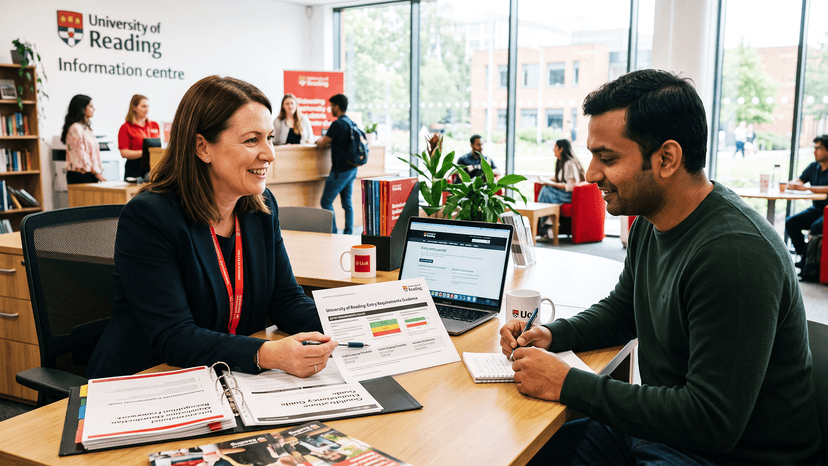
The University of Reading accepts a range of UK and international qualifications. However, there is no single academic requirement for every course. The grades and subjects you need depend on your chosen programme and level of study.
Before applying, check these important points:
Academic qualifications: Your previous education must meet the standard for your intended course.
Required grades: You must meet the academic offer specified for your programme.
Subject background: Some courses require previous study in particular subjects.
English language proficiency: International applicants may need to provide an accepted English language test result.
Additional conditions: Certain programmes may have extra academic or professional requirements.
The university assesses applications individually. Published entry requirements are useful guidance, but they should not be treated as a guaranteed offer of admission.
For the most accurate assessment, identify your preferred course first and compare your qualifications with its specific entry criteria.
Undergraduate vs Postgraduate Eligibility
The entry requirements for undergraduate and postgraduate study differ because each level expects a different academic background.
Undergraduate Entry Requirements
Undergraduate degrees are generally suitable for students who have completed secondary education and meet the university's requirements for degree-level study.
The University of Reading publishes typical offers for qualifications such as A levels, BTEC qualifications and the International Baccalaureate. It also accepts a range of overseas qualifications.
Depending on the course, applicants may need to demonstrate:
Appropriate school-leaving qualifications or an accepted equivalent.
Required grades in relevant subjects.
Suitable English language proficiency.
Additional qualifications where the course specifies them.
For example, some programmes require knowledge of subjects such as mathematics or science. Meeting the general academic standard alone may not be enough if your chosen degree has specific subject requirements.
Read the detailed guide:University of Reading Undergraduate Entry Requirements
This dedicated guide should explain undergraduate qualifications, course-specific grades, English language requirements and alternative entry routes in greater detail.
Postgraduate Entry Requirements
Postgraduate courses usually require an appropriate undergraduate qualification. For many taught master's programmes, the university normally expects applicants to hold a good undergraduate honours degree or an equivalent qualification from an overseas university.
However, the required degree classification or grade can vary by programme. Some courses require a related academic background, while others may consider applicants with different qualifications and relevant professional experience.
Typical requirements may include:
A recognised bachelor's degree or equivalent qualification.
The minimum grades stated on the course page.
English language proficiency at the required level.
Relevant academic preparation or work experience, where applicable.
Additional documents or evidence specified for the programme.
Research degrees, including PhD programmes, have their own requirements. These may depend on your academic background, research proposal, experience and the subject you intend to investigate.
Read the detailed guide:University of Reading Postgraduate Entry Requirements
Check the individual master's or research course page before deciding whether your existing qualifications meet the university's requirements.
English Language Requirements
International students must demonstrate that they can understand lectures, complete assignments, participate in discussions and communicate effectively in an academic environment.
The University of Reading accepts several forms of English language evidence. IELTS Academic is one option, but the required score depends on the programme.
For undergraduate courses, the university's published general requirements include IELTS Academic 6.5 overall, with no component below 5.5, although course-specific exceptions and requirements must be checked.
For postgraduate taught programmes, the university's standard requirements vary by school and department. Depending on the programme, typical IELTS requirements may include:
IELTS 6.5 overall, with no individual component below 5.5.
IELTS 7.0 overall, with no individual component below 6.0.
These are examples of common requirements, not universal scores for every degree. Some programmes require different scores or higher results in particular components.
The university also accepts certain alternative English language qualifications. Accepted tests and conditions can vary, so confirm that your test is recognised for your intended course and start date.
What If You Do Not Meet the English Requirement?
Not meeting the required English score does not always mean you must abandon your plans. The university offers pre-sessional English programmes that can help eligible students improve their academic English before beginning their main degree.
Your available options depend on your current English level, the course requirement and the university's assessment. Ask the admissions team which route is appropriate before making a decision.
Important: Do not assume that an English test waiver or an alternative qualification will be accepted automatically. Confirm the relevant conditions with the university.
Entry Requirements for Bangladeshi Students
Bangladeshi applicants should compare their qualifications with the University of Reading's country-specific guidance. The university recognises several academic routes, but eligibility depends on the qualification held, grades achieved and intended programme.
Undergraduate Study After HSC
Completing HSC does not automatically mean that you can enter every undergraduate degree directly. The university's published Bangladesh guidance states that undergraduate applicants may need a completed HSC combined with an appropriate foundation or bridging programme. Other accepted qualifications may also be considered.
Depending on your academic background, possible routes include:
Applying with qualifications accepted for direct undergraduate entry.
Completing an appropriate foundation or bridging programme.
Exploring an International Foundation Programme if you do not yet meet the academic requirements for your intended degree.
The university's International Foundation Programme provides a pathway for eligible students who need further academic preparation before progressing to an undergraduate degree.
Do not assume that one HSC result guarantees entry to every programme. Check the specific course requirements and the university's latest Bangladesh guidance before applying.
Postgraduate Study After a Bachelor's Degree
The university's Bangladesh guidance identifies several possible qualifications for master's and MPhil applications.
These include:
A four-year bachelor's degree with grades typically ranging from 2.5/4.0 to 3.0/4.0 from selected public and private universities.
A one-year master's degree following a four-year bachelor's honours degree.
A two-year master's degree following a three-year bachelor's pass degree, with GPAs typically ranging from 2.5/4.0 to 3.0/4.0.
These are general country-specific guidelines, not a guarantee of admission. The accepted grade range can depend on the university attended, the qualification and the programme. Some courses may require higher grades or a relevant academic background.
Applicants interested in a PhD should check the separate research-degree requirements because these depend on the proposed research and previous academic preparation.
Resource: For additional guidance on international university qualifications and admission preparation, visitStudy UK by the British Council
How Bangladeshi Students Can Check Their Eligibility
Before submitting an application, prepare the following information:
Your completed qualifications and final results.
The names and duration of your previous degrees.
Your intended course and level of study.
Your current English language test result, if available.
Details of any foundation programme, professional qualification or relevant experience.
Use this information to compare your profile with the university's official requirements. If an equivalency is unclear, ask the admissions team for guidance rather than relying on assumptions.
Course-Specific Requirements and Alternative Pathways
Even when you meet the general University of Reading entry requirements, your preferred programme may have additional conditions.
For example, some courses may require specific subjects, a relevant undergraduate degree, professional experience or other evidence of academic preparation. Requirements can also differ between taught master's programmes and research degrees.
The university's course pages should be your main reference for confirming these details.
If you do not meet the standard requirements, consider whether an alternative route is available.
Possible alternatives include:
International Foundation Programme: For eligible international students who need additional preparation before undergraduate study.
Foundation or bridging study: Where an appropriate route is available for your qualifications and intended degree.
Pre-sessional English: For eligible applicants who need to improve their English before starting their main programme.
Alternative qualifications or experience: Some postgraduate programmes may consider other qualifications and relevant work experience.
These options are not interchangeable, and availability depends on the course. Completing a pathway programme also does not automatically guarantee progression unless you meet the applicable progression conditions.
A Simple Eligibility Checklist
Use this checklist before preparing your application.
What to check | Why it matters |
Academic qualification | Confirms whether your previous education is accepted |
Required grades | Helps you compare your results with the course offer |
Subject requirements | Identifies any compulsory previous subjects |
English language score | Shows whether you meet the programme's language standard |
Alternative pathways | Helps you explore another route if direct entry is not possible |
Course-specific conditions | Identifies extra requirements before you apply |
Review each item carefully. Checking these details early can help you avoid preparing an application for a course whose requirements you do not meet.
Not sure which course or entry route suits your qualifications? Get a free consultation with our UK education experts at Shabuj Global Education (SGE).
Our team can help you understand the requirements and identify the next steps for your application.
Support for Bangladeshi Students via SGE
Understanding entry requirements can be difficult when you are comparing different qualifications, courses and English language conditions. Shabuj Global Education (SGE) provides guidance to Bangladeshi students planning to study in the UK.
Our support can include:
Course selection: Explore suitable programmes based on your academic background and future goals.
Eligibility guidance: Understand the published academic and English language requirements for your preferred course.
Application support: Get help reviewing documents and preparing application information.
Pre-departure guidance: Understand the steps to prepare for studying in the UK.
The university makes the final decision on admission. SGE guidance can help you understand the process, but it cannot guarantee an offer, scholarship or visa.
Start Planning Your Application
The University of Reading entry requirements depend on your study level, previous qualifications, English language ability and chosen programme. Bangladeshi students should pay particular attention to the university's country-specific qualification guidance and check whether direct entry or a pathway programme is appropriate.
Start by selecting your course, reviewing its official entry criteria and comparing them with your academic results. If you need help understanding your options, contact Shabuj Global Education (SGE) for guidance on planning your UK study application.
Ready to start your UK journey? Complete the SGE enquiry form to discuss your study plans and next steps.
Explore more
Frequently Ask Question