Academic Quality Assurance | Courses & Degrees | International Student Support | Study Abroad – UK
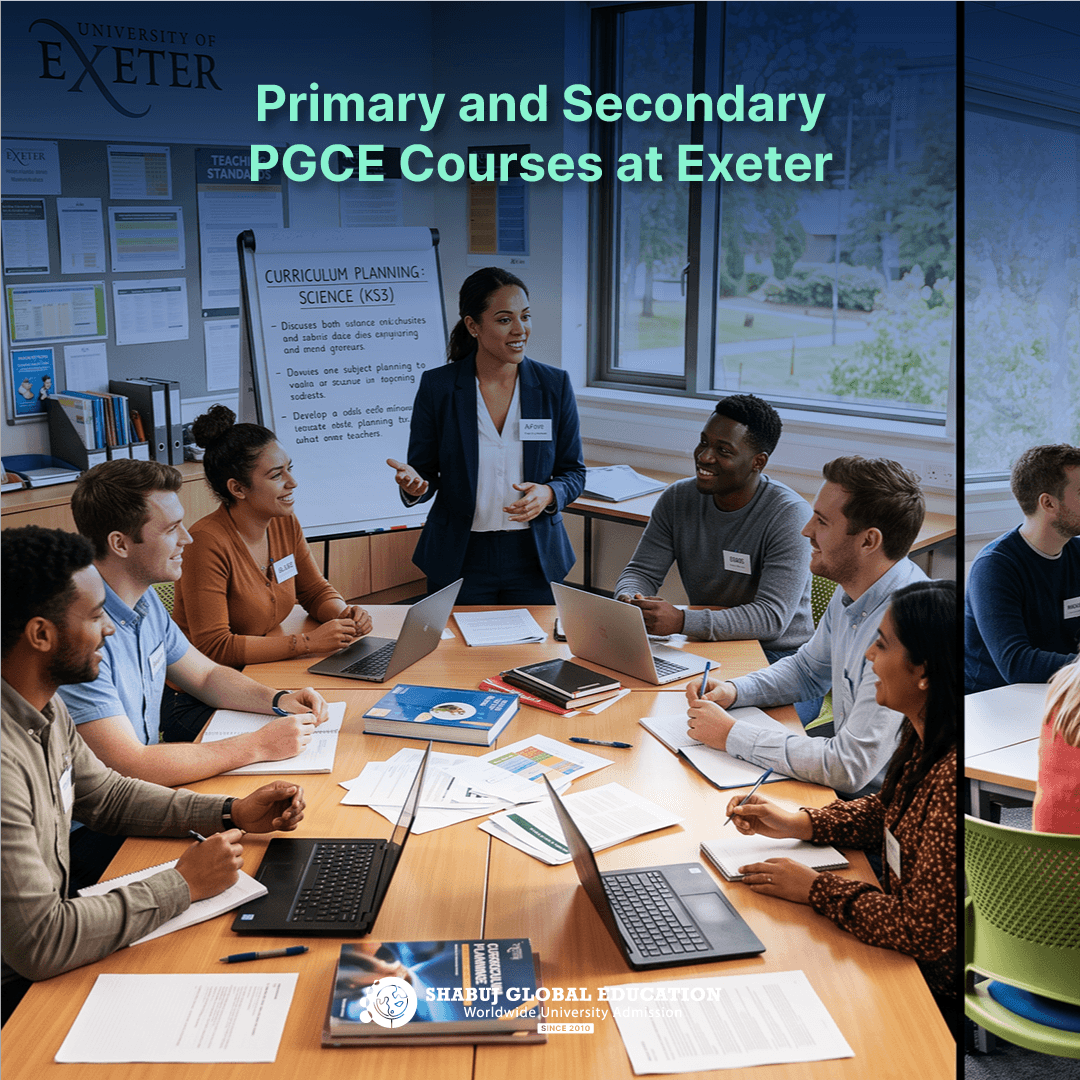
Primary and Secondary PGCE Courses at Exeter

2 minutes of reading time
Explore the Primary and Secondary PGCE courses at the University of...
Summary
Explore the Primary and Secondary PGCE courses at the University of Exeter, including course structure, school placements, entry requirements, assessments, and application steps. Understand the key differences to identify the teaching pathway that suits your goals.
Apply for a UK Scholarship with Expert Guidance – Contact Us Today
Choosing the right PGCE Exeter course is an important step towards becoming a qualified teacher. Whether you want to teach young children or specialise in a secondary school subject, the University of Exeter offers structured training that combines academic learning with real classroom experience.
This guide compares Primary PGCE Exeter and Secondary PGCE Exeter programmes, covering their course structure, school placements, assessments, entry requirements, and application process. It highlights the key differences to help you understand which teaching pathway aligns with your career plans.
What Is a PGCE at Exeter?
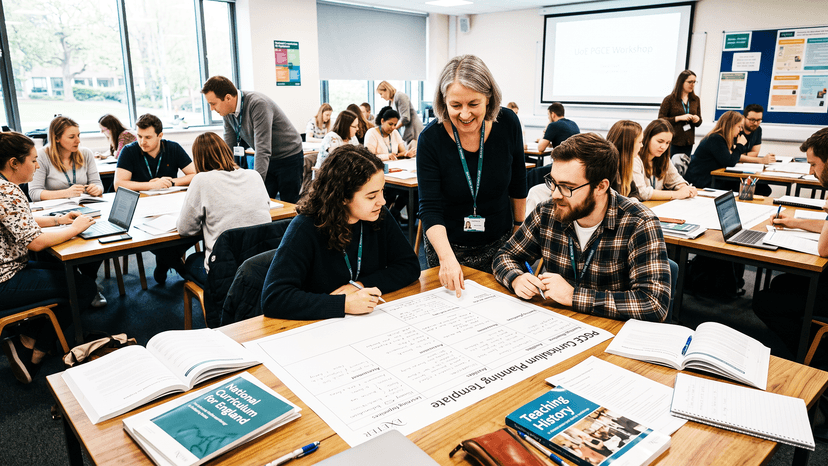
A Postgraduate Certificate in Education (PGCE) is typically a one-year full-time teacher training programme for graduates who want to pursue a teaching career. At the University of Exeter, PGCE programmes combine academic study with practical teaching experience in school settings, allowing trainees to develop essential classroom skills alongside their university learning.
Students graduate with:
Postgraduate Certificate in Education (PGCE)
Qualified Teacher Status (QTS)
60 Master's level credits
The University follows its Exeter Model of Initial Teacher Education, which gradually develops your confidence and independence through supported classroom practice and academic study.
Primary PGCE Exeter vs Secondary PGCE Exeter
Although both programmes lead to Qualified Teacher Status, they prepare you for different stages of education.
Feature | Primary PGCE Exeter | Secondary PGCE Exeter |
Teaching Age | 3–7 or 5–11 | 11–16 (with post-16 experience available) |
Teaching Style | All primary subjects | One specialist subject |
Qualification | PGCE + QTS | PGCE + QTS |
Duration | One year full-time | One year full-time |
School Placements | Two partnership schools | Two partnership schools |
If you enjoy teaching children across many subjects and helping them build strong learning foundations, the Primary route may suit you.
If you are passionate about a particular subject such as English, Mathematics, History, or Science, the Secondary programme allows you to specialise in that area.
Primary PGCE Exeter
The Primary PGCE Exeter programme prepares future teachers to teach the full primary curriculum.
Applicants can choose between two age pathways:
Primary (3–7)
Primary (5–11)
Both routes include university-based learning and school placements where trainees gradually develop classroom confidence.
Students study areas including:
English
Mathematics
Science
Art
Computing
Design and Technology
Humanities
Physical Education
Modern Languages
The 5–11 pathway also includes a curriculum specialism. Depending on availability, options may include:
English
Mathematics
Humanities
SEND
Outdoor Education
This allows trainees to explore one curriculum area in greater depth while still preparing to teach across the primary curriculum.
Secondary PGCE Exeter
The Secondary PGCE Exeter programme is designed for graduates who want to teach a specialist subject in secondary schools.
Current subject specialisms include:
English
Geography
History
Mathematics
French
Spanish
Physical Education
Biology
Chemistry
Physics
Biology with Physical Education
Throughout the programme, trainees develop expertise in subject knowledge, lesson planning, assessment, classroom management, and inclusive teaching.
The course also gives students opportunities to gain experience beyond Key Stage 4, helping prepare them for broader teaching careers.
Course Structure
Both PGCE Exeter programmes follow a similar structure across one academic year.
Autumn Term
Most university-based learning takes place on the St Luke's Campus in Exeter.
Students attend lectures, seminars, workshops, collaborative learning sessions, and begin their first school placement.
Spring Term
Training becomes increasingly school-based.
Students return to their placement schools, continue developing teaching skills, and receive ongoing support from tutors and mentors.
Summer Term
The final term focuses mainly on the second school placement.
By this stage, trainees are expected to teach more independently while continuing to receive professional guidance and feedback. The gradual increase in responsibility is a key feature of Exeter's teacher education model.
Learning Through School Placements
School placements are one of the most valuable parts of both programmes.
Every trainee completes placements in two partnership schools, allowing them to experience different classrooms, teaching styles, and school communities.
Each student is supported by:
University tutors
School-based mentors
Personal tutors
Subject specialists (Secondary)
Regular observations and feedback help trainees improve throughout the year while building confidence for their first teaching role
Assessment and Professional Progress
Assessment in both Primary PGCE Exeter and Secondary PGCE Exeter is designed to measure your progress as a future teacher. Instead of relying on a single final exam, the programme uses different methods to evaluate your teaching skills and professional development throughout the year.
You will receive feedback from university tutors and school mentors during your placements. This helps you identify your strengths, improve your teaching practice, and build confidence before becoming a qualified teacher.
Assessment normally includes:
Teaching practice during school placements
Written academic assignments
Professional reflections
Evidence against the Teachers' Standards
Regular mentor observations and feedback
This balanced approach allows trainees to develop gradually while demonstrating that they meet the standards required for Qualified Teacher Status (QTS).
Entry Requirements
Before applying for a PGCE Exeter programme, make sure you meet the entry requirements.
Although requirements may vary slightly depending on the course, applicants generally need:
A UK honours degree or an equivalent international qualification
GCSE English Language and Mathematics (or accepted equivalents)
GCSE Science for Primary PGCE applicants
A degree related to the chosen teaching subject for most Secondary PGCE courses
Satisfactory references
An interview
Health and suitability checks before starting the programme
International applicants must also meet the University's English language requirements if English is not their first language.
Meeting the minimum requirements does not automatically guarantee an offer, as applications are considered individually.
Not sure which scholarship fits you?
Get a Free Consultation with our UK Education Experts.
How to Apply
Applying early gives you more time to prepare your documents and complete any required interviews.
A typical application process includes:
Choose the Primary PGCE Exeter or Secondary PGCE Exeter course that matches your career goals.
Prepare your academic transcripts and supporting documents.
Write a strong personal statement explaining why you want to become a teacher.
Submit your application through the official admissions process.
Attend an interview if invited.
Complete any required health and background checks before enrolment.
A well-prepared application shows your motivation, communication skills, and understanding of the teaching profession.
Which PGCE Course Should You Choose?
Choosing between Primary PGCE Exeter and Secondary PGCE Exeter depends on your interests, qualifications, and long-term career plans.
Choose Primary PGCE Exeter if... | Choose Secondary PGCE Exeter if... |
You enjoy teaching younger children. | You enjoy teaching teenagers. |
You want to teach a range of subjects. | You want to specialise in one subject. |
You like supporting children's early development. | You are passionate about sharing subject knowledge. |
You prefer the primary school environment. | You see yourself working in secondary education. |
Think about where you will feel most motivated every day. Your teaching placement experiences, academic background, and future career goals should all influence your decision.
Continue Exploring Exeter Teacher Training
This guide focuses on choosing the right PGCE programme. To learn more about teacher education at the University of Exeter, explore these related articles:
Parent Guide
➡ Teacher Training at Exeter University
Learn about teacher training opportunities, funding, school partnerships, and career pathways.
Related Articles
➡ Education Research at Exeter University
Discover how research helps shape teaching practice and learning.
➡ School Partnerships in Teacher Training at Exeter
Learn how placement schools support trainee teachers throughout the programme.
Teach Away shares practical articles on teacher training, classroom management, professional development, and teaching careers. It provides additional guidance for students exploring a future in education.
Need Help Choosing the Right PGCE Course?
Choosing the right PGCE programme is an important step towards building your teaching career. Whether you are comparing Primary and Secondary PGCE options or trying to identify the pathway that fits your academic background and career goals, Shabuj Global Education (SGE) can provide guidance throughout the application process.
Our education advisers provide personalised guidance to help Bangladeshi students make informed decisions before applying to the University of Exeter.
How SGE Supports Your PGCE Journey
Compare Your Options: Understand the differences between Primary and Secondary PGCE programmes to choose the pathway that suits your interests and qualifications.
Review Your Eligibility: Receive guidance on entry requirements, subject suitability, and supporting qualifications before you apply.
Strengthen Your Application: Get advice on preparing your personal statement, organising your documents, and completing your application accurately.
Prepare for Your Move: Learn about the UK student visa process, travel arrangements, and what to expect before your course begins.
Stay Supported: Continue receiving guidance throughout your admission journey, from your initial enquiry to your arrival in the UK.
If you're unsure which PGCE course is right for you, our team can help you explore your options and apply with confidence.
Make the Right Choice
Choosing between Primary PGCE Exeter and Secondary PGCE Exeter depends on the age group you want to teach, the subjects you are interested in, and the type of classroom environment you prefer. Consider these factors alongside the course structure, placement opportunities, and entry requirements before making your decision.
Once you have identified the pathway that suits your goals, prepare your application carefully and take the next step towards qualifying as a teacher at the University of Exeter.
Explore more
Frequently Ask Question



.png&w=256&q=60)