Academic Quality Assurance | International Student Support | Study Abroad – UK
School Partnerships in Teacher Training at Exeter

2 minutes of reading time
Discover how school partnerships support teacher training at the Un...
Summary
Discover how school partnerships support teacher training at the University of Exeter. Learn about teaching placements, mentor support, the ITE Partnership, benefits for schools, and how schools can become involved in training future teachers.
Apply for a UK Scholarship with Expert Guidance – Contact Us Today
Wondering how your school could collaborate with an experienced teacher training provider?Exeter school partnerships connect schools across the South West with trainee teachers, experienced mentors, and a research-informed training model.
This guide walks through how the partnership works, what your school gains, and how to get involved.
How Schools Work With Exeter

The University of Exeter delivers its Initial Teacher Education (ITE) programmes in partnership with schools across the South West. Teaching placements at Exeter are an integral part of the training, giving trainees substantial classroom experience in Partner Schools. During these placements, trainees work alongside experienced teachers and receive support from both school-based mentors and university tutors.
The partnership area covers Devon, Cornwall, Dorset, and Somerset, with a small number of primary placements available in London. Trainees are placed in at least two schools during their training year, giving them contrasting classroom experiences before they qualify.
A typical training year includes:
An autumn term placement of around five weeks, alongside Intensive Training and Practice sessions
A return to School 1 in January, then a move to School 2 in March
School 2 continuing through to the end of the course in early July
For the 2026/27 cycle, Primary trainees are placed at School 1 from 09 November to 04 December 2026, with a further week from 14 to 18 December, before returning from 04 January to 04 March 2027. Secondary trainees follow a similar pattern, with School 1 running from 09 November to 11 December 2026 and resuming from 04 January to 05 March 2027. Both routes then move to School 2 from 08 March through to 01 July 2027, giving trainees a sustained final placement to consolidate everything they have learned.
This structure means your school is never asked to host a trainee with no warning or support. Placement dates are set well in advance, and the Partnership Office keeps schools informed throughout.
How Your School Can Join the Partnership
If your school wants to become one of the partner schools Exeter relies on, the process starts with a simple form. Schools apply to join the ITE Partnership by completing an online form, after which the Partnership Office contacts the school directly to discuss what placements it may wish to offer.
That offer is not a final commitment straight away. It only becomes official once the school signs a Memorandum of Understanding (MoU), which is sent to every school that has agreed to receive trainees once placements are allocated.
The process at a glance:
Complete the online partnership application form
The Partnership Office contacts your school to discuss placement offers
Your school signs the Memorandum of Understanding
Trainees are placed once the MoU is confirmed and bank details are on file
Not sure which scholarship fits you? Get a Free Consultation with our UK Education Experts.
Mentor Roles Inside the Partnership
Every partner school works within a structured framework known as the Exeter Model of Initial Teacher Education. This model shapes how mentoring happens, and it relies on three key roles.
Role | Main Responsibility |
ITE Coordinator | Manages the partnership within the school, briefs and monitors school-based staff, and oversees all in-school training |
Mentor | An experienced teacher who models good practice, plans jointly with trainees, observes lessons, and gives feedback |
University Lead Mentor | Visits placements, supports both trainee and school, and monitors training quality across the partnership |
Mentors receive training on the Exeter Model before they begin, and schools also benefit from a personalised hybrid Mentor training programme along with Mentor Meets sessions that share current research in education.
Benefits for Schools
Joining the partnership is not one-directional. Exeter outlines a clear set of benefits for schools that take part, including:
Fast support: A dedicated Partnership Relations Manager and Partnership Office team offering rapid response throughout the year
A proven training model: Structured guidance for mentors through the well-established Exeter Model of ITE
Access to strong ECTs: Free vacancy advertising and access to employable early career teachers, many of whom go on to work in their placement schools
A professional community: School and university staff join an active Community of Practice, sharing research-led teaching knowledge in both directions
A voice in course design: Schools can help co-design the PGCE curriculum, shaping training around real classroom needs
Fresh energy in classrooms: Pupils benefit from the subject expertise and new ideas that trainees bring in
Wider university links: Invitations to academic lectures and the chance to be involved in ongoing educational research
Schools also receive a placement fee for hosting trainees, paid once the placement begins and the signed MoU is on file.
Shared Responsibilities
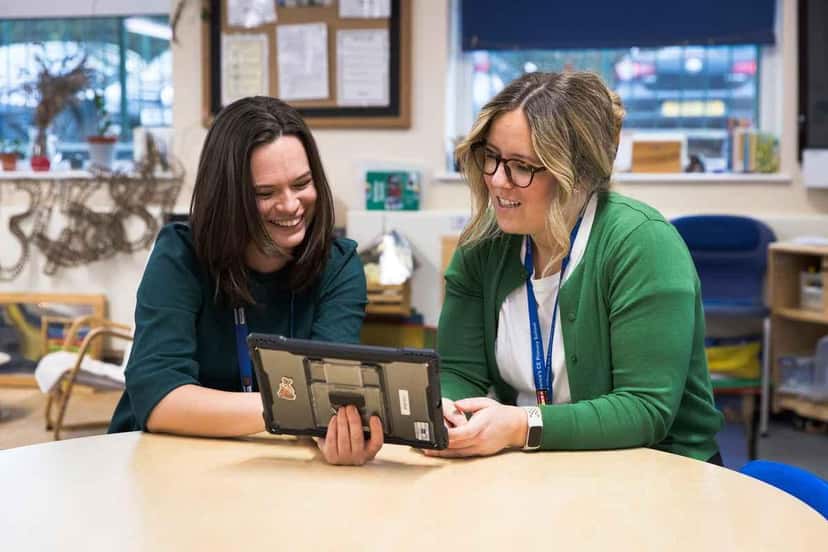
The partnership works because both sides commit to clear responsibilities, set out fully in the MoU. Schools agree to make and honour placement offers where possible, provide an ITE Coordinator, support trainees using the Exeter Model, and ensure mentors complete their required training. In return, the university places trainees with schools that have made offers, provides mentor curriculum and training, advertises ECT vacancies to trainees, and invites partner schools into research projects and university events.
This two-way structure is part of why the model has built such a strong reputation. Schools are not simply hosting trainees. They are active partners shaping how new teachers are prepared for the classroom, with a say in curriculum design and a direct line to the university through the Partnership Office.
For general background on how school-university partnerships operate across the UK,Teacher Tapp is a useful independent resource. It regularly surveys teachers on training and workload issues relevant to schools considering a partnership role.
If you are exploring teacher training options more broadly, our overview of Teacher Training at Exeter University covers the PGCE routes that lead into these school placements.
Support for Bangladeshi Students via SGE
Shabuj Global Education (SGE), your trusted partner for studying in the UK, helps students navigate every step of their Exeter journey:
Expert Guidance: Choose the right course aligned with your goals and entry requirements
Application Made Easy: From document checks to personal statement review, we make sure your application stands out
Visa & Pre-Departure Help: Get step-by-step support for your UK student visa and prepare confidently for departure
Ongoing Support: Even after enrollment, SGE continues to guide you toward academic and career success
Bangladeshi students get a smooth, safe, and fully guided admission process, from your first enquiry through to settling into life in Exeter.
Final Thoughts
Exeter’s school partnerships provide a structured and supportive way for schools to host trainee teachers while contributing to the development of future educators. From the ITE Coordinator role to shared responsibilities outlined in the partnership agreement, each part of the process helps schools and trainees work together effectively.
Ready to start your UK journey? Fill out our form and let's begin your application.
Explore more
Frequently Ask Question



.png&w=256&q=60)