Student Wellbeing & Support | Study Abroad – UK
Focus Groups and Student Engagement at Exeter

2 minutes of reading time
This guide explains focus groups and student engagement at Exeter, ...
Summary
This guide explains focus groups and student engagement at Exeter, including how students can participate, what discussions cover, and how their feedback may be used.
Apply for a UK Scholarship with Expert Guidance - Contact Us Today
Sometimes a survey cannot capture the full story of a student's experience. A discussion can give students more space to explain what they think, share different perspectives and explore an issue in greater detail.
Focus Groups and Student Engagement at Exeter looks at how students can take part in interactive discussions, consultations and other activities where their experiences and ideas can be heard. It also explains how focus groups differ from surveys and what students can expect when they are invited to participate.
What Does Student Engagement Mean at Exeter?

Student engagement in this context means taking part in activities where students can contribute their experiences, opinions and ideas to discussions about education or student life.
At the University of Exeter, the Student Voice Partnership provides a framework for students to participate actively in shaping their education and student experience. Exeter describes it as a flexible and inclusive approach where student issues and ideas can be considered in partnership with staff and the student community.
This participation does not have to look the same for every student. Exeter's Student Voice Partnership guidance identifies a range of activities, including small thematic focus groups, formal town hall forums, large thematic meetings, feedback forms and surveys.
For this article, the focus is on the more interactive side of that process, particularly activities where students can discuss a topic rather than simply select answers on a questionnaire.
Different Forms of Interactive Participation
Activity | What it involves | Why it can be useful |
Focus group | A smaller group discusses a particular topic | Allows more detailed discussion |
Forum | Students contribute to a wider discussion | Brings different views together |
Town hall | A larger group discusses a topic or issue | Gives students a chance to raise views publicly |
Student panel | Students contribute to a specific discussion or activity | Brings student perspectives into a particular area |
Consultation activity | Students are invited to comment on a topic or proposal | Helps explore opinions before decisions are made |
The exact activities available can change according to the topic, programme, faculty or student group. Students should therefore check current University communications rather than assuming that every opportunity is available to everyone.
What Is a Focus Group?
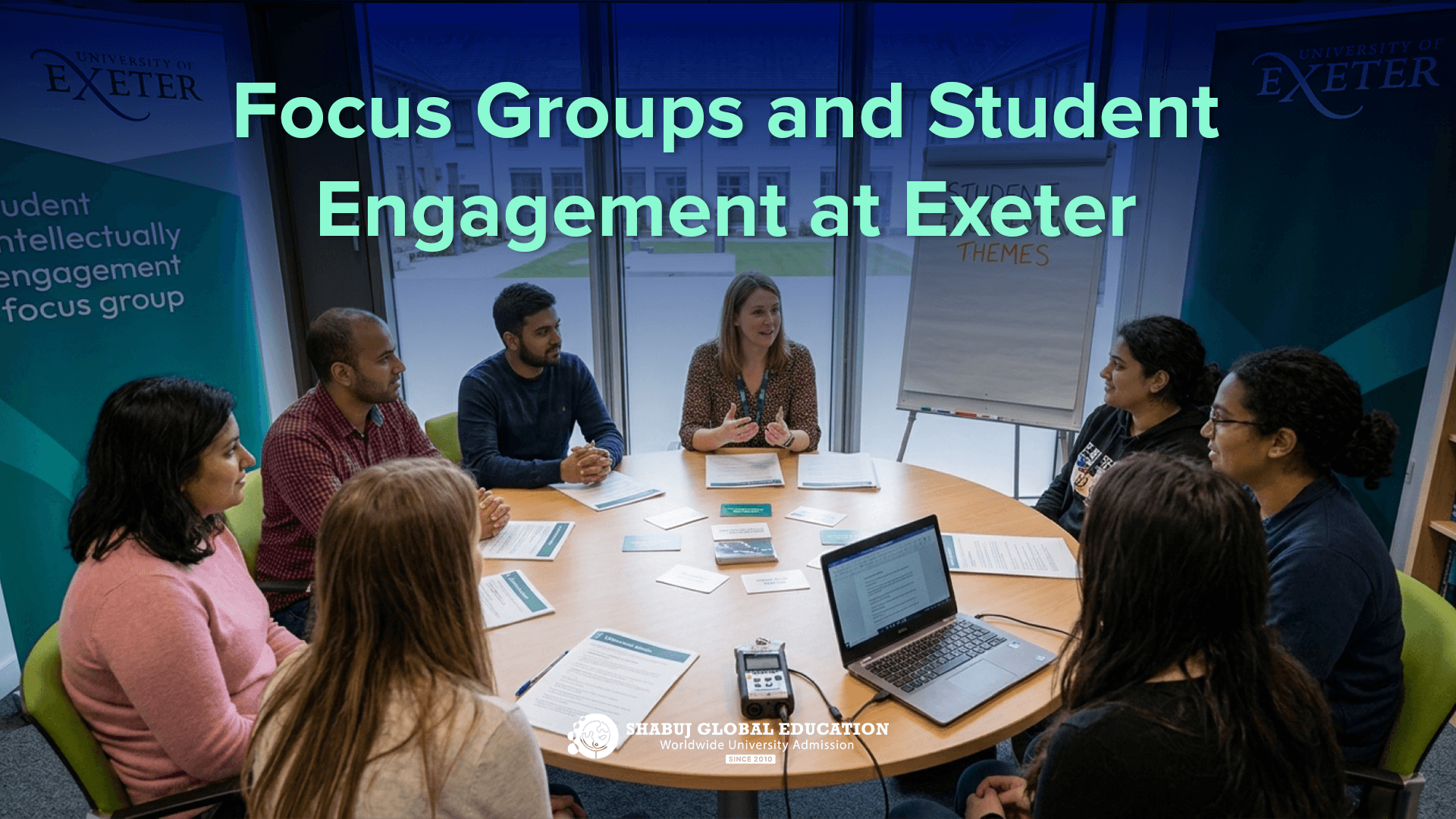
A focus group is a small-group discussion used to explore people's experiences, opinions or ideas in greater depth.
Unlike a questionnaire, where participants normally respond to a set of questions individually, a focus group allows participants to discuss a topic together.
The University of Exeter's Market Research and Insight team explains the difference clearly: surveys can be used to generate quantitative data, while focus groups are a qualitative method that can provide an in-depth understanding of more complex questions.
This makes focus groups useful when simply knowing how many students have a particular opinion is not enough.
A discussion can help explore:
Why students have a particular experience
What different students think about the same issue
What difficulties students may face
What ideas students have for improvement
How experiences can differ between students
A focus group is therefore not simply a smaller survey. The conversation itself is an important part of the activity.
A Current Exeter Example
Focus groups can be organised around specific student experiences.
In May 2026, Exeter Law School and the Students' Guild ran a focus group about students' experiences of attending classes. The discussion explored factors affecting attendance and engagement, including timetables, workload, commuting, paid work, wellbeing and recordings. The University stated that feedback from the session would be recorded and reported anonymously.
This example shows how a focus group can explore a particular issue from several angles rather than asking students to choose from a fixed list of answers.
It is also important not to assume that every Exeter focus group will follow the same format. The subject, participants, session length and method of collecting information can vary.
Focus Groups vs Surveys
It is easy to confuse these two forms of feedback, especially because both can be used to understand student experiences.
The main difference is depth and format.
Survey | Focus group |
Usually uses structured questions | Uses guided discussion |
Can collect responses from many people | Usually involves a smaller group |
Responses are generally individual | Participants discuss a topic together |
Useful for identifying patterns | Useful for exploring reasons and experiences |
Often produces quantitative data | Commonly produces qualitative information |
This does not mean one method is always more useful than the other.
A survey can show that a particular experience is common. A focus group can help explore why students are experiencing it and how they describe it.
For a detailed guide to surveys and formal questionnaires, read Student Surveys and Feedback at Exeter.
The two approaches can also be used together. Exeter's own research and student engagement work includes examples where surveys and focus groups are used to gather different types of information.
Focus groups are a qualitative research method where a small group of participants discusses a specific topic with guidance from a moderator. They can help organisations understand experiences, opinions and ideas in greater detail.
Resource:Qualtrics – Focus Groups
How Students May Be Invited to Participate
Focus groups and other engagement activities are usually connected to a particular topic or area of work.
Students may hear about an opportunity through University communications, their department, a faculty, student organisations or another relevant University team.
For example, Exeter's current student information encourages students to look out for invitations to participate in University surveys and focus groups, including opportunities connected with the evaluation of services.
An invitation may explain:
What the discussion is about
Who the organisers are
Who can take part
When and where it will happen
What participation involves
Whether participants need to register
How information from the session will be handled
Some activities may have a limited number of places because a smaller group is part of the design.
The 2026 Law School focus group, for example, was limited to 20 students and offered a £15 voucher to participants for their time.
That was a specific opportunity, however, and should not be treated as a standard feature of every Exeter focus group.
Are Focus Groups Voluntary?
The answer can depend on the activity, but Exeter's information for Success for All states that students may be invited to participate in evaluation activities such as focus groups and that participation is voluntary, with explicit consent required for collecting and processing data from those activities.
Students should always read the information provided with an individual invitation because the arrangements can differ between activities.
What Might Students Discuss?
There is no single list of topics used for every focus group.
The subject normally depends on the purpose of the activity.
Exeter's official material provides examples of focus groups covering different areas. These include student experiences of class attendance, sustainability education and other student-related research or evaluation activities.
A discussion might therefore explore a particular part of university life, such as:
Learning and teaching experiences
Access to particular services
Student support
Sustainability
Careers or employability activities
Experiences of particular student groups
A proposed change or new initiative
A specific issue affecting students
The important point is that the topic should be explained in the invitation or information provided to participants.
Students should not assume that a focus group is an opportunity to discuss every issue they have experienced at university.
If the session is about a specific topic, staying focused on that topic makes the discussion more useful for everyone.
Why Different Student Perspectives Matter
A university community includes students with different academic backgrounds, cultures, circumstances and experiences.
Two students can use the same service and have very different experiences of it.
This is one reason interactive discussions can be useful. A group conversation can bring together several perspectives and show where experiences are similar and where they are different.
For international students, participating can be a chance to explain experiences that may not be obvious to someone who has always studied in the UK.
For example, an international student may have a different perspective on communication, classroom participation, academic expectations or access to university services.
That does not make one experience more important than another. It simply adds another perspective to the discussion.
Exeter's current student voice approach describes participation as a partnership between staff and students, with students contributing to discussions about their education and student experience.
Why Your Individual Experience Can Be Useful
You do not need to speak for every student.
If you are invited to a focus group, your role is generally to share your own experience and perspective honestly.
You can explain:
What happened
What worked well
What you found difficult
How the experience affected you
What you think could be improved
You may also hear experiences that are different from your own.
That is one of the useful parts of a group discussion. It can show that an issue may affect students in different ways.
How to Prepare for a Focus Group
You do not need to prepare a formal presentation.
However, spending a few minutes thinking about the topic beforehand can help you contribute clearly.
Before the Session
Read the invitation carefully and check:
What is the topic?
Why is the discussion being held?
Who is organising it?
How long will it take?
Where will it take place?
Is registration required?
Is there any information about confidentiality or how responses will be used?
Then think about your own experience.
If the discussion is about a service you have used, consider both positive and negative experiences. If it concerns a particular part of your course, think about specific examples rather than making broad statements.
During the Discussion
You do not have to agree with everyone else.
A useful discussion can include different opinions.
Try to:
Speak from your own experience
Give clear examples where appropriate
Listen when other students are speaking
Respect different experiences
Stay connected to the topic
Ask questions if something is unclear
You also do not need to speak constantly. Listening to other students can be just as useful for understanding the wider issue.
How Discussion Feedback May Be Used
Focus groups are often used when an organisation needs a deeper understanding of an issue.
Exeter's Market Research and Insight team explains that qualitative methods such as focus groups can help the University gain an in-depth understanding of complex research questions.
Within student voice activities, discussions can also contribute to the wider process of reviewing education and student experience. Exeter's Teaching Quality Assurance guidance states that Student Voice Partnership activities are intended to enable students and staff to participate jointly in the development, management and review of educational provision.
However, participating in a focus group does not guarantee that a specific change will happen.
The information collected may be considered alongside other evidence, priorities and practical factors.
This is why students should view a focus group as an opportunity to contribute useful evidence and perspective, rather than as a promise that a particular outcome will follow.
Getting Involved as an Exeter Student
You do not have to wait until you have a serious problem before participating.
Keep an eye on University communications and opportunities connected with your course, department or student community.
The University's Your Voice page currently encourages students to look out for opportunities to get involved and specifically highlights the Student Voice Partnership and other student voice activities.
If you see an opportunity that matches your experience or interests, read the information carefully before deciding whether to participate.
You can also explore the wider Student Feedback and Representation at Exeter guide to understand how interactive engagement fits alongside other ways students can contribute their views.
Not sure which UK study option fits your goals? Get a Free Consultation with our UK Education Experts.
Support for Bangladeshi Students via SGE
For Bangladeshi students planning to study at Exeter, joining university discussions is only one part of preparing for life in the UK.
Shabuj Global Education (SGE) supports students through the wider study abroad process, from choosing a suitable course to preparing for their application and UK journey.
Our support includes:
Course Guidance: Help choosing a course that matches your academic background and future plans.
Application Support: Assistance with documents and personal statement preparation.
Visa and Pre-Departure Guidance: Support while preparing for your UK Student Visa journey and departure.
Ongoing Guidance: Continued support as you begin your studies.
The goal is to make the admission process easier to understand so you can arrive prepared for your academic journey.
Take Part When the Opportunity Fits
Focus groups give students a different way to contribute. Instead of selecting an answer from a questionnaire, you can explain an experience, discuss an issue and hear other perspectives.
At Exeter, student engagement can include small focus groups, forums, town hall activities, panels and other forms of student voice activity. The exact opportunity depends on the topic and student group.
If you receive an invitation, read the details, understand the purpose and decide whether the topic is relevant to your experience.
A thoughtful contribution does not need to be complicated. Share your experience clearly, listen to others and focus on the topic being discussed.
Ready to start your UK journey? Fill out our form and let's begin your application.
Explore more
Frequently Ask Question



.png&w=256&q=60)