Student Wellbeing & Support | Study Abroad – UK
Student Surveys and Feedback at Exeter
2 minutes of reading time
Learn about the main student surveys at Exeter, who can take part, ...
Summary
Learn about the main student surveys at Exeter, who can take part, what they cover, and how survey responses can support improvements.
Apply for a UK Scholarship with Expert Guidance - Contact Us Today
Your experience at university is not only measured by your grades. The University of Exeter also gives students opportunities to share what they think about their courses, teaching, support and wider university experience.
Student Surveys and Feedback at Exeter explains the main formal survey opportunities, what they cover, when students may receive them and how feedback can help the University understand where improvements may be needed.
Why Student Feedback Matters at Exeter

Student feedback gives the University information that cannot be understood from academic results alone. A survey response can show how students experience teaching, assessment, learning resources, academic support and other parts of university life.
The University of Exeter's Your Voice information explains that student feedback is used to understand experiences and consider areas where improvements may be needed. The University also publishes examples of changes made following previous student feedback.
This does not mean that one survey response automatically produces a specific change. University decisions involve different sources of information and other considerations.
Instead, surveys provide evidence about student experiences. When many students respond, the results can help departments and the wider University identify patterns, strengths and areas that deserve further attention.
For students, this makes completing a survey more meaningful than simply ticking boxes. Your response becomes part of a larger set of information used to understand the student experience.
What Can Student Surveys Ask About?
The topics depend on the survey and the type of student taking part. Current Exeter survey information shows that formal questionnaires can cover areas such as:
Teaching and learning
Assessment and feedback
Academic support
Course organisation
Learning resources
IT and library facilities
Student support
Skills and career development
Overall course experience
For example, the 2026 National Student Survey asks final-year undergraduates about teaching, learning opportunities, assessment and feedback, academic support, organisation, learning resources, student voice, employability and environmental sustainability.
A postgraduate taught student may receive questions that are more closely connected to their particular stage of study. The PTES, for example, covers teaching and learning, assessment, community, organisation, resources, support, skills development and the overall quality of the course.
This is why students should read each survey carefully rather than assuming that every questionnaire asks about the same things.
Main Student Surveys at Exeter
The University uses different surveys for different groups of students. The survey you receive can depend on whether you are an undergraduate, postgraduate taught student or postgraduate researcher.
Survey | Who it is for | What it looks at |
National Student Survey (NSS) | Final-year undergraduates | Course and wider university experience |
Postgraduate Taught Experience Survey (PTES) | Postgraduate taught students | Course, learning, support and wider study experience |
Postgraduate Research Experience Survey (PRES) | Postgraduate research students | Research experience, supervision, resources and support |
Module Evaluation Surveys | Students taking relevant modules | Feedback on learning and teaching at module level |
The University currently lists the NSS, PTES and Module Evaluation Surveys among its student communication resources. It also provides a dedicated PRES page for postgraduate research students.
These surveys should not be treated as identical. Each one has a different purpose and may be available at a different point in your studies.
National Student Survey
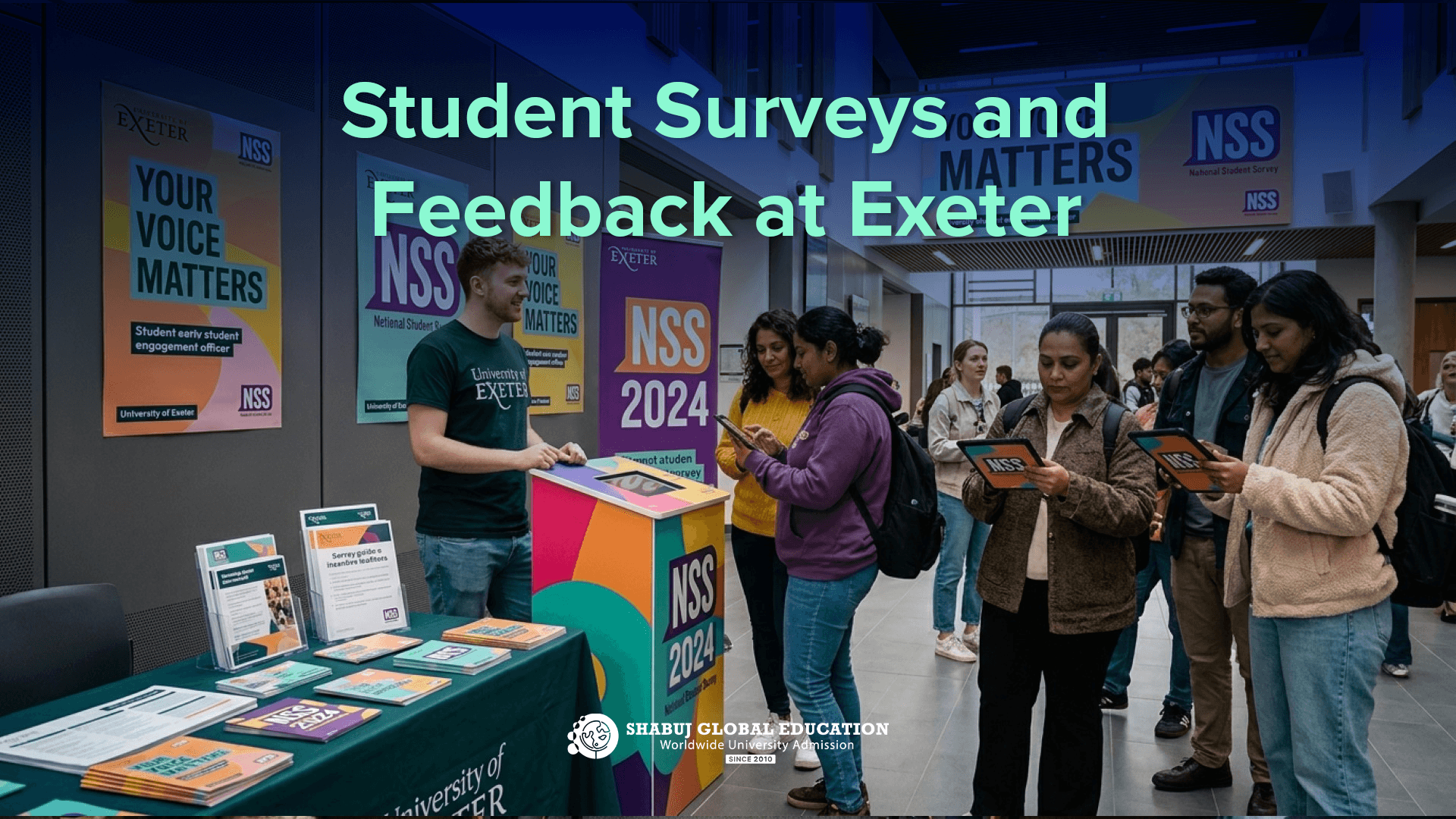
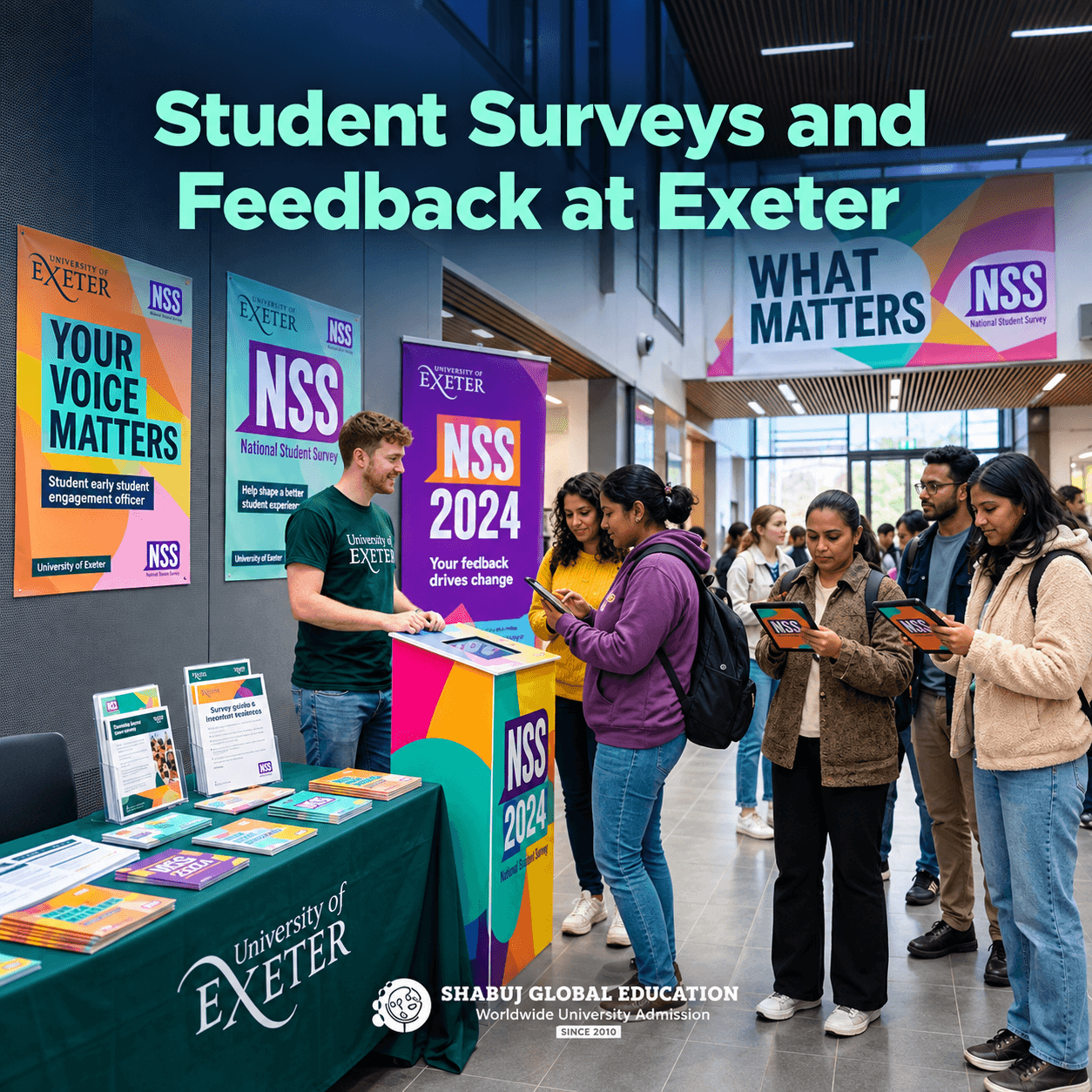
The National Student Survey (NSS) is an annual survey for final-year undergraduates across the UK. At Exeter, the 2026 survey asked eligible students to reflect on their experience of studying at the University. It is voluntary and administered by Ipsos.
The NSS covers several parts of university life. Questions include areas such as teaching, learning opportunities, assessment and feedback, academic support, learning resources and course organisation.
It also includes questions about whether students have opportunities to give feedback and whether they feel their opinions are valued and acted upon.
For final-year undergraduate students, this makes the NSS an opportunity to look back across their university experience rather than commenting only on one recent class or module.
Postgraduate Taught Experience Survey
The Postgraduate Taught Experience Survey (PTES) is designed for postgraduate taught students.
Exeter describes PTES as a nationally recognised annual survey that asks postgraduate taught students about their course and overall learning experience. The 2026 survey was voluntary and administered by Advance HE.
Questions can cover teaching quality, assessment, workload, learning resources, support, skills development, career preparation and the overall quality of the course.
The 2026 PTES was open from 23 February to 12 June 2026 at Exeter. Eligible students received a unique survey link through their University email.
The timing will not necessarily be the same every year, so students should check the University's latest information when their survey period approaches.
Postgraduate Research Experience Survey
Postgraduate researchers have a separate feedback route through the Postgraduate Research Experience Survey (PRES).
The University explains that PRES is a national survey for postgraduate research students. It asks about areas including supervision, resources, research culture, progress and assessment, support, research skills and professional development.
At Exeter, postgraduate research students are invited by the Doctoral College and receive a unique survey link. The University says responses are kept confidential and identifying information is removed before results are shared.
This makes PRES particularly relevant to students whose experience is centred around research rather than a taught postgraduate programme.
When Might You Be Asked for Feedback?
There is no single point in university when every student completes every survey.
Instead, opportunities can appear at different stages depending on your course and level of study.
For example:
During a module: You may encounter module-level evaluation opportunities.
During a postgraduate taught course: You may be invited to complete PTES.
During postgraduate research: You may receive a PRES invitation.
Near the end of an undergraduate degree: Eligible final-year students may be invited to complete the NSS.
At other points: The University may provide additional feedback opportunities relating to specific areas or services.
The University also publishes student communication resources for Module Evaluation Surveys, showing that feedback can take place at a more local course or module level rather than only through large national surveys.
Because survey dates and eligibility can change, students should rely on the current University communication for the relevant academic year.
How Exeter Uses Survey Results
Completing a survey is only one part of the feedback process. The next question is what happens to the information collected.
Exeter states that survey results are used at both departmental and wider University levels. For example, the University's 2026 NSS information says departments use feedback and ideas to consider their programmes, while results are also analysed across the University to identify areas such as library and IT services that may need attention.
The PTES information provides a similar picture. Exeter says departments use responses to consider their programmes, while University-level analysis can highlight wider areas of student experience.
The University has also published examples of actions connected with previous survey feedback. These include changes involving teaching spaces, study areas, technology, careers support and student support.
It is important not to assume that every improvement came from one survey alone. Survey results are part of a wider review process.
From Feedback to Improvement
The basic process can be understood like this:
Students share experiences → responses are collected → results are analysed → areas for attention are identified → actions or further reviews may follow.
This is why honest responses matter.
If students only provide positive answers because they think that is expected, the results may not accurately represent their experience. On the other hand, very general negative comments may give staff little information about what needs attention.
Useful feedback is honest, specific and constructive.
Student surveys can help universities understand how students experience teaching, learning, support and other parts of university life. Survey findings can be reviewed alongside other information to identify common experiences and areas that may need further attention.
Resource:Inside Higher Ed - Student Surveys
What Should You Consider Before Completing a Survey?
When you receive a university survey, take a moment to understand what it is asking.
Think about your experience over the period covered by the survey rather than focusing only on your most recent class or interaction.
For example, ask yourself:
What has worked well during my studies?
Were teaching and learning resources useful?
Was the assessment explained clearly?
Did I receive appropriate academic support?
Were university services easy to access?
Were changes to my course communicated clearly?
Is there something that could reasonably be improved?
If the survey allows written comments, use them carefully. A short example can explain your rating more clearly than a general statement.
Be Honest and Constructive
You do not need to give a positive answer simply because you study at Exeter. Equally, you do not need to be negative to make your feedback useful.
The aim is to describe your experience accurately.
For the NSS, Exeter's 2026 guidance also emphasised that students should be able to interpret and answer questions themselves without being directed toward particular responses.
That is important because the value of a survey depends on students being able to give their own views.
Feedback for International Students
International students are part of the wider student community, so their experiences can also provide useful perspectives.
Moving to another country for university can involve different expectations around teaching, communication, academic support, technology and student services. A survey can provide an opportunity to describe these experiences directly.
When completing a questionnaire, international students should not feel that they need to compare their experience with someone else's. Answer based on your own time at Exeter and the questions being asked.
If English is not your first language, take your time to read each question carefully. Where written comments are available, simple and specific English is enough. You do not need to use complicated academic language.
The University also provides different feedback routes for different student groups, so postgraduate taught students and postgraduate researchers should pay attention to the opportunities relevant to their programme.
Where to Find Current Feedback Opportunities
The University's Your Voice page brings together current information about student feedback and links to major survey opportunities, including the NSS and PTES.
The University also publishes current student communications and information about module evaluation surveys. Checking these sources is more reliable than depending on old survey dates or information shared by other students.
For a broader overview of the different ways students can make their views heard, you can also read Student Feedback and Representation at Exeter.
Support for Bangladeshi Students via SGE
For Bangladeshi students preparing to study at Exeter, understanding the university's feedback system is only one part of the journey.
Shabuj Global Education (SGE) can support students from course selection through the application and pre-departure stages.
Our support includes:
Course Guidance: Help choosing a course that fits your academic background and future plans.
Application Support: Assistance with application documents and personal statement preparation.
Visa and Pre-Departure Guidance: Support with preparing for your UK Student Visa journey and moving to the UK.
Ongoing Guidance: Continued support as you begin your studies.
Not sure which UK study option fits your goals? Get a Free Consultation with our UK Education Experts.
Make Your Feedback Count
Student surveys give Exeter a structured way to understand how students experience their courses and university services. Whether you are an undergraduate, postgraduate taught student or postgraduate researcher, the relevant survey can give you an opportunity to share what is working well and where further attention may be needed.
The most useful response is simple: be honest, be specific and answer from your own experience. Your individual response becomes part of a wider picture that can help the University review and understand the student experience.
Ready to start your UK journey? Fill out our form and let's begin your application.
Explore more
Frequently Ask Question



.png&w=256&q=60)