Careers & Job Opportunities
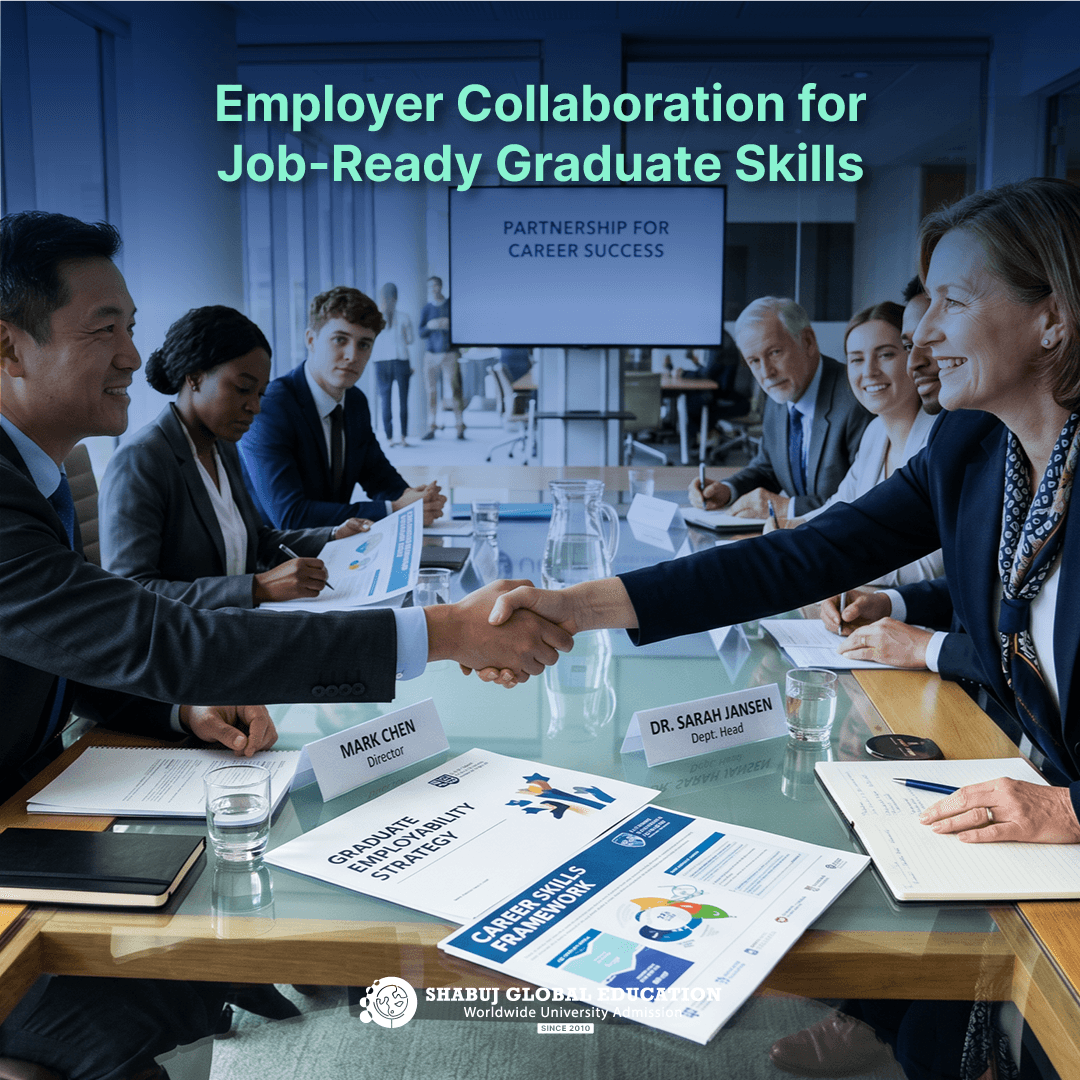
Employer Collaboration for Job-Ready Graduate Skills

2 minutes of reading time
This blog explains how employer collaboration helps students develo...
Summary
This blog explains how employer collaboration helps students develop practical skills through internships, live projects, and career support. It highlights how these opportunities improve job readiness and enhance employability.
A degree alone is no longer enough to guarantee employment. Employers increasingly look for graduates who can contribute from day one with practical skills and an understanding of workplace environments.
This is why employer collaboration has become an important part of modern education, helping connect academic learning with real industry expectations.
Explore the full system:External Industry Expertise in Education for Career Skills
Why Employer Collaboration Matters
Many graduates face challenges when transitioning into employment because their skills do not always align with industry requirements.
Employer collaboration helps address this gap by bringing real workplace expectations into the learning process.
Employers typically look for:
Practical work experience
Communication and teamwork skills
Problem-solving ability
Adaptability in real environments
Basic industry understanding
This ensures students are prepared for actual job roles, not just exams.
Not sure which career path fits you? Get expert UK study guidance today.
Internships and Work Experience
Internships provide structured exposure to professional work environments, allowing students to apply their academic knowledge in practical settings.
They support:
Workplace understanding
Professional confidence
Skill application in real tasks
Career networking opportunities
Students who complete internships are generally more competitive in the job market due to hands-on experience.
With Internship vs Without Internship
Factor | With Internship | Without Internship |
Job readiness | High | Low |
Employer preference | Strong advantage | Weak |
Confidence level | High | Moderate |
Hiring chances | Much higher | Lower |
This comparison clearly shows how employer involvement directly improves job readiness and hiring outcomes.
Live Projects and Applied Learning
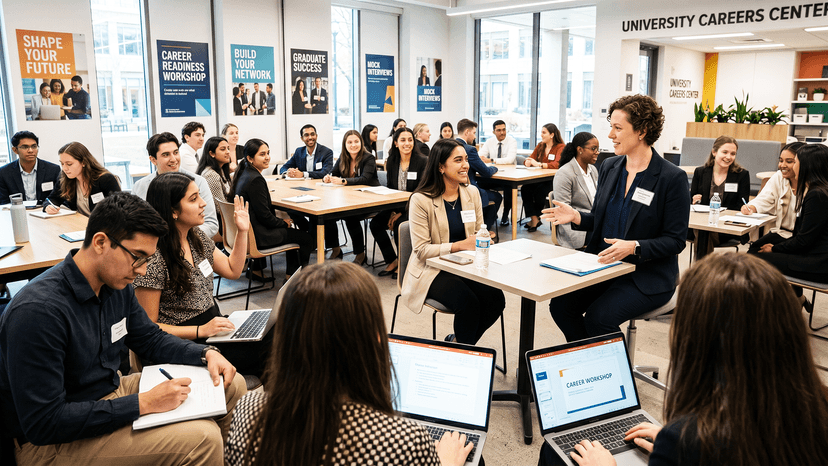
Live projects allow students to work on real business challenges instead of theoretical assignments.
This helps develop:
Critical thinking
Team collaboration
Problem-solving under pressure
Practical decision-making skills
This approach trains students to think like professionals, not just learners.
Understanding Employer Expectations
Employers today focus heavily on practical readiness and soft skills.
Key expectations include:
Professional communication
Time management
Accountability
Team collaboration
Workplace behavior
These skills often matter as much as technical knowledge in hiring decisions.
Research from National Association of Colleges and Employers shows that employers consistently prioritize skills like communication, teamwork, and problem-solving when hiring graduates.
This highlights the growing importance of developing practical and workplace-ready skills during education, not just academic knowledge.
Career Services and Graduate Support
Career services help students prepare for employment by connecting their education with the skills and requirements needed for the job application process.
Support typically includes:
CV and interview preparation
Career guidance and planning
Employer networking opportunities
Job search support
This ensures students are not only educated but also prepared for recruitment processes.
Graduate Employability Outcomes
Students who engage with employers during their studies are more likely to:
Secure jobs faster
Perform better in interviews
Adapt quickly in workplaces
Build long-term careers
This demonstrates the direct impact of employer collaboration on career success.
Bloomsbury Institute: Employer Collaboration
At Bloomsbury Institute London, employer collaboration is integrated into the student learning experience, not treated as an extra feature.
Students benefit from:
Opportunities to engage in internships and work-based learning
Exposure to real business challenges through applied projects
Career-focused academic programs aligned with employer needs
Access to structured career services and employer networking
This approach ensures that students graduate with practical skills, workplace awareness, and the confidence required to enter the job market successfully.
Career-Focused Support for Bangladeshi Students
For students aiming to build strong career outcomes, choosing the right academic path aligned with employer expectations is important.
Shabuj Global Education (SGE), the official exclusive partner of Bloomsbury Institute London, supports students in making informed study decisions that improve long-term employability.
Their support includes:
Guidance on selecting career-focused programs
Help understanding job-relevant course options
Advice on aligning studies with industry demand
Application and admission assistance
Visa and documentation support
This ensures students not only enter university, but also move toward stronger career outcomes after graduation.
Final Thoughts
Employer collaboration is essential for developing job-ready graduates. It helps students gain practical skills, understand employer expectations, and improve their career prospects after graduation.
For students seeking long-term career success, this approach is no longer optional. It has become a necessary part of modern education.
Ready to build a job-ready future? Apply now and start your UK study journey today.
Explore more
Frequently Ask Question

.png&w=256&q=60)