International Student Support | South Asian Student Guides | Study Abroad – UK
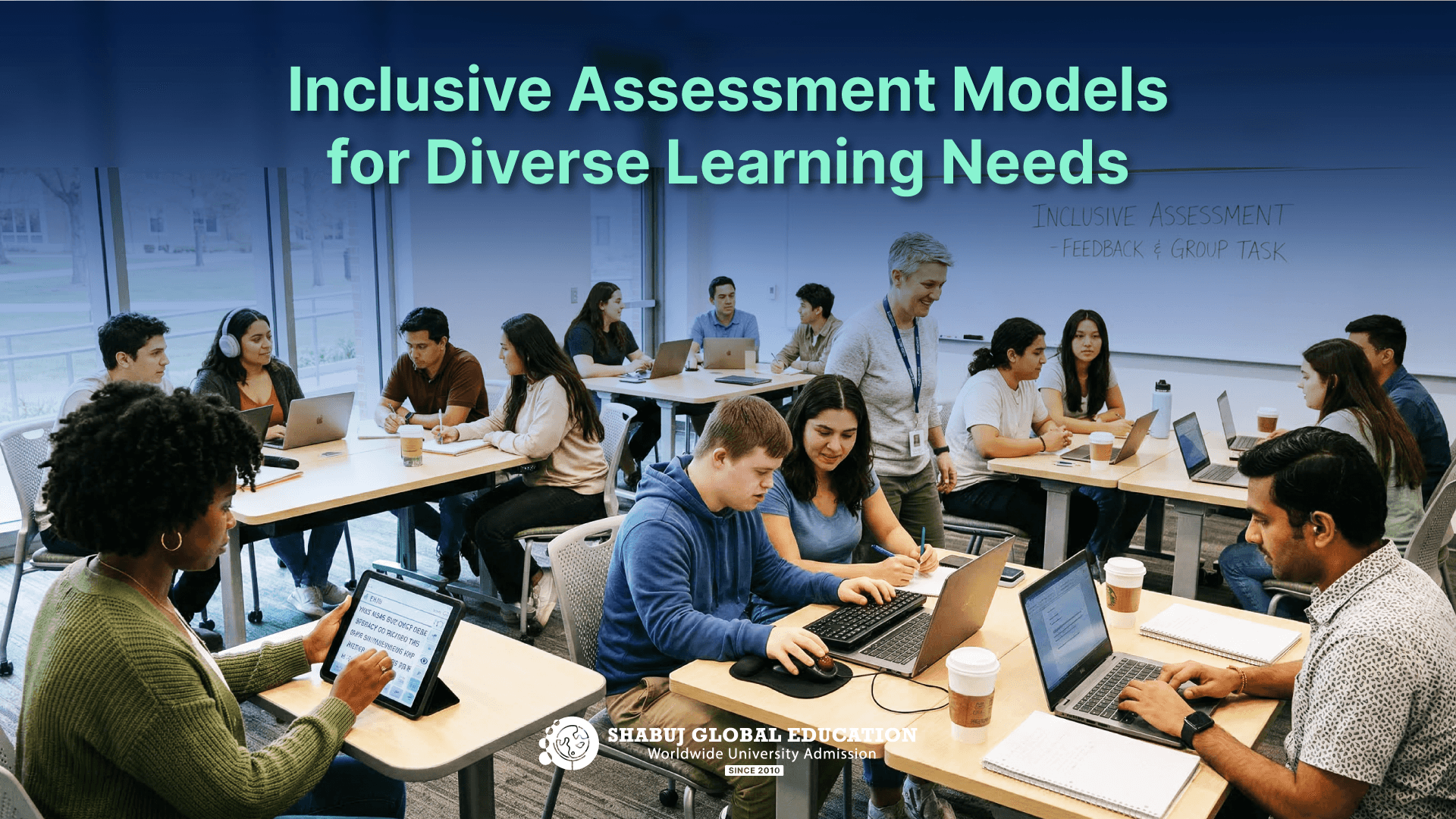
Inclusive Assessment Models for Diverse and International Students
2 minutes of reading time
Inclusive assessment models enable universities to evaluate student...
Summary
Inclusive assessment models enable universities to evaluate students fairly by recognising different learning styles, abilities, and cultural backgrounds. They use flexible formats, accessibility support, and clear expectations to give every learner an equal opportunity to demonstrate knowledge and succeed in higher education.
Universities today serve students from a wide range of cultural, academic, and social backgrounds. Learners also differ in abilities, learning preferences, and communication styles. As a result, traditional assessment methods do not always provide every student with a fair opportunity to demonstrate their knowledge.
Inclusive assessment models aim to solve this challenge by creating fair and accessible evaluation methods for all learners. These models focus on flexibility, accessibility, and transparency so students can demonstrate their knowledge in ways that suit their strengths.
Institutions such as Bloomsbury Institute London integrate inclusive assessment principles within their academic frameworks to ensure that all students can succeed regardless of background or learning needs.
Why Inclusive Assessment Matters
Assessment should measure what students have learned, not how well they adapt to one specific testing format.
Inclusive assessment helps universities ensure:
Fair evaluation for students with different abilities
Equal learning opportunities for diverse groups
Recognition of multiple ways to demonstrate knowledge
Reduced barriers for international students
Without inclusive assessment approaches, some students may struggle simply because the evaluation method does not match their learning style or background.
Teaching specialists at Faculty Focus highlight that effective assessments should give all learners an equal opportunity to demonstrate their understanding and achieve success.
Key Inclusive Assessment Models
Universities use a range of inclusive assessment models to support diverse learners. Each model focuses on fairness, flexibility, and accessibility.
Inclusive Model | Purpose | Benefit for Students |
Flexible Assessment Model | Allows different submission formats | Students demonstrate strengths in preferred formats |
Accessible Assessment Model | Integrates assistive technologies and accommodations | Supports students with disabilities or learning differences |
Culturally Responsive Assessment | Considers diverse backgrounds and experiences | Reduces cultural bias in evaluation |
Transparent Assessment Model | Uses clear instructions and grading rubrics | Helps students understand expectations |
These models help institutions create a fair academic environment where students can succeed based on their knowledge rather than their circumstances.
Flexible Assessment Models
A flexible assessment model allows students to demonstrate learning through different formats instead of a single method.
For example, universities may allow:
written essays
oral presentations
research projects
practical demonstrations
This flexibility enables students to express their knowledge in ways that match their strengths while still meeting academic standards.
Flexible assessments also encourage creativity, critical thinking, and problem-solving skills.
Accessible Assessment Models
Accessibility is a key component of inclusive education.
Accessible assessment models ensure that students with disabilities or learning differences can fully participate in evaluation processes.
Common accessibility measures include:
screen readers and assistive technology
speech-to-text tools
extended exam time
alternative assessment formats
Institutions like Bloomsbury Institute London incorporate accessibility considerations within their academic support systems to ensure fair participation for all learners.
Culturally Responsive Assessment
Students at international universities often come from a wide range of educational systems and cultural contexts.
A culturally responsive assessment model ensures that evaluation tasks consider this diversity.
Benefits of culturally responsive assessment include:
reducing cultural bias in exam questions
avoiding unfamiliar references that may confuse learners
encouraging global perspectives in assignments
When students see their backgrounds respected in learning environments, engagement and confidence increase significantly.
Transparent Assessment Models
Many students struggle with assignments simply because instructions are unclear.
A transparent assessment model focuses on clarity and guidance so that every student understands exactly what is expected.
Key elements include:
clear assignment descriptions
simple and direct language
grading rubrics explaining evaluation criteria
examples of high-quality work
Clear expectations help students focus on learning rather than trying to interpret complicated instructions.
Supporting International Students
International learners often face challenges when adapting to unfamiliar academic systems.
These challenges may include:
new assessment styles
language barriers
different expectations for academic writing
Inclusive assessment models help international students succeed by providing clear guidance, flexible evaluation formats, and fair opportunities to demonstrate knowledge.
Many universities also conduct structured entry evaluations such as Admissions Assessments That Identify Your True Potential to understand students’ strengths and offer appropriate academic support.
How Shabuj Global Education Supports Students
Understanding assessment expectations in UK universities can be difficult for international students.
Guidance from Shabuj Global Education helps students prepare for these academic systems before they begin their studies.
SGE supports students by helping them:
understand how inclusive assessment works in UK universities
interpret grading criteria and coursework expectations
prepare for different assessment formats
develop academic confidence and communication skills
With proper preparation, students can adapt quickly and perform successfully in their academic programs.
Start Your UK Study Journey with Confidence
Inclusive assessment models ensure that every learner has the opportunity to demonstrate their knowledge and succeed in higher education.
If you are planning to study in the UK and need guidance on understanding university assessment systems, Shabuj Global Education can support you throughout the process.
Book your free consultation today and take the next step toward achieving your academic goals.
Explore more
Frequently Ask Question