International Student Support | South Asian Student Guides
Faculty Expertise and Quality Assurance in Student Evaluation
2 minutes of reading time

UK September 2026 & January 2027 Intake is Now Open! Apply to 79+ Top Universities.
International Student Support | South Asian Student Guides
2 minutes of reading time
Summary
This blog explains how faculty expertise, external examiners, moderation processes, and clear assessment criteria work together to ensure fair, consistent, and reliable student evaluation in higher education.
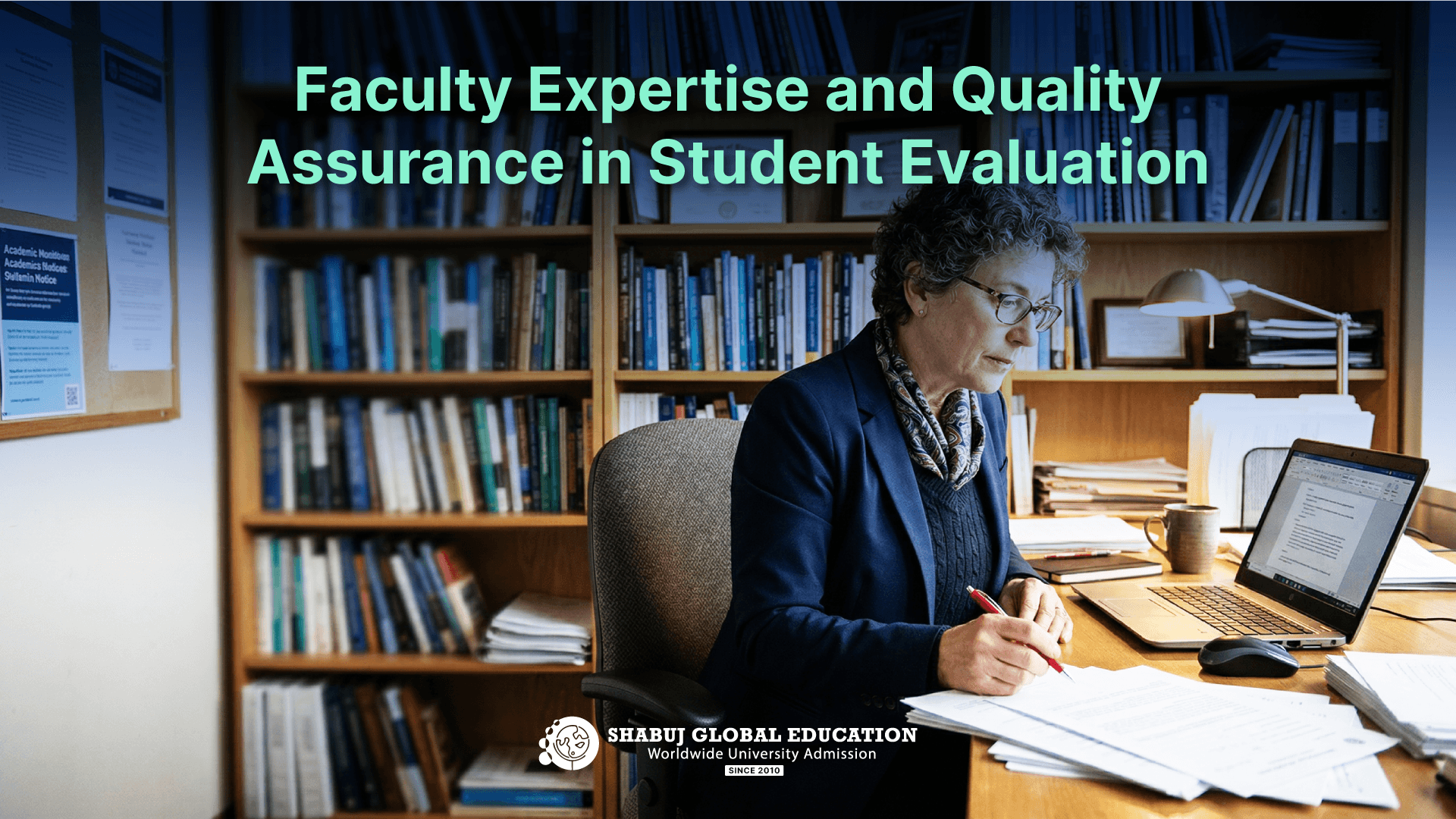
Faculty expertise is essential for reliable student evaluation. Even well-designed assessments may not accurately measure learning without instructors who understand academic standards, assessment design, and quality assurance processes. At Bloomsbury Institute London, faculty expertise and quality systems work together to ensure fairness, consistency, and strong academic standards across all degree programmes.
This article explains how faculty training, moderation, clear assessment criteria, and quality checks contribute to effective evaluation. A table outlines key practices and their benefits for students.
When instructors and assessment staff are skilled and well‑trained:
Students are evaluated fairly and consistently
Feedback is useful and aligned to learning outcomes
Academic standards remain comparable across cohorts and over time
Without expertise and oversight, grading can be inconsistent or biased, which undermines student trust and the value of academic qualifications.
Consistent academic evaluation is particularly important in professional degrees such as LLB Law Courses That Shape Future Legal Professionals, where strict academic standards and fair assessment are critical.
Practice | Purpose | Benefit for Students |
Assessment Staff Training | Ensure staff understand procedures, standards and quality requirements | Consistent and informed evaluation across courses |
External Examiner Review | Independent review of assessment tasks and standards | Ensures fairness, comparability and academic integrity |
Clear Criteria and Documentation | Provide transparent expectations for assessment and marking | Students know how their work is judged |
Moderation and Verification | Cross‑check grades across markers | Reduces bias and supports reliable results |
These core practices are part of the institute’s quality assurance to make evaluation transparent, reliable and aligned to national standards.
At Bloomsbury Institute, assessment activities are supported by trained staff who understand the purpose, standards, and quality requirements of assessment design. Assessment roles within the institute’s Registry division include staff trained in relevant policy areas such as equality, diversity and inclusivity, which supports fairness in evaluation.
Staff training helps ensure that instructors:
Know how to assess learning outcomes in line with national qualifications frameworks
Apply marking criteria fairly and consistently
Provide feedback that supports improvement
This foundation of competence strengthens the reliability of student evaluation.
Quality assurance at Bloomsbury Institute includes the use of external examiners, who are independent academic experts appointed to review assessment processes and standards. These examiners:
Approve draft assessments and review internal marking standards
Compare the institute’s student achievement and assessment quality to other UK higher education providers
Report annually on fairness and quality of assessment processes
Their reports and any recommended actions are considered at institutional quality committees, ensuring that grading and assessment practices remain fair and aligned to sector expectations.
Grades are cross-checked across markers to reduce bias and improve reliability. Moderation processes bring multiple faculty members together to review work and ensure consistent application of standards. These practices help ensure that student performance is evaluated fairly and consistently.
According to Psico-smart, structured evaluation criteria, multi-rater feedback, and ongoing monitoring help ensure fairness, reduce bias, and improve learning outcomes.
Faculty expertise is especially important for students from diverse educational, language, and cultural backgrounds. Skilled instructors adapt communication and assessment methods to ensure students are evaluated based on their achievement of course outcomes, not on misunderstandings or unfamiliar academic conventions. Through careful assessment design and evaluation, Bloomsbury Institute ensures every student has a fair opportunity to demonstrate their strengths.
Understanding assessment standards and evaluation practices is crucial when preparing to study abroad. Shabuj Global Education (SGE) helps students who plan to study in the UK by offering support in these areas:
Guidance on how UK faculties evaluate student work
Tips for interpreting assessment criteria and expectations
Advice on preparing for varied assessment formats
Help with academic skill development before departure
SGE’s support prepares students not just for entry into UK universities but for thriving in academic environments where fair and rigorous evaluation is expected.
Take the first step toward academic success in the UK.
Book Your Free Consultation with Shabuj Global Education Today.
Explore more
Frequently Ask Question