Accommodation | Study Abroad – UK
Private Student Accommodation in Reading: What to Know
2 minutes of reading time
This guide covers private student accommodation options in Reading ...
Summary
This guide covers private student accommodation options in Reading near the University of Reading. Learn about purpose-built student residences (PBSA), private studios, shared houses, rental costs, utility bills, tenancy agreements, safety tips, and advice for international students navigating UK housing requirements.
Finding the right place to live is an important part of preparing to study in the UK. Private student accommodation in Reading gives students alternatives to university-managed halls, including shared houses, individual rooms and purpose-built student residences.
Understanding the different arrangements, rental costs and tenancy responsibilities can help you make a more informed decision.
1. Understanding Private Student Accommodation in Reading
Private student accommodation refers to housing rented from private landlords, letting agents or specialist student accommodation providers rather than directly from the University of Reading.
Reading has a variety of privately rented properties available to students. These options can suit undergraduates, postgraduate students and international students who want to live independently or share a property with friends.
The University of Reading also recognises private renting as an accommodation option and directs students to Reading Students' Union for housing information and advice.
Private student housing generally includes several arrangements:
Purpose-built student accommodation (PBSA).
Private student apartments.
Individual rooms in shared houses.
Shared flats with other students.
Private studios and self-contained properties.
The facilities, rental terms and services depend on the landlord or accommodation provider.
2. Types of Private Student Housing in Reading
Before choosing a property, it is useful to understand how different types of private student accommodation work.
Purpose-Built Student Accommodation (PBSA)
Purpose-built student accommodation, commonly called PBSA, refers to residential buildings designed specifically for students.
These properties are usually managed by specialist accommodation companies. They may offer furnished bedrooms, shared kitchens, communal areas and other facilities.
Depending on the building, facilities may include:
Shared social and study spaces.
Laundry facilities.
Internet access.
Secure entry systems.
Shared kitchens.
On-site management or maintenance support.
Some PBSA properties offer private en-suite rooms, while others provide self-contained studios.
What to check: Confirm whether the rent includes utility bills, internet access and other services. Facilities and contract arrangements are not identical across providers.
Private Student Studios and Apartments
Private studios and student apartments are suitable for students who prefer more independent living arrangements.
A studio usually combines sleeping, studying and living areas within one private space. It generally includes a private bathroom and kitchen facilities.
A private apartment may offer separate bedrooms, a living area, a kitchen and a bathroom.
These options can provide more privacy than shared accommodation. However, they may also involve higher rental and utility expenses.
Students should check the available furniture, kitchen equipment, internet arrangements and contract length before booking.
Shared Student Accommodation in Reading
Shared student accommodation involves renting a property with other students.
This may include a shared house or flat where each student has a bedroom but shares common areas.
Typical shared spaces include:
Kitchen and dining areas.
Bathrooms.
Living rooms.
Hallways and storage areas.
Students may rent individual bedrooms under separate agreements or sign one joint tenancy with their housemates.
Important: Under a joint tenancy, tenants may share responsibility for the rent and other obligations. Read the agreement carefully before signing.
Renting a Private Room or House
Another option is renting a room directly from a private landlord or through a letting agent.
Students can search for individual rooms in shared properties or rent an entire house with friends.
This arrangement may offer flexibility in choosing housemates and living arrangements. However, students need to check who manages repairs, how bills are divided and what happens if another tenant moves out.
3. Location, Rental Costs and Additional Expenses
Where to Look for Private Accommodation Near the University of Reading
Location is an important consideration when searching for private student housing in Reading.
Students should compare properties based on their distance from the University of Reading's Whiteknights campus and their regular teaching locations.
Rather than choosing a property based only on its advertised distance, consider the actual journey.
Check the following:
Walking distance to campus.
Public transport connections.
Access to supermarkets and essential shops.
Nearby healthcare services.
Availability of suitable routes for travelling in the evening.
Distance from libraries and other university facilities.
The University provides information about living off campus and encourages students to consider their local neighbourhood and available support services.
Private Student Accommodation Costs
The cost of private student accommodation in Reading varies depending on the property, location, room size and facilities.
For example, a private studio may have a different rental cost from an individual bedroom in a shared house.
There is no single rental price that applies to every private property. Students should compare actual offers rather than relying on old online estimates.
Accommodation type | Main cost considerations |
PBSA | Room rent, included facilities and additional services |
Private studio | Rent, utilities and internet if not included |
Shared apartment | Individual rent and shared household expenses |
Shared house | Room rent, household bills and shared costs |
Private room | Rent and any separately charged services |
Rent, Bills and Other Expenses
Some private accommodation providers include bills in the rent, while other landlords require tenants to arrange and pay for them separately.
Before agreeing to a property, check whether the rent includes:
Electricity and gas.
Water.
Internet and Wi-Fi.
Council tax arrangements.
Laundry facilities.
Other building services.
You should also prepare a separate budget for groceries, transport, personal expenses and study materials.
Always calculate the total monthly housing cost, not just the advertised rent.
4. Tenancy Agreements, Safety and Advice for International Students
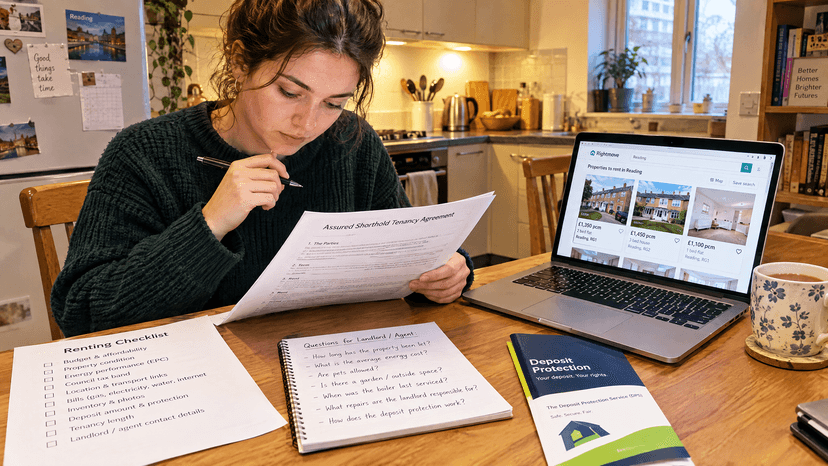
What to Check Before Signing a Tenancy Agreement
A tenancy agreement is a legal contract between the tenant and landlord. It explains the responsibilities of both parties.
Before signing, carefully review:
Rent amount: Confirm the agreed rent and payment dates.
Bills: Understand which household expenses are included.
Tenancy terms: Read the agreement and understand the notice requirements.
Deposit: Check how the deposit will be protected and returned.
Repairs: Understand how to report maintenance problems.
Shared responsibilities: Check how common areas and household expenses are managed.
Property condition: Record existing damage before moving in.
The University of Reading advises students to read all tenancy terms, understand their payment responsibilities and keep copies of signed documents.
Deposit and Payment Considerations
A rental deposit is usually paid to provide security against certain costs or damage covered by the tenancy agreement.
If you pay a tenancy deposit, your landlord must protect it through a government-approved deposit protection scheme and provide the required information within 30 days.
Students should also keep receipts and written records of rental payments.
The Renters' Rights Act introduced important changes to renting in England from 1 May 2026. The University's current private renting guidance explains the changes to tenancy arrangements, rent increases and notice requirements.
Do not rely on an old tenancy template or advice written before these changes. Check the current agreement and seek independent housing advice if something is unclear.
Safety and Property Facilities
Before paying money or signing an agreement, make sure the accommodation is genuine and suitable.
If possible, arrange a viewing in person or request a reliable live video viewing.
Check:
Door and window security.
Smoke alarms and fire safety arrangements.
Heating and hot water.
Kitchen and bathroom conditions.
Signs of damp or existing damage.
Locks and access arrangements.
How to contact the landlord or property manager.
Take photographs when you move in and keep a record of the property's condition.
Be careful if someone pressures you to make an immediate payment, refuses to show the property or asks you to transfer money without proper documentation.
Important Advice for International Students
International students should pay particular attention to rental contracts and payment arrangements before travelling to the UK.
One common challenge is finding a UK-based guarantor. Some private landlords or letting agents may ask students to provide one before agreeing to a tenancy.
The University of Reading explains that students without a UK guarantor may be asked to pay six to twelve months' rent upfront, depending on the landlord's requirements.
The University and Reading Students' Union have also established a partnership with YourGuarantor to provide a guarantor option for eligible students.
Before making a decision, consider these points:
Ask whether an overseas guarantor is accepted.
Check whether a guarantor service is available and what it costs.
Confirm the payment schedule in writing.
Understand the tenancy length and notice requirements.
Avoid paying before verifying the property and landlord.
Make sure the accommodation is available from your intended arrival date.
International students should also consider whether the tenancy covers the full period they expect to stay in Reading.
Advantages and Disadvantages of Private Accommodation
Private housing offers independence, but it also comes with responsibilities.
Advantages | Disadvantages |
More choice of property types | Finding suitable housing takes time |
Opportunity to choose housemates | Shared living may involve disagreements |
Greater choice of locations | Travel costs may vary |
Independent living arrangements | Bills may need separate management |
Different contract and room options | Tenancy agreements require careful attention |
The right choice depends on your budget, preferred lifestyle, study schedule and willingness to manage a private tenancy.
Make an Informed Housing Decision
Choosing private student accommodation in Reading requires more than comparing room photographs and rental prices. Students should understand the property type, location, total expenses, deposit arrangements and tenancy responsibilities before making a commitment.
For a wider overview of housing choices and accommodation planning, read our parent guide: University of Reading Accommodation: Your Housing Guide.
How Shabuj Global Education (SGE) Supports Bangladeshi Students
Preparing to study in the UK involves several important steps beyond choosing accommodation. Shabuj Global Education (SGE) supports Bangladeshi students throughout their study abroad journey.
Our guidance includes:
University and course guidance: Understand suitable study options and entry requirements.
Application assistance: Get support with document preparation and application checks.
UK visa guidance: Understand the student visa application process.
Pre-departure support: Prepare for important arrangements before travelling to the UK.
Planning to study at the University of Reading? Contact Shabuj Global Education for guidance with your UK university application and preparation.
YourGuarantor provides guarantor services for eligible students who cannot provide a UK-based guarantor. Check the service requirements and fees before applying.
Explore more
Frequently Ask Question