Academic Quality Assurance | Study Abroad – UK
Effective Feedback Strategies That Improve Student Engagement

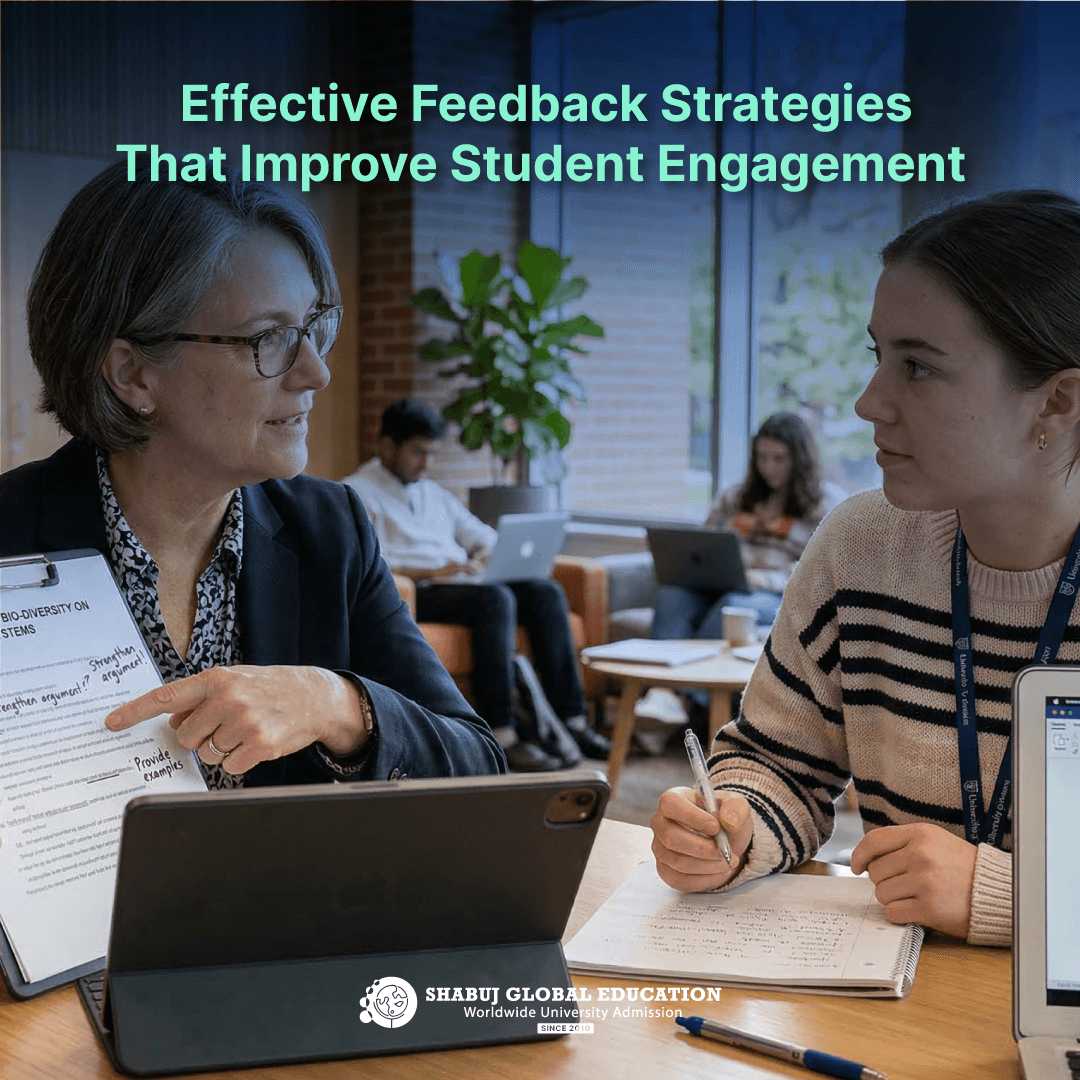
2 minutes of reading time
This blog explains how universities use effective feedback strategi...
Summary
This blog explains how universities use effective feedback strategies to improve student engagement and academic performance. It covers formative feedback, peer review, digital tools, best practices, and institutional support systems that help students understand their progress.
Feedback is one of the most important elements of effective teaching in higher education. When students receive timely, clear, and actionable feedback, they better understand their academic progress and what they need to improve. Research consistently shows that meaningful feedback strengthens motivation, encourages reflection, and supports deeper learning outcomes.
Universities around the world are adopting structured feedback strategies that combine instructor guidance, peer learning, and digital tools. Institutions such as Bloomsbury Institute London implement systematic approaches to ensure feedback is consistent, transparent, and aligned with learning outcomes.
This article explores the key feedback strategies universities use to improve student engagement and support continuous learning.
Why Feedback Is Essential for Student Engagement
Effective feedback helps students understand how their work meets academic expectations and where improvements are needed. Rather than just receiving a grade, students gain insights that guide their learning process.
Well-designed feedback systems support several important goals:
Helping students understand their academic strengths and weaknesses
Encouraging reflection and independent learning
Improving engagement with course materials and assessments
Allowing instructors to identify learning gaps and adjust teaching methods
According to education researcher David Nicol, feedback is most effective when it encourages students to take an active role in evaluating and improving their own work.
Key Feedback Strategies Used in Universities
Universities use multiple feedback approaches to ensure students receive guidance throughout their academic journey. These strategies support continuous improvement rather than focusing only on final grades.
Formative Feedback
Formative feedback is provided during the learning process before final assessments are completed. Its purpose is to help students refine their understanding and improve their work while they still have time to make changes.
Common formative feedback practices include:
Targeted written comments explaining strengths and areas for improvement
Rubric-based guidance aligned with grading criteria
Feedforward suggestions that help students perform better in future assignments
Instructor-student discussions to clarify feedback and expectations
Research by Graham Gibbs shows that formative feedback improves student engagement when it is delivered promptly and clearly linked to assessment criteria.
Peer Feedback

Collaborative feedback sessions allow students to discuss key concepts and review assignments together.
Peer feedback involves students reviewing each other’s work using structured guidelines. This approach encourages collaboration and allows students to learn from different perspectives.
Benefits of peer feedback include:
Promoting critical thinking and analytical skills
Increasing student participation in learning activities
Helping students understand assessment standards more clearly
Encouraging collaborative learning environments
When combined with instructor feedback, peer review creates a more comprehensive learning experience.
Digital Feedback Tools
Technology has made feedback delivery faster and more accessible for both students and instructors. Most universities now use digital platforms to manage assignments and provide feedback.
Examples of digital feedback tools include:
Learning Management Systems (LMS): Platforms where students submit assignments and receive instructor comments
Automated quizzes and assessments: Provide immediate responses that help students check their understanding
Online annotation tools: Allow instructors to highlight specific sections of student work and provide detailed feedback
These systems improve efficiency while ensuring that feedback is documented and easily accessible.
Best Practices for Delivering Effective Feedback
To maximize the impact of feedback on student engagement, universities follow several best practices.
1. Provide Timely Feedback
Feedback should be delivered as soon as possible after an assignment. Quick responses help students connect feedback to their work and apply improvements in future tasks.
2. Make Feedback Specific and Actionable
Students benefit most when feedback clearly explains what was done well and what needs improvement. Specific suggestions provide a clear path for improvement.
3. Align Feedback With Assessment Criteria
Using rubrics and predefined grading standards ensures consistency and transparency across courses.
4. Encourage Reflection
Allowing students to review and discuss feedback encourages deeper learning and helps them develop self-assessment skills.
5. Use Multiple Feedback Formats
Combining written, verbal, and digital feedback ensures that students receive guidance in ways that suit different learning styles.
Effective feedback strategies also support long-term academic success, see our guide on Best Courses For a Career Growth and Academic Success for related pathways.
Feedback Strategies and Their Impact on Engagement
Feedback Strategy | Purpose | Engagement Benefit |
Formative Feedback | Provide guidance during the learning process | Helps students improve before final grading |
Peer Feedback | Encourage collaborative evaluation | Promotes discussion and deeper understanding |
Digital Feedback Tools | Deliver feedback efficiently | Ensures timely and accessible feedback |
Reflection Opportunities | Allow students to review feedback | Encourages critical thinking and self-improvement |
Clear Rubrics | Define grading criteria | Builds transparency and trust in assessment |
Institutional Support for Effective Feedback
Effective feedback systems require coordination between instructors, academic administrators, and support services. Institutions such as Bloomsbury Institute use structured processes to ensure feedback aligns with course outcomes and academic standards.
Clear communication, standardized assessment criteria, and digital feedback platforms help maintain consistency while improving the overall learning experience.
Support for Bangladeshi Students
For many international students, understanding university expectations, academic feedback systems, and submission processes can initially be challenging. Educational consultancies such as Shabuj Global Education provide guidance to help students navigate these systems effectively.
Students can receive support with:
Choosing the right UK universities and programmes
Preparing application documents and meeting submission deadlines
Understanding academic expectations and assessment structures
Adjusting to university learning and feedback processes
Strengthening Student Engagement Through Feedback
Effective feedback is a powerful tool for improving student engagement in higher education. When feedback is timely, clear, and aligned with learning objectives, students gain valuable insights into their progress and build the skills needed for continuous improvement.
By combining formative feedback methods, peer review, and digital feedback platforms, universities can create learning environments that encourage reflection, collaboration, and academic growth. Institutions that prioritize structured feedback strategies ultimately help students achieve stronger learning outcomes and greater academic confidence.
Explore more
Frequently Ask Question



.png&w=256&q=60)