Academic Quality Assurance | Study Abroad – UK
Assessment and Feedback Systems in Higher Education


2 minutes of reading time
This blog explores how assessment and feedback systems operate in h...
Summary
This blog explores how assessment and feedback systems operate in higher education institutions. It discusses grading methods, moderation procedures, digital assessment tools, student performance tracking, and continuous improvement strategies that ensure fairness, transparency, and high academic standards.
Universities use structured assessment and feedback systems to evaluate student performance fairly and consistently. These systems help ensure grading remains transparent, reliable, and aligned with academic standards in higher education. Assessment frameworks guide how assignments, exams, and coursework are marked, while feedback helps students understand their performance and improve future work.
Institutions such as Bloomsbury Institute use digital platforms and moderation processes to maintain consistency in grading and feedback delivery.
For Bangladeshi students applying through Shabuj Global Education, understanding these processes can make academic preparation and documentation smoother.
Contact SGE for guidance on applying to Bloomsbury Institute and completing your pre-CAS process.
Why Assessment Systems Matter
Assessment systems play an essential role in maintaining academic quality in universities. Without structured processes, grading can become inconsistent, feedback may be delayed, and academic administration can become less effective.
Universities focus on several priorities when managing assessments:
Maintaining clear workflows for planning and evaluating assessments
Delivering feedback within established timelines
Standardizing grading practices across departments
Monitoring assessment outcomes to improve quality
At Bloomsbury Institute, structured assessment frameworks help ensure transparency and accountability across courses. These systems also allow administrators to monitor grading practices and maintain consistent academic standards.
Feedback Systems in Universities

One-on-one academic feedback helps students refine their research and understand grading criteria.
Feedback is a key component of the assessment process. Universities use organized feedback systems to ensure students receive clear and timely information about their performance.
Common feedback methods include:
Digital submission platforms that track assignments and grades
Learning management systems (LMS) used for marking and feedback distribution
Online grading tools that support standardized evaluation
Structured review processes before feedback is released
Effective feedback systems allow institutions to maintain accurate records, track response times, and ensure that grading decisions are well documented.
For students, timely feedback helps clarify expectations and provides guidance for improving future academic work.
Assessment Moderation in Higher Education
Moderation is an important step that ensures grading remains fair and consistent across different markers and departments.
Most universities follow a structured moderation process:
Pre-assessment standardization
Faculty members define grading criteria, marking schemes, and expected learning outcomes before assessments begin.
Sample double-marking
Selected assignments are reviewed by another examiner to check for consistency.
Moderation meetings
Academic staff review grading patterns and resolve any discrepancies.
Final mark adjustments
Grades may be updated after moderation to maintain fairness.
Documentation and reporting
Records of moderation decisions are maintained to support quality assurance and accreditation requirements.
Through moderation, universities reduce grading inconsistencies and maintain confidence in academic results.
According to reporting and analysis from Times Higher Education, quality assurance frameworks and structured assessment processes play a critical role in maintaining academic standards, consistency in grading, and institutional accountability within higher education.
Assessment Planning and Scheduling
Effective assessment planning helps universities manage workload, avoid scheduling conflicts, and maintain smooth academic operations.
Typical planning activities include:
Creating assessment schedules before each academic term
Coordinating assignments and examinations across modules
Allocating markers and moderators to balance workloads
Monitoring submissions and grading progress through digital dashboards
For example, a course coordinator at Bloomsbury Institute may create an annual assessment calendar outlining submission deadlines, marking periods, and feedback release dates. These structured timelines help ensure assessments are managed efficiently.
For students preparing to apply to university, understanding the full admission workflow is equally important, see our guide on 5 Easy Steps to Applying and Earning Your Academic Dreams.
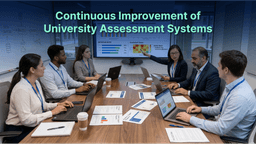
Continuous Improvement of Assessment Systems
Universities regularly review assessment and feedback systems to ensure they remain effective, consistent, and aligned with academic standards.
Continuous improvement usually involves several processes:
Data monitoring
Institutions track metrics such as feedback turnaround time and grading consistency.
Performance analysis
Assessment data is analyzed to identify delays or inefficiencies.
Policy updates
Universities revise assessment guidelines, moderation procedures, or digital tools when improvements are needed.
Staff training
Faculty members receive training to follow updated grading and feedback procedures.
These ongoing reviews allow universities to maintain reliable evaluation systems while improving efficiency.
Key Indicators Used to Monitor Assessment Systems
Indicator | Purpose |
Feedback turnaround time | Measures how quickly feedback is delivered to students |
Moderation consistency | Evaluates reliability of grading across markers |
Submission compliance rate | Tracks whether deadlines and procedures are followed |
Staff workload metrics | Helps balance marking responsibilities |
Tracking these indicators allows institutions to identify operational challenges and improve assessment processes.
Best Practices for University Assessment Systems

Digital assessment tools allow students to submit work and track their academic progress efficiently.
Universities can strengthen their assessment frameworks by adopting several best practices.
Standardized processes
Clear assessment guidelines and grading procedures help ensure consistency across departments.
Use of digital tools
Centralized platforms allow institutions to manage submissions, marking, and feedback more efficiently.
Performance monitoring
Regular tracking of feedback timelines and moderation outcomes helps identify improvement areas.
Regular review cycles
Periodic audits of assessment processes support continuous quality improvement.
These practices help universities maintain transparent grading systems while ensuring students receive reliable and timely feedback.
Final Thoughts
Assessment and feedback systems play a vital role in maintaining academic quality in higher education. Through structured grading frameworks, moderation processes, and digital feedback platforms, universities ensure student performance is assessed fairly and consistently.
Institutions such as Bloomsbury Institute rely on these systems to maintain transparency and academic standards across their programs. For international students working with Shabuj Global Education, understanding these processes can support smoother academic participation and compliance with university requirements.
Explore more
Frequently Ask Question