Academic Quality Assurance | Study Abroad – UK
Continuous Improvement of University Assessment Systems
2 minutes of reading time
This blog explains how universities continuously improve their asse...
Summary
This blog explains how universities continuously improve their assessment systems to maintain fairness, consistency, and transparency. It covers data-driven reviews, improvement cycles, monitoring tools, quality assurance standards, and structured strategies that strengthen grading and feedback processes.
Universities must continuously evaluate and refine their assessment systems to ensure fairness, consistency, and alignment with academic standards. Continuous improvement of assessment helps institutions monitor performance, identify gaps, and enhance grading and feedback processes in a structured, evidence-based way.
When assessment systems are regularly reviewed, universities strengthen transparency, improve operational efficiency, and maintain confidence in academic outcomes. Institutions such as Bloomsbury Institute London embed continuous improvement practices within their quality assurance workflows to support reliable evaluation across programmes.
Why Continuous Improvement Matters
Assessment systems cannot remain static. Teaching methods, student needs, and regulatory expectations evolve over time. Regular review ensures evaluation processes remain effective and aligned with learning outcomes.
Continuous improvement enables universities to:
Maintain consistent grading standards across modules
Detect inconsistencies in marking or feedback
Improve workflow efficiency and resource allocation
Strengthen accountability and transparency
Enhance student learning experiences
For a deeper understanding of how structured evaluation processes support academic quality, see our related article on Assessment Moderation in Higher Education for Fair Grading, which explains how moderation contributes to consistent and reliable grading practices.
Reviewing Assessment Performance and Feedback Data
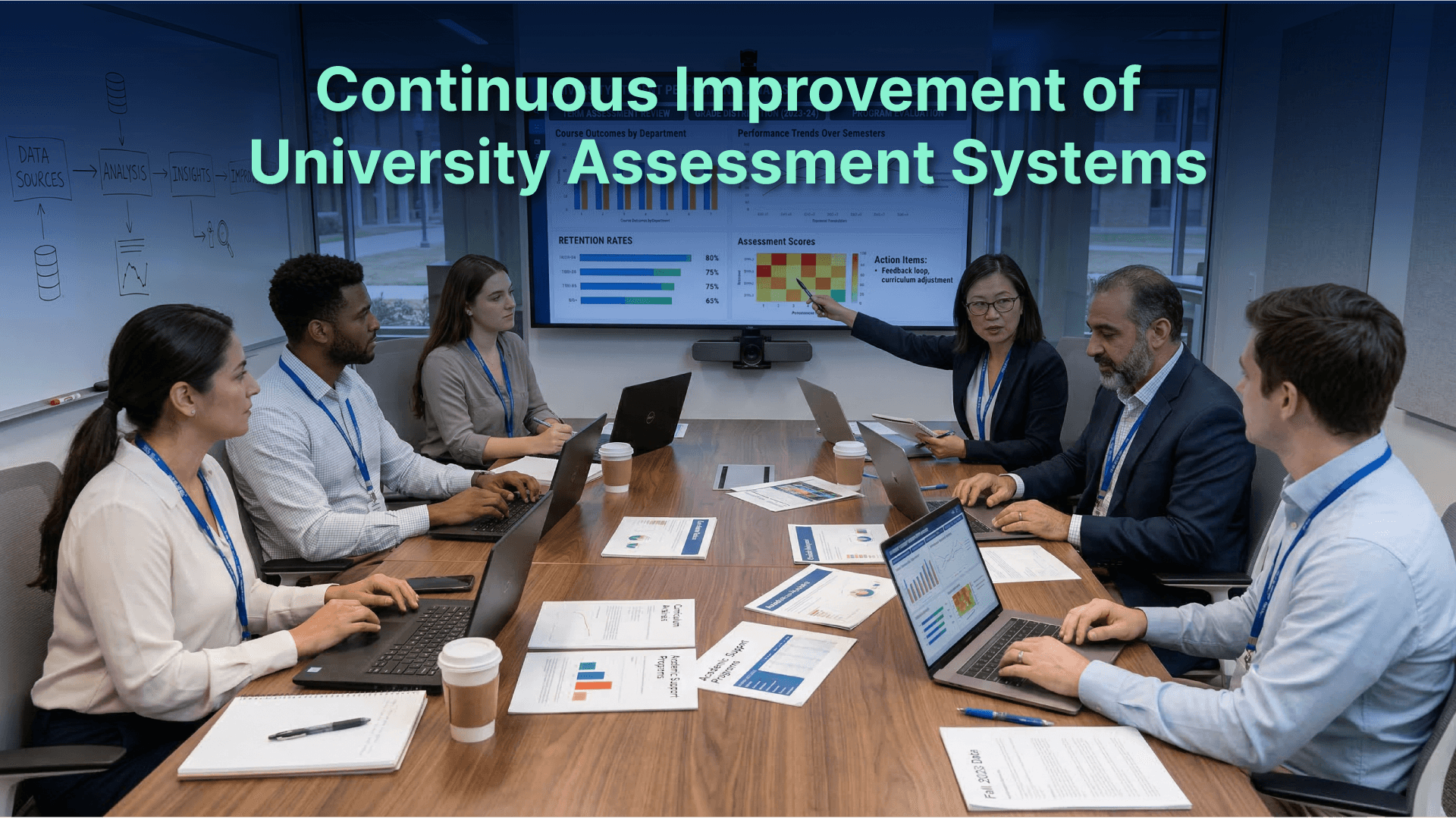
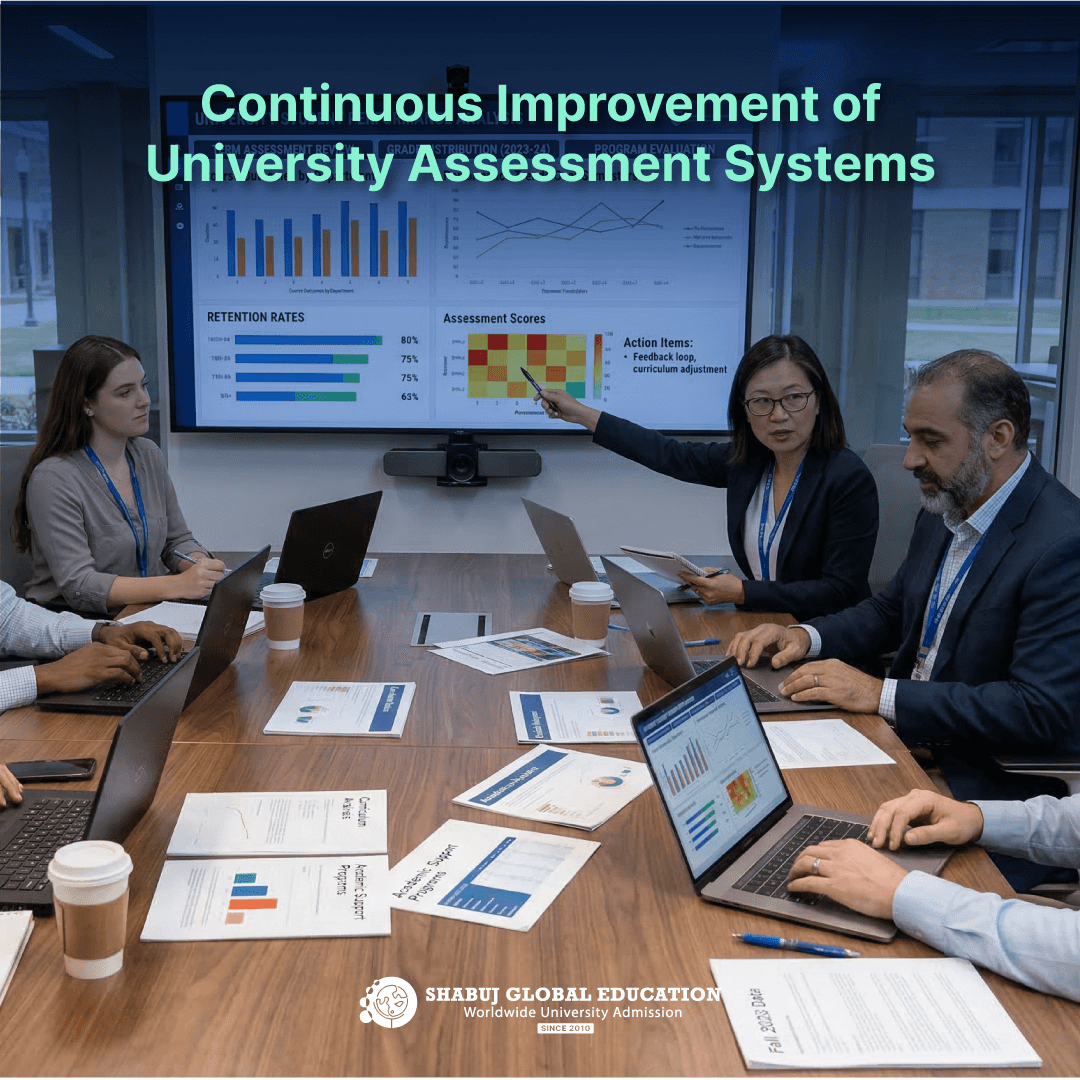
Data-driven evaluation is central to continuous improvement. Universities collect and analyze information from multiple sources to guide decisions.
Key data sources include:
Grade distributions and performance trends
Student feedback on clarity and assessment design
Staff reflections on marking consistency
Moderation reports and internal reviews
Analyzing this information helps institutions identify patterns, address inconsistencies, and refine assessment strategies. Evidence-based decision-making ensures that improvements are measurable and sustainable.
Institutional Improvement Cycles
Continuous improvement is often structured through formal review cycles that integrate assessment processes into broader quality frameworks.
A typical cycle includes:
Planning- Define objectives, indicators, and evaluation criteria
Implementation- Deliver assessments and gather performance data
Evaluation- Analyze results and review feedback
Enhancement- Update procedures, standards, and workflows
Embedding this cycle into institutional operations ensures that assessment systems are regularly reviewed and systematically improved.
Tools for Monitoring Assessment Systems
Modern universities rely on operational tools to support continuous assessment improvement.
Common strategies include:
Performance dashboards for real-time monitoring
Standardized moderation protocols
Feedback management systems
Regular staff training on assessment policies
Quality assurance audits
These tools strengthen feedback system improvements and help implement structured strategies for assessment quality enhancement. When combined with internal moderation processes, they create a reliable and transparent evaluation environment.
Institutional Standards and External Guidance
Continuous improvement frameworks are often aligned with national quality assurance standards to ensure academic credibility.
For example, the European Association for Quality Assurance in Higher Education (ENQA) provides guidance on quality assurance frameworks, institutional review processes, and continuous improvement practices in higher education.
Aligning institutional processes with recognized quality frameworks strengthens consistency, transparency, and accountability.
Recommendations for Effective Continuous Improvement
To maintain strong university assessment systems, institutions should:
Conduct regular assessment reviews using measurable indicators
Analyze grading trends and student feedback systematically
Integrate improvement cycles into operational workflows
Use digital tools to track performance efficiently
Provide ongoing staff training on assessment standards
These practices ensure that assessment frameworks remain fair, efficient, and aligned with learning outcomes.
Support for International Students
Understanding assessment systems, moderation workflows, and institutional improvement processes can be challenging for international students.
Shabuj Global Education (SGE) provides structured guidance to help Bangladeshi students prepare for studying in the UK. Support includes:
University and programme selection
Application document preparation
Admission guidance
Pre-CAS interview preparation
Visa application assistance
If you are planning to study at Bloomsbury Institute London, contact Shabuj Global Education today to receive step-by-step support from application to enrollment. Early guidance ensures you are fully prepared to engage confidently with university assessment systems from the beginning of your academic journey.
Explore more
Frequently Ask Question



.png&w=256&q=60)