Courses & Degrees | Study Abroad – UK
Faculty of Health and Life Sciences at Exeter University
2 minutes of reading time
Explore the Faculty of Health and Life Sciences at the University o...
Summary
Explore the Faculty of Health and Life Sciences at the University of Exeter. Learn about its departments, medical and healthcare programmes, research strengths, NHS partnerships, and graduate career opportunities.
Apply for a UK Scholarship with Expert Guidance – Contact Us Today
Thinking about a future in medicine, healthcare, or biosciences? The Faculty of Health and Life Sciences at Exeter brings together six departments dedicated to transforming human health, from world-leading research to hands-on NHS clinical placements. Here's everything you need to know.
Faculty Overview

The Faculty of Health and Life Sciences focuses on improving human health and wellbeing through education, research, and collaboration. Its interdisciplinary approach brings together health, climate, and social research, while partnerships with healthcare providers, industry, and the wider public help connect research with real-world needs.
The faculty's education programmes are designed to develop the science and healthcare leaders of the future, critical thinkers and problem-solvers who are socially accountable and committed to serving patients and the wider public. Founded in 2010, the faculty has grown into one of Exeter's most research-intensive areas, drawing together clinicians, scientists, and educators under a shared commitment to public health impact.
Medical and Life Science Departments
This faculty is made up of six departments, three of which together form the University of Exeter Medical School (UEMS):
Department | Focus Area |
Biosciences | Genes, molecules, cells, and biological research |
Psychology | Neuroscience, mental health, and behavioural science |
Health and Care Professions | Nursing, medical imaging, and pharmacy-related training |
Clinical and Biomedical Sciences (UEMS) | Core medical and biomedical education |
Health and Community Sciences (UEMS) | Community-based healthcare and services |
Public Health and Sport Sciences (UEMS) | Public health, sports, and rehabilitation science |
The faculty is based across multiple sites, primarily at St Luke's Campus, alongside the Geoffrey Pope and Washington Singer buildings for Biosciences and Psychology, giving students access to specialised teaching spaces and laboratories suited to each discipline.
Healthcare and Biomedical Programmes
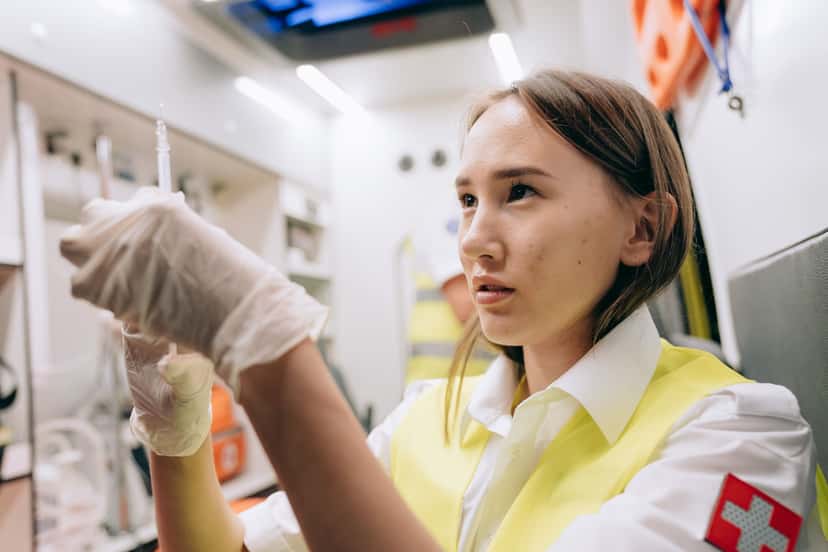
Students in this faculty can choose from a wide range of programmes, including:
BMBS Medicine, a five-year Bachelor of Medicine, Bachelor of Surgery degree built around Exeter's NHS partnership in Devon and Cornwall.
Biosciences degrees, covering genetics, microbiology, and molecular biology.
Psychology degrees, exploring mental health, cognition, and behaviour.
Nursing, medical imaging, and pharmacy-related courses, delivered through Health and Care Professions.
Public health and sports science programmes, connecting research to real community health outcomes.
The BMBS Medicine programme provides students with early clinical experience, including patient contact from the first year. Case-based learning helps students connect scientific knowledge with real clinical situations. From the third year, students follow structured clinical pathways with increasing time spent on hospital and community placements across Devon and Cornwall. The final year focuses mainly on supervised clinical practice, helping students develop their practical skills and prepare for professional healthcare settings.
Not sure which scholarship fits you? Get a Free Consultation with our UK Education Experts.
Research Facilities and Strengths

Research in the faculty covers a wide range of areas, including food and nutrition, infectious and lifelong diseases, neuroscience and mental health, sports and rehabilitation, and the relationship between environment, climate, and health.
Faculty researchers are closely linked to the Living Systems Institute (LSI), which pioneers interdisciplinary science aimed at understanding the individual and collective properties of cells, the basic units of life. According to the Complete University Guide, the faculty ranks strongly nationally, including 7th in the UK for Sports Science and 8th for Psychology.
Students also benefit from access to the Research, Innovation, Learning and Development (RILD) facility, a dedicated space supporting cutting-edge medical and biomedical research training, giving students direct exposure to translational research alongside their taught modules.
Clinical Partnerships With the NHS
A defining feature of this faculty is its close working relationship with the NHS. The University of Exeter Medical School partners with NHS Trusts across Devon and Cornwall, including the Royal Devon University Healthcare NHS Foundation Trust, to deliver medical education and clinical training.
These partnerships support:
Clinical placements across hospitals, GP practices, and community settings throughout the South West.
The NIHR Exeter Biomedical Research Centre, hosted by the Royal Devon Trust in partnership with the university.
Continued professional development (CPD) programmes that build skills across the regional healthcare workforce.
Research funding from major bodies including the National Institute for Health Research (NIHR) and the Medical Research Council.
This connection to real clinical environments means students gain genuine hands-on experience well before graduation, not just classroom theory, preparing them for the realities of working within an integrated healthcare system.
Graduate Careers
Graduates from this faculty move into a wide range of healthcare and science-related careers, including:
Doctors and clinicians, following the five-year BMBS pathway and postgraduate specialisation.
Researchers and scientists, working in biomedical, genetic, or public health research.
Psychologists and mental health professionals, supporting individuals and communities.
Allied health professionals, including nurses and those in medical imaging or pharmacy-related roles.
Public health and sports science specialists, working across policy, community health, and performance science.
With strong NHS ties and a research-led teaching approach, graduates leave well prepared for both clinical practice and further academic study, whether their path leads to a hospital ward, a research lab, or a community health setting.
For a broader look at UK medical school entry requirements and comparisons,MedicalSchoolUK.com offers a general overview of medical programmes across different universities, useful as a quick reference alongside Exeter's own course pages.
How We Support Bangladeshi Students at SGE
At Shabuj Global Education (SGE), we're your trusted partner for studying in the UK, and we're here to guide you through every step of your Exeter journey:
Expert Guidance: We help you choose the right course aligned with your goals and entry requirements.
Application Made Easy: From document checks to personal statement review, we make sure your application stands out.
Visa & Pre-Departure Help: We give you step-by-step support for your UK student visa and help you prepare confidently for departure.
Ongoing Support: Even after enrollment, we continue to guide you toward academic and career success.
With SGE by your side, Bangladeshi students interested in medicine, biosciences, or psychology get expert guidance matching their goals to the right department, along with a smooth, fully guided admission process.
Explore More Academic Faculties
The Faculty of Health and Life Sciences is one of the University of Exeter's three academic faculties. To explore the other faculties, departments, and subject areas, read our Exeter University Faculties and Departments Guide and compare the programmes available across the university.
Final Thoughts
The Faculty of Health and Life Sciences combines research-led teaching with clinical partnerships and a focus on improving human health. Whether you are interested in medicine, psychology, or biosciences, the faculty offers opportunities to develop subject knowledge alongside practical experience and skills relevant to healthcare and science careers.
Ready to start your UK journey? Fill out our form and let's begin your application.
Explore more
Frequently Ask Question



.png&w=256&q=60)