Academic Quality Assurance | Study Abroad – UK
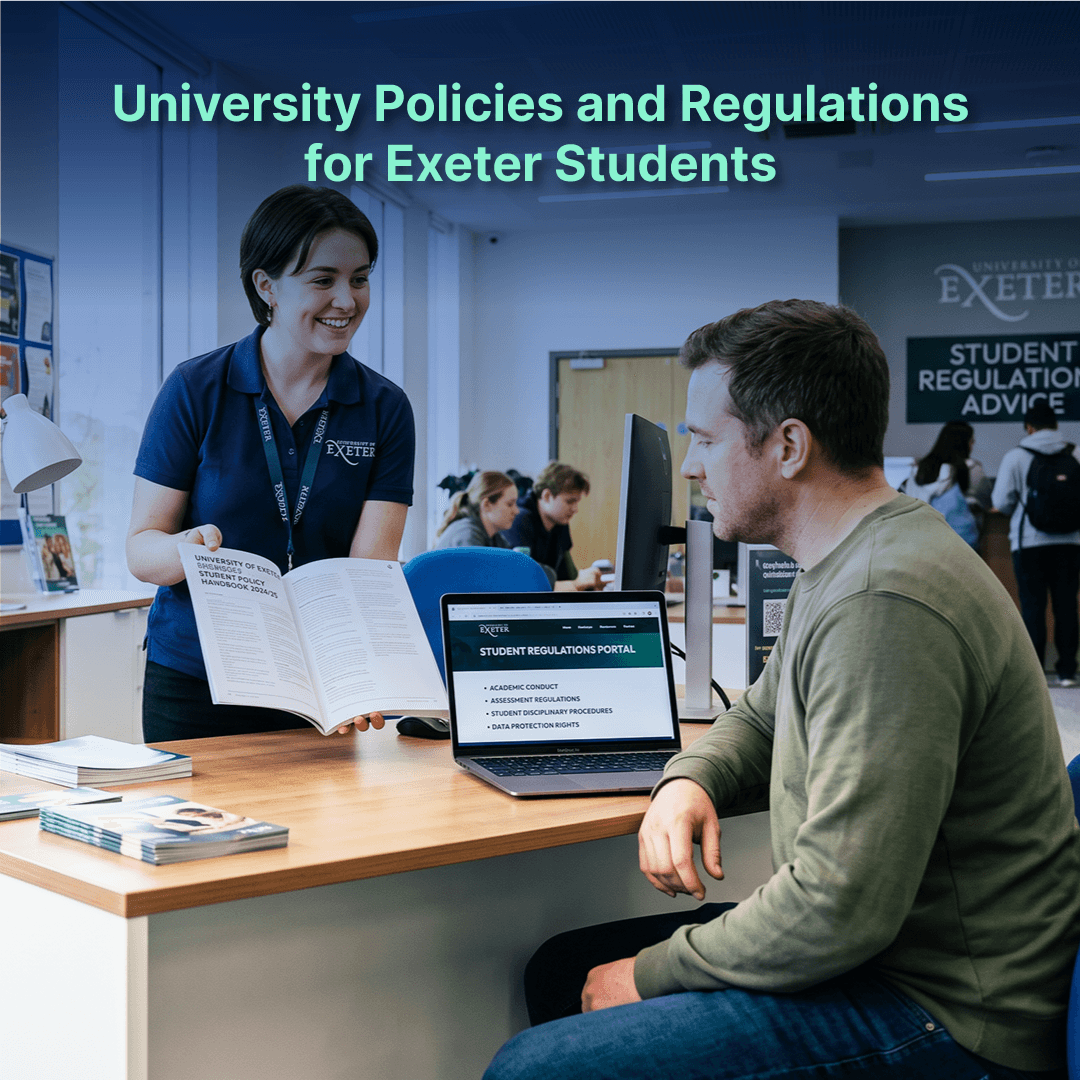
University Policies and Regulations for Exeter Students
.png&w=3840&q=60)
2 minutes of reading time
Learn about student regulations covering academic conduct, assessme...
Summary
Learn about student regulations covering academic conduct, assessments, attendance, complaints, appeals, and other important university responsibilities.
Apply for a UK Scholarship with Expert Guidance – Contact Us Today
Starting university is about more than attending classes and completing assignments. Students also need to understand the rules that apply to their studies, conduct, assessments and attendance.
This guide explains the University Policies and Regulations for Exeter Students in a simple way, so you know what is expected during your time at the University of Exeter.
Understanding University Policies and Regulations

University regulations provide a framework for student life and academic study. At the University of Exeter, students are required to follow general regulations as a condition of registration. These cover areas such as attendance, registration, general conduct, academic conduct, academic progress, fees and other student responsibilities.
The rules are not designed simply to create restrictions. They help students understand what is expected of them and provide clear processes when problems arise.
University regulations are formally established through the University's governance arrangements, but students do not need to understand the governance structure to follow them. What matters most is knowing the rules that affect your everyday academic and student experience.
If you want to understand the wider relationship between university rules and policies, you can also read our guide on University Governance and Policies at Exeter.
For students, the most important areas include:
Academic study and progress
Attendance and engagement
Academic conduct
Assessment and examinations
General student conduct
Complaints
Academic appeals
Registration and other student requirements
Academic Regulations for Students
Academic regulations affect almost every part of your student journey. They set expectations around registration, academic progress, assessment and appropriate academic behaviour.
Students are expected to take responsibility for their studies and meet the requirements of their programme and modules. This includes completing required academic activities, participating in learning and meeting assessment requirements.
Academic conduct matters
Academic honesty is a major part of university study. Exeter's information on academic conduct covers issues including plagiarism, collusion and dishonest behaviour in examinations or assessments. Plagiarism means presenting another person's work or ideas as your own without proper acknowledgement or referencing.
Collusion can also create serious problems. This involves students working together in a way that represents another person's work as their own when that collaboration is not permitted.
Students should therefore:
Use appropriate referencing when using another person's ideas or work.
Make clear which parts of an assignment are their own work.
Follow the instructions given for individual and group assessments.
Avoid unauthorised collaboration.
Follow examination and assessment instructions carefully.
Ask a tutor or supervisor when they are unsure about academic practice.
The safest approach is simple: understand the assessment instructions before you start and make sure the submitted work honestly represents your own academic work.
Academic progress
University regulations also cover academic progress. Your programme has requirements that you need to meet to continue successfully through your studies. Students should therefore keep track of assessment requirements, results and any academic conditions attached to their programme.
Student Conduct and Responsibilities
Being a university student comes with responsibilities outside the classroom as well. Exeter's regulations include requirements relating to general conduct and student behaviour. The University's disciplinary procedure may be used where there is reason to believe that its rules have been broken or where student behaviour falls below expected standards.
This means students should think carefully about how their behaviour affects other members of the university community.
Important responsibilities include:
Following University rules and procedures.
Behaving appropriately toward other students and staff.
Respecting the learning environment.
Following relevant campus and facility rules.
Taking academic responsibilities seriously.
Cooperating with formal university processes when required.
The University's rules also include separate procedures for particular student cases, including academic misconduct, complaints, academic appeals and fitness to practise.
For students on professional programmes, fitness to practise requirements can be particularly important because the University has procedures designed for programmes where professional standards apply.
Assessment and Examination Regulations
Assessment is one of the areas where students need to pay close attention to university rules. Coursework, examinations and other assessments form part of the academic requirements of your programme.
Students are expected to attend examinations, submit work when required and fulfil the academic requirements of their modules and programme. Exeter's attendance and engagement guidance specifically identifies these responsibilities.
Before submitting an assessment, check:
The submission deadline
The required submission method
Word or format requirements
Referencing expectations
Whether collaboration is permitted
Examination instructions
Any specific module requirements
Missing an assessment requirement can create academic problems, so do not assume that every module follows exactly the same process.
Academic misconduct is another important area. Exeter has procedures for dealing with suspected cheating, plagiarism and collusion.
A good rule for students is to read the assessment instructions carefully rather than relying on what you did in a previous module.
Resource:Turnitin Academic Integrity Resources
Turnitin provides educational resources covering academic integrity, plagiarism and original student work. It can be useful for students who want to strengthen their understanding of responsible academic writing.
Not sure which scholarship fits you? Get a Free Consultation with our UK Education Experts.
Complaints and Appeals
Students sometimes experience problems with university services, teaching, facilities or academic decisions. Exeter provides different procedures for complaints and academic appeals, and it is important not to confuse the two.
A complaint is generally used when a student is unhappy about an aspect of the University's service or student experience. Exeter identifies examples such as concerns about a university service, misinformation about academic programmes, poor teaching or supervision, and insufficient facilities.
An academic appeal is different. It can be used to challenge or request reconsideration of certain academic decisions relating to areas such as assessment, progression and awards, where the relevant grounds are met.
Complaint or academic appeal?
Situation | Usually relevant process |
Concern about a university service | Student complaint |
Concern about teaching or supervision | Student complaint |
Concern about facilities | Student complaint |
Concern about a misinformation issue | Student complaint |
Challenge to an eligible academic decision | Academic appeal |
Concern about an academic decision affecting progression | Academic appeal |
Students should use the correct procedure because a complaint and an appeal are not interchangeable. Exeter specifically advises students to use the complaints process for concerns about feedback, teaching, supervision or programme delivery rather than treating those matters as academic appeals.
Pay attention to deadlines
Time limits matter. Exeter's complaints guidance says complaints should normally be raised within 30 calendar days of the issue arising. The formal and review stages also have their own timeframes.
For academic appeals, Exeter states that eligible taught-student appeals must be submitted within 10 working days of notification of final results, subject to the applicable procedure and requirements. Provisional results cannot normally be appealed.
If you believe you have a problem, do not wait unnecessarily. Read the relevant procedure and check the deadline.
Attendance and Other Student Requirements
Attendance is another important part of the University's regulations. Exeter states that students registered on its programmes are expected to be in attendance during academic terms and present at scheduled learning and teaching activities required by their module or programme. Attendance can include physical or virtual participation, depending on how the programme is taught.
Students are also expected to engage with:
Guided independent study
Group study
Assessment activities
Feedback activities
Required module or programme activities
Examinations
Other academic requirements
Attendance is therefore more than simply sitting in a classroom. Active academic engagement matters too.
Students should also keep their registration and other university requirements up to date. Exeter's general regulations identify registration, attendance, academic progress, conduct and financial obligations among the areas covered by its student regulations.
International students should be particularly careful about meeting any requirements connected with their student status and programme. If you are unsure about a requirement, ask the appropriate University support team rather than making assumptions.
Where Students Can Find Official Regulations
The best place to check a rule is always the University's current official information. Exeter's Academic Study Administration page explains that the University's main rules and regulations are found in the University Calendar and the Teaching Quality Assurance Manual.
Students can find information covering areas such as:
General Regulations for Students
Academic conduct
Student disciplinary procedures
Library regulations
Academic appeals
Student complaints
Fitness to practise
Health, wellbeing and support for study
The University also provides dedicated student information about complaints, appeals, attendance and academic cases.
Always check the current University version of a regulation before acting on information from an older guide, social media post or third-party website.
Why Students Should Understand University Policies
Understanding university policies can prevent avoidable problems. You do not need to memorise every regulation, but you should know where to find the rules when you need them.
A student who understands the rules is better prepared to:
Submit assessments correctly
Avoid academic misconduct
Meet attendance expectations
Understand academic responsibilities
Raise concerns through the correct process
Know when an appeal may be appropriate
Respond properly to formal university procedures
The important point is that University Policies and Regulations for Exeter Students are part of everyday university life. They affect what students submit, how they behave, how they participate in their studies and what they can do when something goes wrong.
Support for Bangladeshi Students via SGE
For Bangladeshi students planning to study at Exeter, understanding university requirements is only one part of preparing for the UK.
Shabuj Global Education (SGE) helps students navigate the Exeter application journey with practical guidance from course selection through to pre-departure preparation.
SGE can support students with:
Course Selection: Guidance on choosing a suitable course based on your academic background and future goals.
Application Support: Help with document preparation and personal statement review.
Visa and Pre-Departure Guidance: Step-by-step assistance with preparing for your UK journey.
Ongoing Support: Guidance continues after enrolment as you adjust to university life.
For Bangladeshi students, having support throughout the application process can make the journey more organised and easier to manage.
Ready to start your UK journey? Fill out our form and let’s begin your application.
A Simple Final Reminder
University rules may look complicated at first, but most students can manage them by knowing the key requirements and checking official guidance when needed. Attend your required activities, follow assessment instructions, maintain academic integrity, respect others and use the correct complaint or appeal process if a problem arises. Most importantly, always check the latest University of Exeter regulations before making an important academic decision.
Explore more
Frequently Ask Question



.png&w=256&q=60)