Academic Quality Assurance | Study Abroad – UK
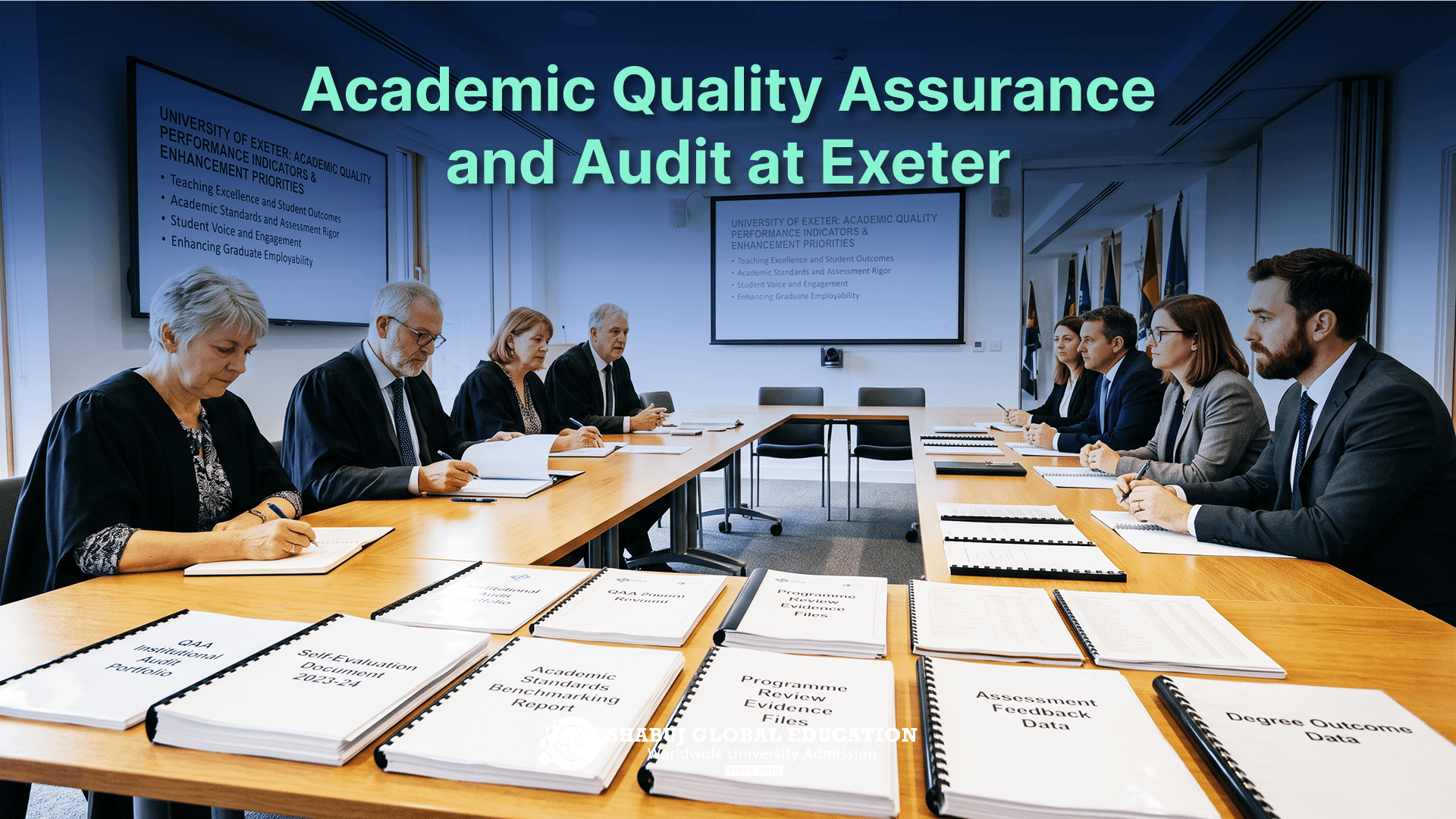
Academic Quality Assurance and Audit at Exeter
2 minutes of reading time
Learn how academic quality is monitored through programme reviews, ...
Summary
Learn how academic quality is monitored through programme reviews, external examiners, internal audits, student feedback, and continuous improvement processes.
Apply for a UK Scholarship with Expert Guidance – Contact Us Today
Academic quality matters because students need confidence that their degree meets the required academic standards. Academic Quality Assurance and Audit at Exeter uses regular monitoring, programme review, external input and improvement processes to check that teaching, learning and assessment remain effective.
If you are considering studying at Exeter, understanding these quality processes can help you see how the University works to maintain the value and credibility of its academic programmes.
What Is Academic Quality Assurance?

Academic quality assurance is the system used to check that learning, teaching and assessment meet established expectations. At the University of Exeter, these processes are set out through its Teaching Quality Assurance Manual (TQA Manual).
The TQA Manual provides the policies and processes that support the assurance of the quality and standards of learning, teaching and assessment. It includes areas such as programme approval, assessment, external examining and the Quality Review and Enhancement Framework.
The aim is not simply to find problems. Exeter's quality system also supports continuous improvement and enhancement. Its Quality Review and Enhancement Framework provides a structure for review and development activities and uses outcomes to support improvement in the academic experience.
In simple terms, quality assurance asks important questions such as:
Are programmes meeting their intended academic standards?
Are students achieving the expected learning outcomes?
Is assessment appropriate and credible?
Are programmes being monitored regularly?
Are weaknesses being identified and addressed?
Are good practices being recognised and shared?
This makes quality assurance an ongoing process rather than a single inspection.
How Exeter Monitors Academic Standards
One of the most important parts of Exeter's approach is evidence-based monitoring. The University uses different sources of information to understand how programmes and students are performing.
For taught programmes, the Quality Review and Enhancement Framework identifies a wide range of evidence that can be considered. This includes student feedback, achievement and progression data, external examiner reports, comparative performance information, employability and Graduate Outcomes data, degree classifications, attendance and engagement information, and Annual Module Review information.
This gives Exeter more than one way to judge academic quality.
For example, student feedback can highlight issues with teaching or learning. Achievement and progression data can show patterns in student performance. External examiner reports provide an independent academic perspective. Looking at these sources together can help identify whether a programme is working as intended.
Exeter also states that it is responsible for setting and maintaining the academic standards of its degrees and qualifications. Its published Degree Outcomes Statement explains how the University monitors and manages undergraduate academic standards and degree outcomes.
External Examiners and Academic Standards
External examiners are another important quality check.
Exeter describes external examination as one of its principal ways of upholding academic standards. External examiners review academic and professional standards and report on the credibility of assessment and awarding.
Their annual reports can identify:
Areas that are working well
Issues that need attention
Themes appearing across programmes
Opportunities for enhancement
Exeter's Education Policy, Quality and Standards team coordinates the handling of these reports and works with Faculties and academic departments so that identified themes, commendations and areas for enhancement are considered and acted upon.
This creates an important feedback loop. Evidence is collected, reviewed, discussed and then used to improve academic provision.
Programme and Course Review
Quality does not begin after a programme has been running for several years. Exeter also has processes for approving and revising programmes and modules.
The University's programme approval process is designed to confirm that new programmes meet relevant quality expectations and that academic standards are consistent with the appropriate qualifications framework.
Existing programmes can also be reviewed and revised. Exeter's Programme Design and Quality Enhancement team supports the development, review and revision of programmes and modules throughout their lifecycle.
Programme specifications also provide information about indicators of quality and standards. Exeter identifies areas such as progression data, completion rates, recent professional accreditation outcomes where applicable, and the outcomes of quality assessments as part of its monitoring and review processes.
This means a course is not simply approved once and then left unchanged. Its performance and relevance can be considered through continuing quality processes.
What Programme Reviews Look At
Programme and module reviews can bring together different types of evidence rather than relying on one measure.
Exeter's quality review information identifies areas such as:
Student experience and feedback
Student achievement and progression
Assessment outcomes
External examiner feedback
Programme and module performance
Employability and Graduate Outcomes
Professional or regulatory body feedback where relevant
Attendance and engagement
Examples of good practice
Previous review actions
Using multiple sources gives the University a broader picture of how academic provision is performing.
Not sure which scholarship fits you? Get a Free Consultation with our UK Education Experts.
Quality Monitoring and Evaluation
Exeter's quality assurance system operates through regular review cycles. Its Quality Review and Enhancement Framework describes an annual process for taught programmes, beginning with the Annual Review of Modules and progressing through different levels of review, ultimately reaching an annual review of Faculties.
This layered approach is important because quality problems can be identified at different levels.
For example, an issue may first appear in module-level evidence. Further review may show that the issue is limited to one area, or it may reveal a wider pattern that needs attention across a programme or department.
Exeter also uses Teaching Excellence Action Plans (TEAPs) as part of its cyclical quality assurance and enhancement process. These plans can record emerging issues, actions taken and completed actions. Teaching Excellence Monitoring Meetings also provide annual scrutiny of teaching and learning expectations and allow good practice to be highlighted and shared.
The key point is that monitoring is connected to action.
The purpose is not simply to collect data. The evidence should help the University understand what is working, what needs attention and where improvements can be made.
Academic Reviews and Audits
Academic review and audit provide another layer of assurance.
Exeter's published quality framework includes review and development processes designed to assure the quality and standards of teaching and learning. It also recognises external assurance activities as part of the wider quality system.
The University's published records also show that academic quality has been subject to internal audit. For example, Exeter's Audit and Risk Committee records include internal audit work covering academic quality and the assessment and feedback process.
This is different from routine programme monitoring. Monitoring looks at academic performance and quality as part of the University's regular review cycle, while audit can provide a more independent examination of whether processes are operating effectively.
Together, these activities help create stronger assurance around academic quality.
Identifying Areas for Improvement
A strong quality system should not only confirm that standards are being maintained. It should also identify opportunities to make education better.
Exeter's approach places clear emphasis on enhancement. Its Quality Review and Enhancement Framework is designed to use review outcomes to support continuous improvement.
Improvement can be informed by several sources, including student feedback, external examiner comments, academic performance data, peer dialogue and examples of good practice.
The process can therefore work like a cycle:
Collect evidence → Review performance → Identify strengths and concerns → Take action → Monitor progress → Enhance provision
This cycle is important because academic quality can change over time. Student needs, subject areas, teaching methods and programme requirements can all develop.
Maintaining Consistent Academic Standards
Another major question is consistency.
How does Exeter make sure that academic standards are not significantly different from one programme or subject area to another?
The University uses several mechanisms. Assessment and academic standards are supported by established policies and procedures within the TQA Manual. External examiners provide independent academic scrutiny, while programme approval and review processes consider relevant standards and reference points.
Exeter also considers QAA Subject Benchmark Statements and other sector standards when approving and reviewing programmes. Where appropriate, professional, statutory and regulatory body requirements are also considered. External assessors can contribute to the academic approval process.
These checks help Exeter make sure that a programme's intended standards are appropriate for its academic level and subject.
For students, this matters because the quality of a degree is not based only on the name of the university. The academic standards behind the programme, the assessment process and the learning experience all matter.
How Quality Assurance Benefits Students
Students are the people who ultimately experience the results of academic quality assurance.
A well-developed quality system can help ensure that:
Courses are regularly reviewed rather than remaining unchanged.
Academic standards are monitored using evidence.
Assessment is subject to quality checks.
External academic perspectives are included through external examining.
Student feedback can contribute to review processes.
Areas needing improvement can be identified and acted upon.
Good practice can be shared and developed.
Exeter's published information shows that quality assurance is connected with both academic standards and the wider student academic experience. Its quality processes are designed to support reliable standards while encouraging continuous enhancement.
A Simple View of Exeter's Quality Cycle
Quality Activity | What It Helps Exeter Check |
Module review | How individual modules are performing |
Programme review | Whether the wider programme remains effective |
Student feedback | How students experience learning and teaching |
Performance data | Achievement, progression and outcomes |
External examining | Academic standards and assessment credibility |
Internal audit | Whether important processes are working effectively |
Enhancement plans | What should be improved next |
Resource: For broader background on quality assurance in higher education,Times Higher Education's Quality Assurance resource provides sector-focused coverage. It is included here as a general reference, while the Exeter-specific information in this article is based on University of Exeter sources.
Support for Bangladeshi Students
For Bangladeshi students, understanding academic quality can make the decision to study abroad more informed. Shabuj Global Education (SGE) can support students throughout their Exeter application journey.
SGE can help with:
Course Selection: Choosing a suitable Exeter programme based on your academic background and goals.
Application Support: Assistance with documents and personal statement preparation.
Visa and Pre-Departure Guidance: Step-by-step support before travelling to the UK.
Ongoing Guidance: Continued support as you progress through your UK study journey.
The goal is to make the application process clearer and easier for Bangladeshi students.
Ready to start your UK journey? Fill out our form and let's begin your application.
Final Takeaway
Quality Is an Ongoing Process
Academic Quality Assurance and Audit at Exeter is not based on one single check. Exeter combines programme and module reviews, academic performance data, student feedback, external examining, monitoring, audit and enhancement activities to understand whether its programmes continue to meet expected standards.
For students, the key message is simple: Exeter uses an ongoing cycle of evidence, review and improvement to help maintain academic standards and strengthen the quality of education.
Explore more
Frequently Ask Question



.png&w=256&q=60)