Academic Quality Assurance | Study Abroad – UK
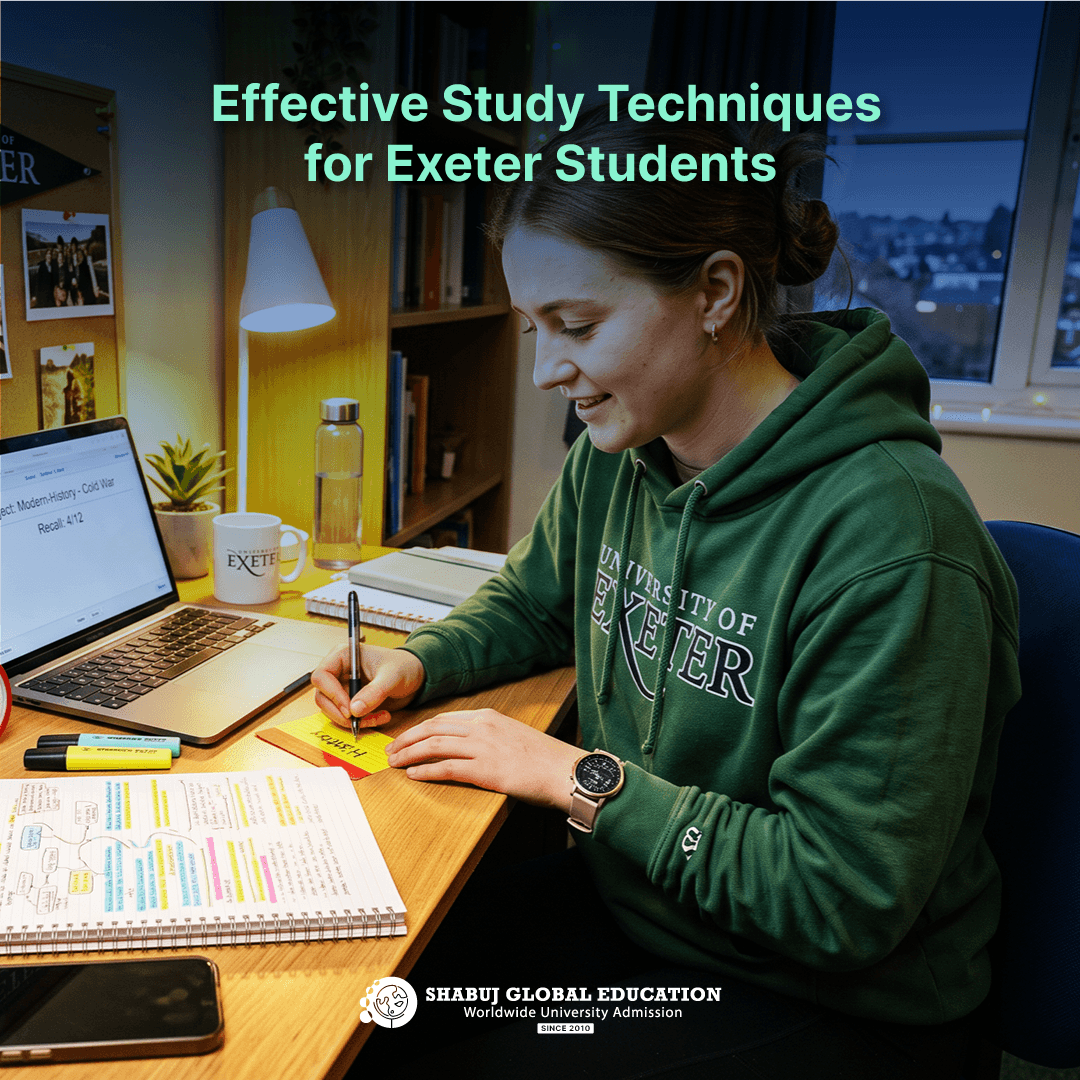
Effective Study Techniques for Exeter Students

2 minutes of reading time
Explore effective study techniques for university students, includi...
Summary
Explore effective study techniques for university students, including active learning, note-taking, revision methods, and exam preparation strategies to support academic success.
Apply for a UK Scholarship with Expert Guidance – Contact Us Today
University study looks nothing like school, and that catches a lot of new students off guard. The good news is that effective study techniques aren't a mystery. They're a set of habits you can learn and practise, and the University of Exeter has built plenty of guidance around exactly that.
This guide explores practical study techniques recommended by Exeter, covering active learning, effective note-taking, revision methods, and exam preparation to help you study more effectively and feel better prepared.
Why Good Study Habits Matter

University exams require more than simply remembering information. They often assess how well you understand concepts, organise ideas, analyse information, and apply what you have learned. Because of this, passive methods such as repeatedly reading textbooks or highlighting notes may not be enough for effective preparation.
Building effective study techniques early helps you:
Retain information for longer, not just until the next test
Feel calmer and more prepared heading into assessments
Spend your study time more efficiently
Once these habits are in place, everything else, from essays to exams, becomes far more manageable.
Active Learning Techniques

The single biggest shift most students need to make is moving from passive to active learning. Simply reading or copying notes doesn't move information into long-term memory. Actively engaging with material does.
Some active techniques worth trying:
Self-testing with flashcards, using tools like Quizlet or Anki, which uses spaced repetition to help material stick
Explaining concepts aloud, as if teaching someone else
Practising exam questions under timed conditions to get familiar with format and pacing
Interleaving, or mixing related topics within a single study session, which supports both retention and application
Digital tools can genuinely help here too. AI-supported summarising tools are increasingly part of the toolkit, though it's worth using them as one part of a mixed approach rather than relying on them alone.
Note-taking Methods

Good note-taking is an active process, not just a record-keeping task. It helps you capture key information, track where it came from, and note your own questions or reactions as you go.
Effective notes at university tend to share a few qualities:
Quality | Why It Matters |
Accurate | Keeps your understanding correct for later revision |
Concise | Focuses on main points, not every word |
Organised | Shows how ideas connect and develop |
Sourced | Records where information came from, for referencing |
A simple habit worth building from day one: always note the source and page number as you go. It saves hours later and helps you avoid accidental plagiarism when writing assignments.
Revision Strategies
When it comes to revision, variety really is key. Exeter's guidance is clear that copying out notes word for word is one of the least effective ways to revise, yet it's one of the most common mistakes students make.
Instead, try mixing up:
How you revise: flashcards, mind maps, flowcharts, or practice questions
Where you revise: a quiet space versus a group setting
Who you revise with: alone, in pairs, or in a study group
Spaced repetition also makes a big difference. Revisiting a topic more than once, with breaks in between, helps move information from short-term into long-term memory far more effectively than one long cramming session.
Preparing for Exams
Exam preparation is about more than knowing the content. It's also about exam technique. Long or complex-looking questions often give you more direction than they seem to, so take a moment to break the question down before you start writing.
A few practical tips for exam day:
Eat a proper breakfast and avoid too much sugar or caffeine, since the energy boost wears off fast
Check you have everything you need, including the right paper and stationery
If your mind goes blank, pause, stay calm, and move on rather than panicking
Remember: you've prepared for this, and you likely know more than you think
Short-answer questions usually need quick, focused facts, while long-answer questions call for more structure and argument, similar to essay writing. Always follow your tutor's specific guidance if it differs from general advice.
Not sure which scholarship fits you? Get a Free Consultation with our UK Education Experts.
Avoiding Common Study Mistakes
A few habits quietly undermine good intentions. Watch out for:
Passive re-reading instead of active recall
Copying notes rather than summarising in your own words
Cramming the night before instead of spacing out revision
Skipping practice questions, which means missing out on real exam conditions
Studying the same way every session, which leads to boredom and lower focus
Small changes to these habits often make the biggest difference to results.
Tips for International Students
Adjusting to a new academic culture takes time, and that's completely normal. A few things that help:
Get familiar with how academic reading and referencing work in the UK system early on
Don't be afraid to ask questions in seminars. It's expected, not discouraged
Use recorded lectures or slides to revisit material at your own pace if English isn't your first language
Build a study routine that also allows time to adjust socially and culturally
Time management plays a role here too, though it deserves its own deep dive. If you want more detail, we've covered it fully inTime Management Tips for University Students.
For the full picture of how the University supports students academically, including workshops and library resources, see our main guide onStudy Skills and Academic Support at Exeter.
Students who want to explore additional evidence-based study methods can also refer to trusted educational resources that discuss techniques such as active recall, spaced repetition, and interleaving to support effective learning.
Resources: Exam Study Expert.
Achieve Your Study Abroad Goals with SGE
Studying at the University of Exeter begins long before your first lecture. From choosing the right course to submitting a strong application, every step matters. Shabuj Global Education (SGE) supports Bangladeshi students throughout the process, making UK university applications simpler and less stressful.
Our experienced counsellors can help you:
Choose an Exeter course that matches your academic background and future career plans
Prepare a complete application, including document checks and personal statement guidance
Explore scholarships, tuition fees, and admission requirements
Receive step-by-step support with your UK student visa and pre-departure planning
Get practical advice before you leave Bangladesh and after you arrive in the UK
Whether you're applying for undergraduate or postgraduate study, SGE provides personalised guidance to help you make informed decisions and submit your application with confidence.
Ready to study at the University of Exeter? Contact Shabuj Global Education today for a free consultation and take the first step towards your UK education.
Final Thoughts
Effective studying is not simply about spending more hours at your desk. It is about using the right approach, such as active learning, organised note-taking, spaced revision, and consistent exam preparation. Developing these habits early can make your studies more manageable and reduce unnecessary stress.
Ready to start your UK journey? Fill out our form and let's begin your application.
Explore more
Frequently Ask Question



.png&w=256&q=60)