Student Wellbeing & Support | Study Abroad – UK
Emergency Contacts and Crisis Support at Exeter
2 minutes of reading time
This guide covers essential emergency contacts and crisis support f...
Summary
This guide covers essential emergency contacts and crisis support for students, including 999, NHS 111, Estate Patrol, mental health services, and SafeZone.
Apply for a UK Scholarship with Expert Guidance – Contact Us Today
Knowing the right Emergency Contacts can help you respond quickly during a stressful or urgent situation. At the University of Exeter, students can access emergency services, NHS 111, campus security, and other support options. This guide explains what to do during an emergency and where to find Crisis Support when immediate help is needed.
Emergency vs Non-Emergency Situations
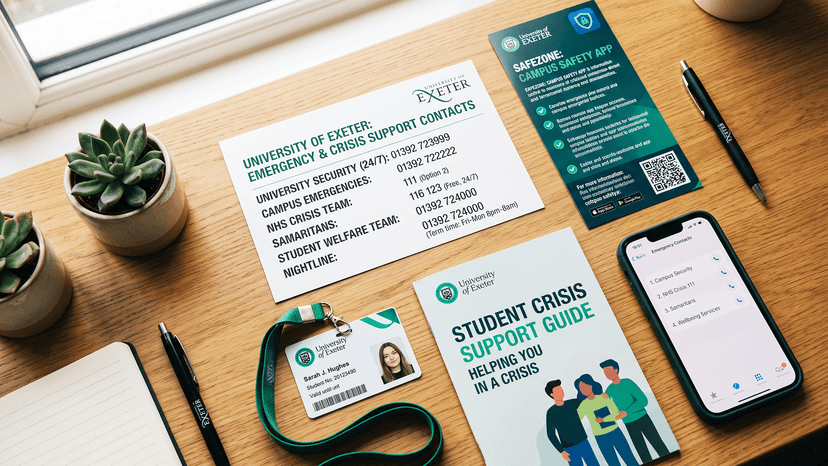
The first step is deciding whether a situation is an emergency or something that can be handled through a non-emergency service.
A serious or life-threatening situation requires immediate action. The University of Exeter advises students to call 999 for urgent assistance from the police, fire and rescue service, ambulance service, or coastguard.
For situations that are urgent but not life-threatening, students may need a different service. For example, NHS 111 can provide medical advice and support when a student is unwell or unsure which healthcare service to use. NHS 111 is available 24 hours a day, seven days a week.
A simple way to remember the difference is:
Situation | What to do |
Serious or life-threatening emergency | Call 999 |
Urgent medical advice, not life-threatening | Call NHS 111 |
Emergency on Exeter campus | Call 999, then contact Estate Patrol |
Campus security concern | Contact Estate Patrol |
Non-urgent incident or concern | Use the University's reporting options |
Understanding these differences before an emergency happens can help students act quickly instead of searching for information under pressure.
Important Emergency Contacts at Exeter
Saving important contact numbers on your phone can help you act quickly when support is needed. The University provides separate contact details for emergency services, healthcare, and campus security, so students can reach the appropriate service more easily.
Emergency Services: 999
Call 999 when there is a serious or life-threatening emergency involving the police, fire service, ambulance or coastguard. The University specifically advises students to use 999 for genuine emergencies.
When calling, be prepared to explain:
Your name
Your location
What has happened
What type of help you need
Any important information about people involved
If you are on campus and need an ambulance because of a medical emergency, the University advises calling 999 first and asking for an ambulance. You should then contact the relevant campus security team.
NHS 111
NHS 111 is designed for situations where students need urgent medical advice but the situation is not a life-threatening emergency.
The University states that students can call 111 or use the NHS 111 online service for medical advice and support. NHS 111 is available 24 hours a day, seven days a week, and students can select the mental health option to access appropriate mental health support.
For international students who may be unfamiliar with the UK healthcare system, NHS 111 can be particularly useful when they are unsure whether they should contact a GP, use an urgent care service or seek emergency treatment.
The University's international student healthcare guidance also explains that 999 is appropriate for urgent medical attention in an emergency, while NHS 111 can advise when students are unsure about the right service.
Campus Security Emergency Numbers
For students on Exeter campuses, Estate Patrol provides 24-hour security support throughout the year.
The University's current contact details are:
Estate Patrol emergency: 01392 722222
Estate Patrol routine: 01392 723999
Email:e.patrol@exeter.ac.uk
Estate Patrol operates 24 hours a day, 365 days a year and provides security, safety and welfare support across the Exeter campuses.
For serious emergencies, Estate Patrol should not be used as a substitute for emergency services. If an ambulance, police, or fire and rescue service is urgently required, call 999 first.
Penryn Campus
Students studying at the University of Exeter's Penryn Campus in Cornwall have different campus emergency contacts.
The University's current guidance lists:
Emergency: 01326 254444
Safety and Security: 01326 254444 or other campus support numbers depending on the situation
999: for emergency police, fire or ambulance services
Students at Penryn should save the appropriate campus number before they need it.
Not sure which scholarship fits you? Get a Free Consultation with our UK Education Experts.
Medical Emergencies and Crisis Support
Medical emergencies can happen unexpectedly, so students should understand which service to use.
The University explains that A&E or 999 is appropriate for serious or life-threatening conditions. Examples given by the University include severe bleeding, breathing difficulties, severe chest pain, severe burns, serious allergic reactions, major trauma and loss of consciousness.
For urgent medical concerns that are not life-threatening, students can contact NHS 111 for advice and guidance. The service can help assess the situation and advise on the most appropriate type of medical care.
Mental Health Crisis Support
If a student is experiencing an urgent mental health situation or is concerned about their immediate safety, the University directs students towards urgent support options.
For students in Exeter and Devon, NHS 111 can provide urgent mental health support through the mental health option. The University states that this service is available 24/7.
For a life-threatening emergency, students should call 999. The University also explains that Wellbeing Services are not an emergency email service, so students should not wait for an email response when immediate help is required.
The key point is simple: urgent situations require prompt action. Students should seek emergency assistance when necessary instead of waiting for a routine appointment or delaying care.
Lost Property and Incident Reporting
Not every problem requires an emergency call. The University provides separate routes for reporting incidents, concerns and lost property.
For incidents, students can use the University's Support and Report service. Students can report something formally, informally or anonymously. The service covers concerns such as bullying, harassment, hate incidents, discrimination, sexual misconduct and other harmful behaviour.
Students can also report certain campus incidents directly through the University's Estate Patrol incident reporting service. The University's reporting form asks for information such as the location, incident details and whether the police were informed. In an emergency, the form clearly directs students to call 999.
Lost property is handled separately. If a student loses an item, the University provides a lost property enquiry process where the item can be registered. Valuable items found on campus are kept securely according to the University's lost property arrangements.
The important distinction is that lost property is not an emergency, while a serious threat to someone's safety should be treated as an emergency.
Preparing for Emergencies
The best time to prepare for an emergency is before one happens. Students do not need to memorise every university procedure, but they should know the main contacts and understand when to use them.
Before starting university, students should:
Save 999 in their phone.
Save the Exeter Estate Patrol emergency number: 01392 722222.
Save the Estate Patrol routine number: 01392 723999.
Learn how to contact NHS 111.
Download and register for the SafeZone app if available to them.
Learn the emergency arrangements for their accommodation.
Know their campus location and accommodation address.
Keep their phone charged when travelling around campus.
Read the University's emergency guidance.
SafeZone is particularly useful for students on campus because it can connect users with the campus security team when they request help. The app can share the user's location with the response team when an alert is raised.
Resource:SafeZone App provides a short explanation of how the app works and its emergency alert features.
For international students, it is worth preparing these details before arriving in the UK. Emergency systems can work differently from those in your home country, so knowing the correct UK numbers can prevent confusion.
Support for Bangladeshi Students via SGE
For Bangladeshi students preparing to study at the University of Exeter, Shabuj Global Education (SGE) can provide guidance throughout the university application journey.
SGE support can include:
Expert Guidance: Help choosing a suitable Exeter course based on academic background, entry requirements and future goals.
Application Support: Assistance with document checks and personal statement preparation.
Visa and Pre-Departure Help: Step-by-step guidance for preparing for the UK student visa process and getting ready for departure.
Ongoing Support: Continued guidance as students progress through their university journey.
Understanding Emergency Contacts and Crisis Support is one part of preparing for life in the UK. Students should also know how to access their university services, healthcare options and campus security before they arrive.
To discover how wellbeing services, safety initiatives, and student support work together, read our Student Wellbeing and Campus Safety at Exeter guide.
Ready to start your UK journey? Fill out our form and let’s begin your application.
Be Prepared, Stay Safe
Knowing the right Emergency Contacts before you need them can help you respond more confidently during a difficult situation. At Exeter, students can use 999 for serious emergencies, NHS 111 for urgent but non-life-threatening medical advice, and Estate Patrol for campus security support.
Save these important numbers on your phone and understand when to use each service. Being familiar with the available support can help you get the right assistance without unnecessary delay.
Explore more
Frequently Ask Question



.png&w=256&q=60)