Student Wellbeing & Support | Study Abroad – UK
Campus Safety and Security at Exeter University
2 minutes of reading time
Discover how Exeter supports campus safety through 24/7 security, S...
Summary
Discover how Exeter supports campus safety through 24/7 security, SafeZone, CCTV, safer walking routes, emergency contacts, and essential fire safety procedures.
Apply for a UK Scholarship with Expert Guidance – Contact Us Today
Starting university is exciting, but knowing how to stay safe on campus is just as important as choosing your course or accommodation. The University of Exeter has several measures in place to support students, including 24/7 Estate Patrol, CCTV, SafeZone and fire safety procedures.
This guide covers the key Campus Safety and Security services students should be familiar with before arriving and throughout their time at Exeter.
Campus Security Overview

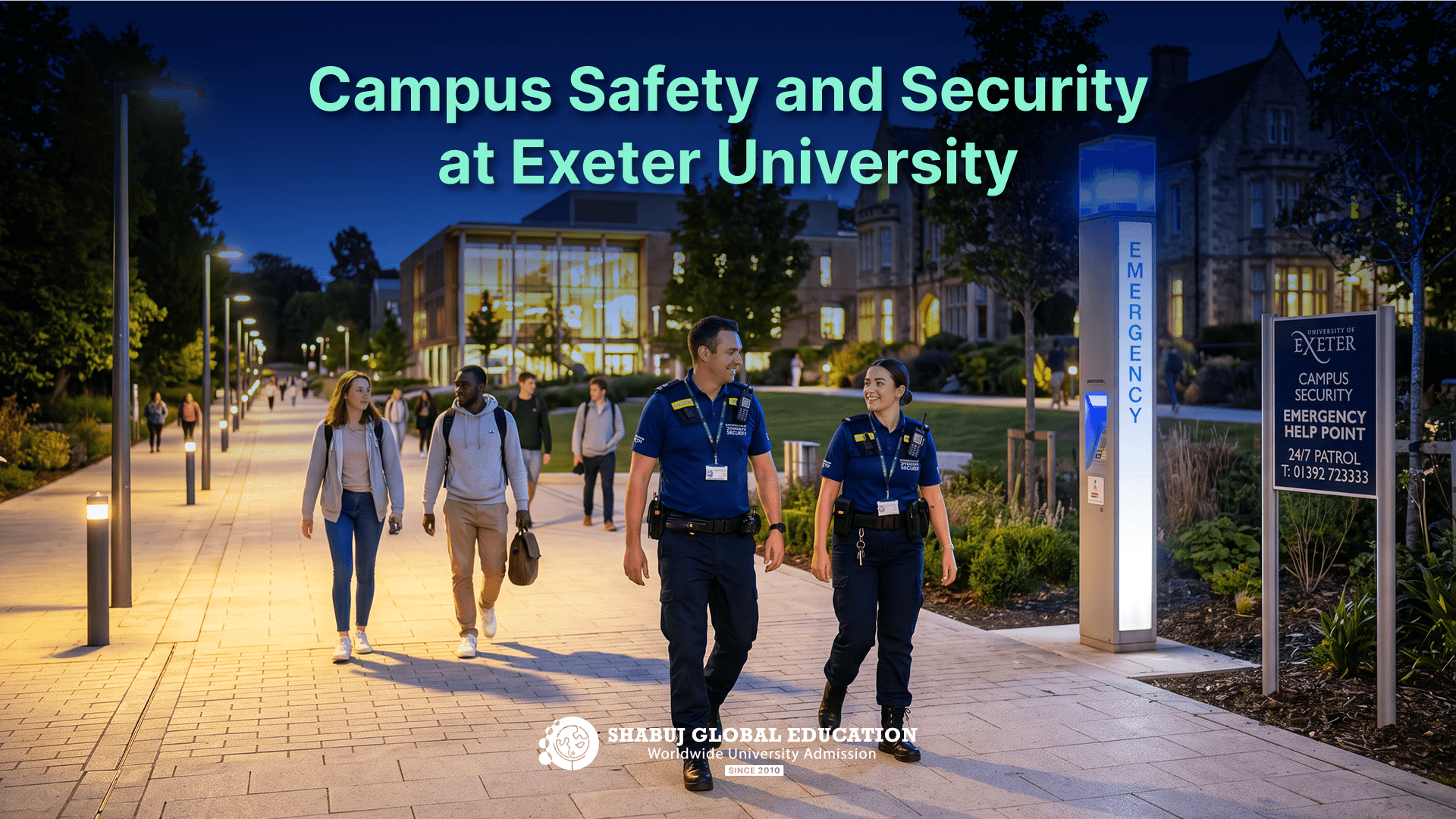
The University of Exeter’s Estate Patrol team helps maintain safety and security across its Exeter campuses. Working alongside students, staff, local authorities, and emergency services, the team supports a safe, secure, and welcoming environment for the university community.
Estate Patrol officers carry out regular foot and vehicle patrols around campus. Their uniforms make them easy to identify, while their presence also helps provide a visible security service for the university community.
The team is available 24 hours a day, 365 days a year, so students can contact campus security outside normal university office hours as well as during the daytime.
For Exeter campuses, the University lists:
Estate Patrol emergency: +44 (0)1392 722222
Estate Patrol routine: +44 (0)1392 723999
Email:e.patrol@exeter.ac.uk
For a genuine emergency requiring police, fire or ambulance services, students should call 999.
Students can also read the wider Student Wellbeing and Campus Safety at Exeter guide on your website to understand how campus safety connects with other aspects of student life.
24/7 Security Team and Campus Monitoring

The University’s Estate Patrol service is an important part of Campus Safety and Security at Exeter. Security officers respond to a range of situations across campus and can offer guidance to students who are unsure how to handle a safety concern.
The service includes several important functions:
24/7 security patrols across Exeter campuses
Regular foot and vehicle patrols
Response to security and fire alarms
Response to SafeZone alerts
Personal safety advice
Property security advice
First aid support
Support with certain out-of-hours accommodation issues
The University also uses an extensive CCTV network as part of its campus security measures. The Estate Patrol team monitors more than 900 cameras across campus, helping security staff keep track of university locations and respond to potential incidents when necessary.
This combination of visible patrols, CCTV monitoring and emergency response gives students several layers of security while they study, live and spend time on campus.
SafeZone App
The SafeZone app is one of the most useful safety tools available to University of Exeter students and staff. It is free and connects users directly with the Estate Patrol security team when they are on campus.
After registering with a University of Exeter email address, students can use the app to contact security without needing to remember different phone numbers. The app includes several options for different situations.
What can students use SafeZone for?
SafeZone provides:
Emergency: Request urgent assistance.
Help: Contact security for non-emergency assistance.
First Aid: Request assistance when first aid is needed.
Check In: Share your location with security for personal safety.
Notifications: Receive important location-based security information.
Live chat: Communicate with the security team when appropriate.
When a student raises an alert, their location can be sent to relevant university staff so that the situation can be handled more efficiently. The University states that location information remains private unless the user requests assistance or uses a check-in feature.
External resource: Students who want information about the SafeZone platform can visitSafeZone App. It provides information about the app and how it works.
Tip: Install and register for SafeZone early rather than waiting until you need it. Knowing how the app works in advance can save time during an unexpected situation.
Personal and Night-Time Safety
University life often means moving around campus at different times of the day. Students may attend evening activities, study late, return from social events or walk between accommodation and university buildings.
The University provides Safer Walking Routes around campus. These routes have enhanced lighting and CCTV coverage along many paths. Students can identify the routes through green spots on the ground and signs on lampposts.
Students can also take simple steps to reduce avoidable risks:
Stay aware of your surroundings when walking around campus.
Use well-lit and recognised walking routes.
Keep valuable belongings secure.
Follow university security advice.
Use SafeZone when you need assistance on campus.
Save the Estate Patrol contact details in your phone.
Let someone know if you are working or studying alone for an extended period.
Contact Estate Patrol if you have a genuine security concern.
The University's safety guidance also encourages students to think about personal safety both on campus and when out and about.
Being careful does not mean avoiding normal university activities. It means understanding your surroundings and knowing where to get help if something goes wrong.
Reporting Crimes, Incidents and Safety Concerns
Students should not ignore a security concern simply because they are unsure whether it is serious enough to report.
For an immediate emergency, the University advises calling 999 and asking for the appropriate emergency service. For campus security support at Exeter, students can contact Estate Patrol using the University's emergency or routine numbers.
The University also provides an Incident Report Form for students and staff to report incidents and health and safety concerns. This gives students another way to make the university aware of problems that may need attention.
If you notice a safety issue, provide clear information about:
What happened
Where it happened
When it happened
Whether anyone needs immediate assistance
Any other information that could help the university respond
For urgent situations, do not rely only on an online form. Contact the appropriate emergency or security service immediately.
Fire Safety Procedures
Fire safety is another important part of Campus Safety and Security at Exeter. The University's Fire Safety team carries out fire risk assessments for university buildings and provides fire safety information, training and advice.
Students also have a responsibility to follow fire safety procedures.
If a fire alarm sounds, students should:
Leave the building immediately.
Do not stop to collect personal belongings.
Use the appropriate emergency exit.
Do not return to the building until authorised.
Keep emergency exits and escape routes clear.
Never wedge open fire doors.
Do not cover or remove fire or smoke detectors.
The University also advises students to take care when cooking, avoid leaving cooking appliances unattended and avoid overloading electrical sockets.
Knowing your nearest escape route is particularly important when moving into university accommodation. Students should familiarise themselves with the quickest way out of their building and know an alternative route where possible.
Safety for International Students
Moving to a new country can make safety information especially important for international students. The University's security services are available to all students, and international students can use the same campus safety systems and services as other members of the university community.
Before classes begin, international students should take a few minutes to understand the University's safety arrangements.
A simple safety checklist
Before arriving:
Save the Estate Patrol emergency and routine numbers.
Learn how SafeZone works.
Read the University's campus safety information.
Check the emergency procedures for your accommodation.
After arriving:
Register for SafeZone using your University email.
Identify emergency exits in your accommodation and study buildings.
Learn where safer walking routes are located.
Keep your accommodation and personal belongings secure.
Ask Estate Patrol for safety advice if you are unsure about something.
For students arriving from Bangladesh and other countries, these steps can make the transition to life in Exeter easier. You do not need to know every procedure on your first day. The important thing is to know where reliable information and support are available.
Not sure which scholarship fits you? Get a Free Consultation with our UK Education Experts.
Support for Bangladeshi Students via SGE
Shabuj Global Education (SGE) helps Bangladeshi students prepare for their UK university journey, including applications to the University of Exeter.
Our support can include:
Course Guidance: Help choosing a course that matches your academic background and future goals.
Application Support: Assistance with document checks and personal statement preparation.
Visa and Pre-Departure Guidance: Step-by-step support to help students prepare for the UK.
Ongoing Guidance: Continued support as students move forward with their academic journey.
For Bangladeshi students, having reliable guidance before travelling can make the transition to studying in the UK more organised and manageable.
Ready to start your UK journey? Fill out our form and let’s begin your application.
Stay Safe at Exeter
Campus safety depends on more than security staff and technology. Students also have a role to play by following safety guidance, using available services, and reporting concerns when appropriate.
With 24/7 Estate Patrol, CCTV monitoring, SafeZone, safer walking routes, and clear fire safety procedures, the University of Exeter offers a range of measures to support students across its campuses. Familiarising yourself with these services before you need them can help you respond more confidently to safety concerns during university life.
Explore more
Frequently Ask Question



.png&w=256&q=60)