Academic Quality Assurance | Study Abroad – UK
Exeter Research Centres and Innovation Programs
2 minutes of reading time
Explore how research centres, flagship institutes, innovation progr...
Summary
Explore how research centres, flagship institutes, innovation programmes, and industry partnerships support world-class research and collaboration. Discover how these initiatives enhance student learning and help turn research into practical solutions.
Apply for a UK Scholarship with Expert Guidance – Contact Us Today
Research excellence depends not only on strong ideas but also on the people, facilities, and partnerships that help turn those ideas into results. Exeter research centres and innovation programmes provide a strong foundation for research, collaboration, and real-world impact across a wide range of disciplines.
From leading research institutes to industry partnerships and innovation initiatives, the University of Exeter creates opportunities for researchers, students, and businesses to work together on global challenges and develop practical solutions.
Understanding Exeter's Research Infrastructure
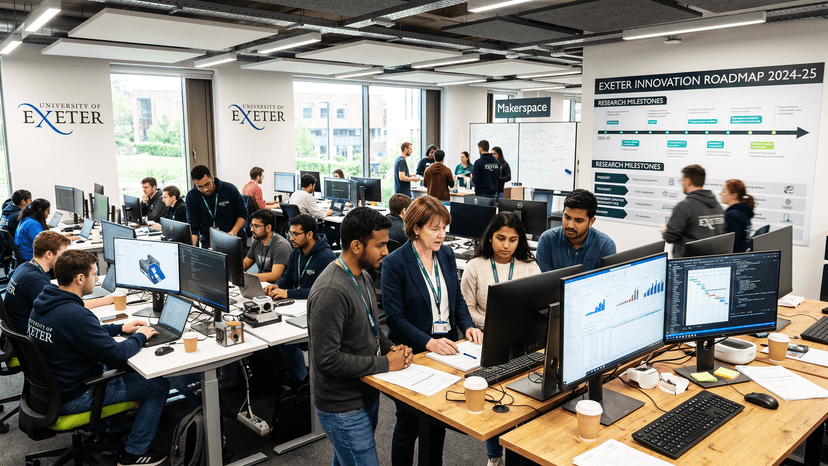
The Exeter research centres and innovation programs are designed to encourage collaboration between different academic fields while supporting research that delivers practical benefits.
Rather than working in isolation, researchers often collaborate across departments by sharing knowledge, facilities, and expertise. This interdisciplinary approach brings together different perspectives and helps address complex global challenges more effectively.
The University's research infrastructure includes:
Four flagship research institutes
Faculty research centres
Advanced research facilities
Innovation and enterprise support
Knowledge Exchange programmes
Business partnerships
Commercialisation initiatives
Together, these elements create a connected research environment that supports both discovery and innovation.
Learn more: Research and Innovation at the University of Exeter
The Four Flagship Research Institutes
One of the strongest features of the Exeter research centres and innovation programs is the University's four flagship interdisciplinary research institutes. These institutes bring together experts from different academic backgrounds to address major global challenges.
Research Institute | Primary Purpose |
Environment and Sustainability Institute (ESI) | Develops solutions for environmental sustainability and resource management. |
Living Systems Institute (LSI) | Combines biology, chemistry, physics, engineering, and medicine to improve understanding of living systems. |
Global Systems Institute (GSI) | Studies climate change, environmental systems, and sustainable futures through global collaboration. |
Institute of Data Science and Artificial Intelligence (IDSAI) | Supports research in artificial intelligence, machine learning, data science, and digital innovation. |
Rather than focusing on one department, these institutes encourage experts from multiple disciplines to work together on shared research goals.
This collaborative model helps produce innovative ideas that have practical applications across science, healthcare, technology, business, and society.
Planning your UK education?
Not sure which scholarship fits you? Get a Free Consultation with our UK Education Experts.
Faculty Research Centres and Collaboration
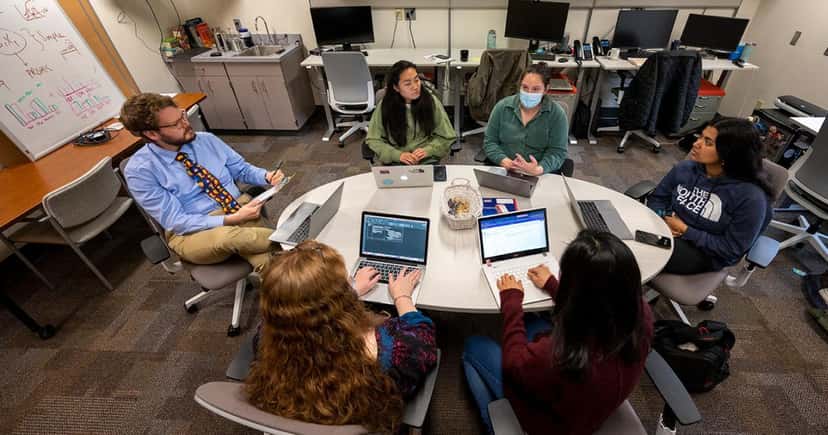
Alongside the flagship institutes, Exeter has numerous faculty-based research centres that support specialised areas of study.
Each faculty develops research communities where academics, postgraduate researchers, and external partners collaborate on long-term projects.
These centres help by:
Encouraging interdisciplinary teamwork
Supporting postgraduate research
Sharing specialist expertise
Building international research partnerships
Creating opportunities for collaborative funding
Researchers frequently work across faculties rather than remaining within one academic discipline. This flexible structure strengthens both research quality and innovation.
Innovation Ecosystem and Research Facilities
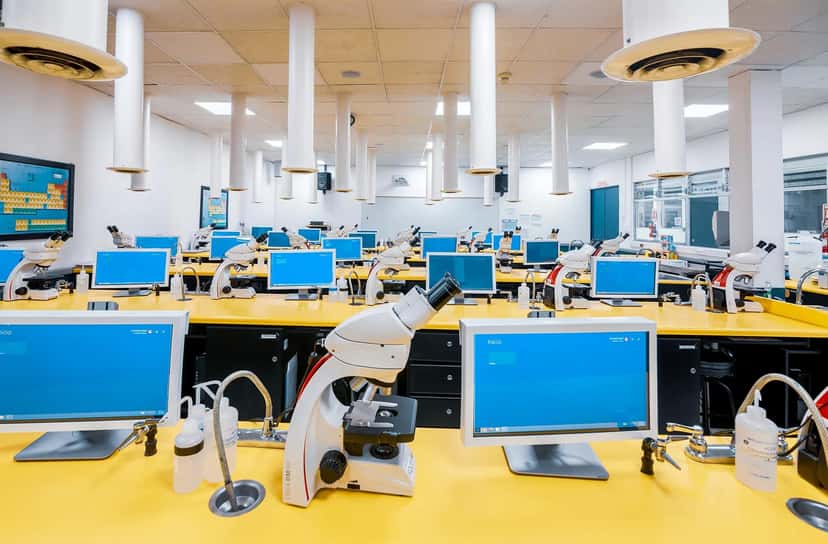
A strong research environment requires more than talented researchers. It also depends on high-quality facilities and an innovation ecosystem that turns ideas into practical outcomes.
The Exeter research centres and innovation programs are supported by modern laboratories, digital research infrastructure, specialist equipment, and collaborative workspaces.
Key features include:
Advanced laboratories
High-performance computing resources
Digital research platforms
Specialist scientific equipment
Shared research spaces
Innovation hubs
These facilities help researchers test new ideas, analyse complex data, and work efficiently with collaborators from around the world.
Students also benefit by gaining exposure to professional research environments during their studies.
Knowledge Exchange and Business Engagement

The University of Exeter places strong emphasis on Knowledge Exchange, which focuses on sharing research expertise beyond the university.
Knowledge Exchange allows researchers to work closely with:
Businesses
Public sector organisations
Healthcare providers
Community groups
Charities
International partners
Instead of keeping research within academic publications, researchers collaborate with external organisations to solve practical problems and improve products, services, and public policy.
This approach strengthens both the economy and society while increasing the real-world value of university research.
Commercialising Research and Supporting Innovation
Many research discoveries have the potential to become useful products, services, or technologies.
The University supports researchers through commercialisation programmes that help move ideas from research into practical use.
Commercialisation activities include:
Protecting intellectual property
Supporting patent applications
Developing spin-out companies
Licensing new technologies
Building partnerships with industry
Encouraging entrepreneurship
These programmes help ensure that valuable discoveries can benefit businesses, healthcare systems, governments, and communities.
Students interested in innovation also gain opportunities to learn about entrepreneurship and technology transfer during their studies.
Why Interdisciplinary Collaboration Matters
Today's global challenges rarely fit within a single academic subject.
That is why Exeter research centres and innovation programs encourage interdisciplinary collaboration across science, engineering, medicine, social sciences, business, and the humanities.
Benefits of this collaborative approach include:
Broader research perspectives
Faster problem-solving
Greater innovation
Improved access to funding
Stronger international partnerships
More practical research outcomes
By bringing together experts with different skills and experiences, the University creates research solutions that are more comprehensive and impactful.
This collaborative culture also enriches the student experience by exposing learners to multiple ways of thinking and working.
How Students Benefit from Exeter's Research Structure
Although much of the research infrastructure supports academic staff, students also benefit throughout their education.
Advantages include:
Learning from active researchers
Access to modern research facilities
Opportunities to join research projects
Exposure to interdisciplinary learning
Strong industry connections
Better preparation for future careers
Being part of a university with an organised and collaborative research system helps students develop practical skills alongside academic knowledge.
Universities around the world are increasingly strengthening innovation ecosystems that connect researchers with industry and society. The World Economic Forum explains why collaboration between universities, businesses, and governments is essential for driving innovation and economic growth.
Support for Bangladeshi Students via SGE
If you are planning to study at the University of Exeter, Shabuj Global Education (SGE) is here to guide Bangladeshi students through every step of the admission journey.
Expert Guidance
Our experienced counsellors help you choose the right Exeter course based on your academic background, career goals, and entry requirements.
Application Made Easy
We provide professional assistance with document preparation, university applications, and personal statement reviews to strengthen your application.
Visa & Pre-Departure Help
Receive step-by-step support for your UK student visa and practical guidance before travelling.
Ongoing Support
Even after you begin your studies, SGE continues to support your academic and career success.
Bangladeshi students receive a smooth, secure, and fully guided admission experience.
Build Your Future at Exeter
The Exeter research centres and innovation programmes provide a strong foundation for research excellence, collaboration, and innovation. By bringing together advanced facilities, interdisciplinary institutes, and industry partnerships, Exeter gives students the opportunity to learn in a research-focused environment while developing skills for their future careers.
Ready to start your UK journey?
Explore more
Frequently Ask Question