Study Abroad – UK
Modern Teaching Strategies for Effective Student Learning
2 minutes of reading time
This blog explores how modern teaching strategies improve student l...
Summary
This blog explores how modern teaching strategies improve student learning through active participation, blended education, interactive classrooms, and digital technologies. It also examines how universities create engaging, student-focused, and career-oriented learning environments that enhance academic performance, build practical skills, and prepare graduates for long-term success.
Apply for a UK Scholarship with Expert Guidance – Contact Us Today
Higher education is evolving as universities embrace more engaging and student-centered approaches to teaching. While traditional lectures remain an important part of learning, they are increasingly supported by interactive activities, practical experiences, and digital technologies that help students build critical thinking, problem-solving skills, and the confidence needed to succeed in today's professional world.
This guide explores teaching strategies in higher education that improve student engagement, classroom participation, and academic success. You will also learn how modern universities such asBloomsbury Institute London use innovative approaches to create better learning experiences for students.
What Are Modern Teaching Strategies?
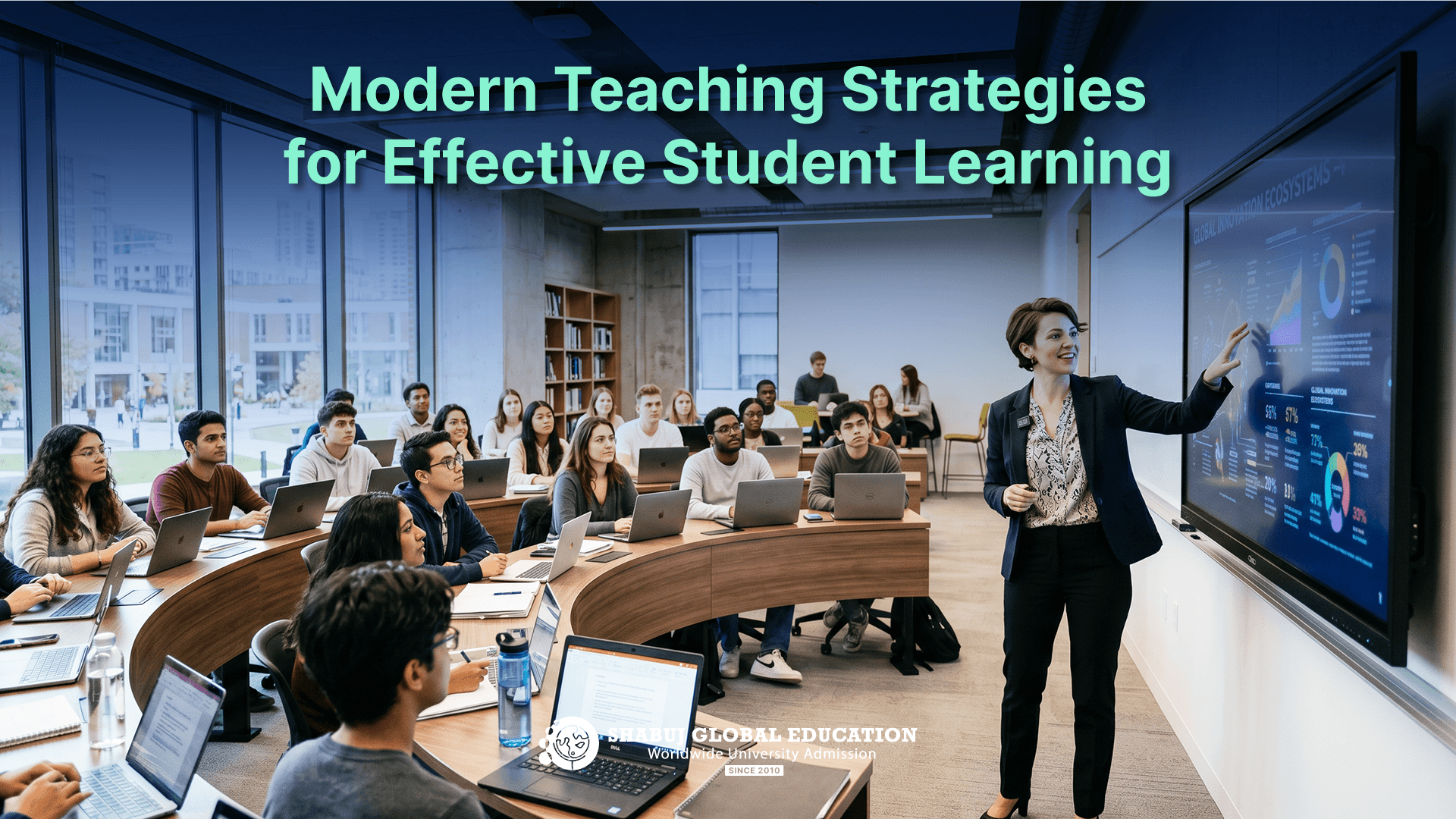
Modern teaching strategies are innovative methods used by educators to enhance learning outcomes and increase student participation. These approaches go beyond traditional lecture-based teaching and encourage students to take an active role in the learning process.
In teaching strategies in higher education, educators use a combination of technology, collaboration, and practical learning to make education more effective and engaging.
Key Features of Modern Teaching Methods
Student-centered learning
Interactive classroom discussions
Technology-supported lessons
Real-world problem solving
Collaborative group activities
Flexible learning environments
These modern teaching methods help students understand concepts more clearly while improving confidence and communication skills.
Universities that use these approaches often see higher student satisfaction and stronger academic performance.
For a better understanding, explore: Innovative Teaching & Learning Methods at Bloomsbury Institute.
Active Learning in Higher Education

Active learning is one of the most successful effective classroom strategies used in universities today. Instead of students passively listening to lectures, they actively participate in the learning process.
This method encourages students to think critically, discuss ideas, and apply knowledge to practical situations.
Examples of Active Learning Techniques
Teaching Method | How It Helps Students |
Group Discussions | Improves teamwork and communication |
Case Studies | Builds analytical thinking |
Problem-Solving Tasks | Encourages creativity |
Classroom Debates | Develops confidence and reasoning |
Peer Learning | Supports collaboration |
Presentations | Enhances public speaking skills |
These university teaching techniques make learning more memorable because students directly interact with the subject matter.
Benefits of Active Learning
Higher Engagement
Students stay focused when they participate in activities instead of only listening.
Better Knowledge Retention
Interactive learning helps students remember information longer.
Improved Critical Thinking
Students learn how to analyze situations and make decisions independently.
Stronger Communication Skills
Activities like presentations and teamwork improve confidence and professional skills.
At Bloomsbury Institute London, many courses encourage interactive classroom participation and applied learning approaches that help students prepare for modern workplaces.
Not sure which scholarship fits you?
Get a Free Consultation with our UK Education Experts.
Blended and Digital Learning Methods

Technology has transformed higher education, allowing universities to combine digital tools with in-person teaching to create more flexible, engaging, and effective learning experiences.
This blended learning approach is now one of the most important teaching strategies in higher education.
What Is Blended Learning?
Blended learning combines:
Classroom teaching
Online study materials
Video lectures
Virtual discussions
Digital assignments
Online assessments
This method gives students greater flexibility and allows them to learn at their own pace.
Advantages of Digital Learning
Flexible Study Options
Students can access materials anytime and review lessons whenever needed.
Better Access to Resources
Online libraries, recorded lectures, and digital platforms improve access to learning content.
Improved Student Participation
Digital quizzes, online forums, and collaborative tools encourage more interaction.
Personalized Learning
Students can focus more on areas where they need improvement.
Modern universities increasingly use learning management systems and digital platforms to support these modern teaching methods.
According to guidance from the UK Council for International Student Affairs (UKCISA), digital learning support and student-centered teaching approaches are important parts of higher education in the UK.
Popular Digital Teaching Tools
Virtual classrooms
Recorded video lectures
Interactive learning apps
Online assessments
Digital whiteboards
Discussion forums
These tools make learning more accessible and interactive for students from different backgrounds.
How Teaching Methods Improve Academic Performance
The quality of teaching plays a direct role in student success. Strong effective classroom strategies help students stay motivated, understand lessons more clearly, and achieve better academic results.
Improved Student Motivation
Interactive teaching keeps students interested and involved in learning activities. Motivated students are more likely to complete assignments and participate in class discussions.
Better Academic Outcomes
Students often perform better when they actively engage with the learning process rather than simply memorizing information.
Stronger Practical Skills
Modern learning approaches help students develop skills required in real workplaces, including:
Communication
Teamwork
Leadership
Problem solving
Critical thinking
Time management
These skills are highly valued by employers worldwide.
Increased Confidence
Students build confidence by participating in class discussions, delivering presentations, and working on collaborative projects.
Supportive Learning Environment
Modern educators focus on creating positive classroom environments where students feel comfortable asking questions and sharing ideas.
This is why many universities invest heavily in improving university teaching techniques and student support systems.
Why Modern Teaching Matters for International Students
International students often face challenges when adapting to a new education system, different cultural environments, and unfamiliar academic expectations. Modern teaching approaches help ease this transition by offering greater support and more engaging learning experiences.
Interactive lessons, blended learning, and supportive classroom environments help international students build confidence and stay actively engaged.
For Bangladeshi students planning to study in the UK, receiving the right guidance is equally important.
Support for Bangladeshi Students via SGE
Shabuj Global Education (SGE) is the Official Exclusive Partner of Bloomsbury Institute London for Bangladeshi students.
SGE provides:
Free application support
Guidance on course selection
Help with university documentation
Pre-CAS interview preparation
Visa assistance
Step-by-step admission guidance
This support helps students complete the admission process more smoothly and confidently.
Students receive personalized guidance throughout their UK education journey, reducing confusion and improving application success rates.
Choosing the Right Learning Environment
When selecting a university, students should not focus only on rankings or course names. Teaching quality and learning support are equally important.
A strong learning environment should include:
Interactive teaching methods
Experienced faculty
Digital learning support
Student engagement activities
Career-focused education
Academic assistance
Universities that invest in these areas often provide better overall student experiences and stronger graduate outcomes.
Final Thoughts
Modern education extends beyond traditional lectures and textbooks, offering more interactive and practical learning experiences. Today’s teaching strategies in higher education focus on engagement, flexibility, collaboration, and practical learning to help students succeed academically and professionally.
By using modern teaching methods, universities create learning experiences that prepare students for real-world challenges and future careers.
Ready to start your UK journey?
Explore more
Frequently Ask Question



.png&w=256&q=60)