Study Abroad – UK
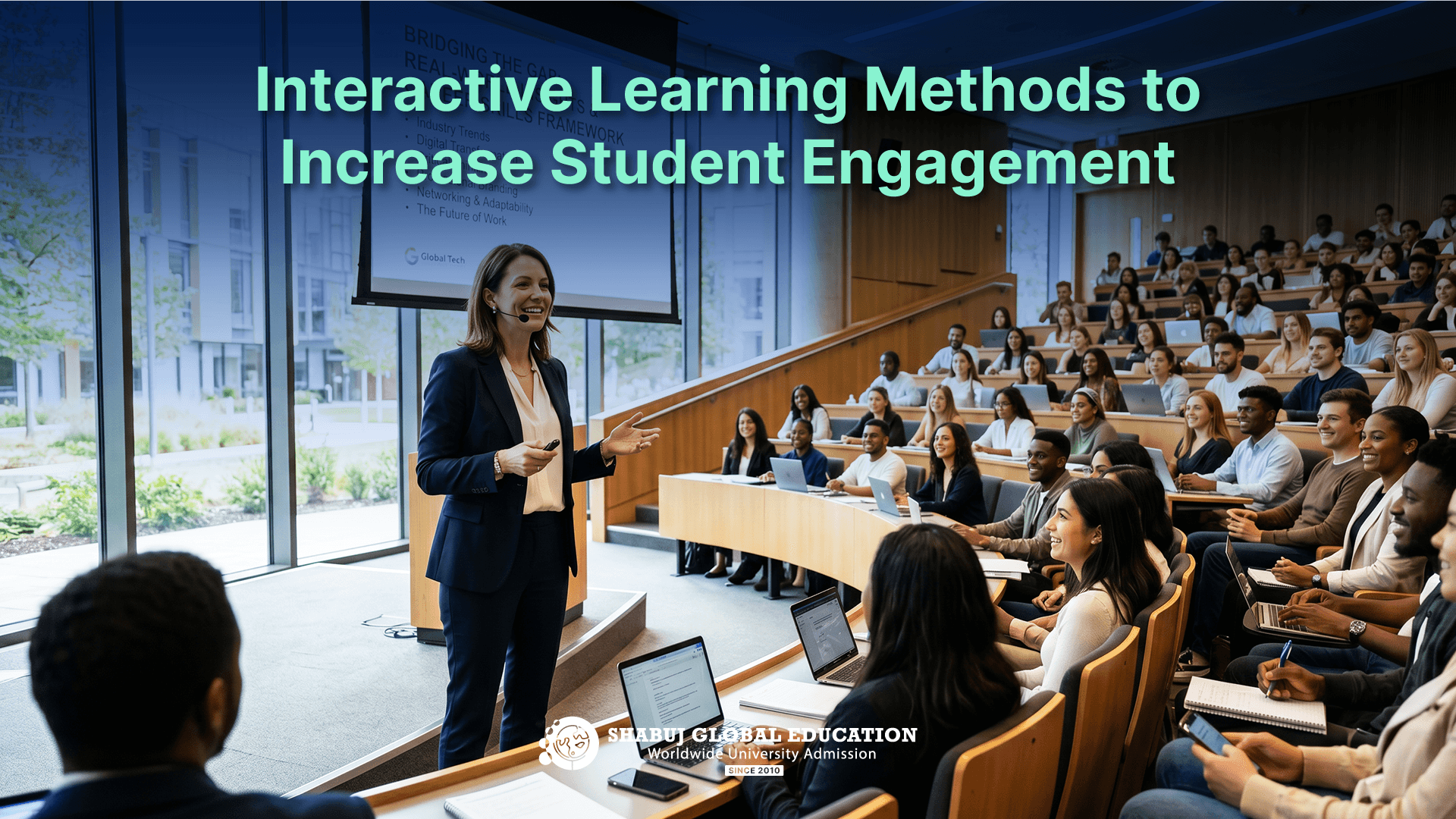
Interactive Learning Methods to Increase Student Engagement
2 minutes of reading time
This blog explores how interactive learning methods improve student...
Summary
This blog explores how interactive learning methods improve student engagement, encourage active classroom participation, and promote academic success. It covers active learning strategies, collaborative activities, digital learning tools, and the role of technology in creating engaging, student-focused learning environments.
Apply for a UK Scholarship with Expert Guidance – Contact Us Today
Student participation is one of the biggest factors behind academic success. Modern universities are now focusing on student engagement strategies that help learners become active participants instead of passive listeners.
Interactive classrooms promote discussion, teamwork, critical thinking, and problem-solving while helping students develop confidence. These engaging learning approaches make lessons more enjoyable and strengthen knowledge retention.
Why Student Engagement Matters in Higher Education

Student engagement involves more than simply attending classes. It reflects how actively students participate in learning, stay motivated, and connect with their academic experience. Universities that promote strong student engagement often achieve improved academic outcomes, higher attendance rates, and greater student satisfaction.
Many institutions now use interactive learning methods to create a more student-centered environment. Instead of relying only on lectures, teachers encourage participation through activities, collaboration, and digital learning tools.
Benefits of Strong Student Engagement
Improves understanding and memory
Increases classroom participation
Builds confidence and communication skills
Encourages teamwork and critical thinking
Helps students stay motivated
Supports better academic performance
At Bloomsbury Institute London, modern teaching approaches are designed to support active participation and practical learning experiences for students from different backgrounds.
Students who stay actively engaged are more likely to complete assignments on time, attend classes consistently, and develop the practical skills and confidence required for future careers.
Interactive Learning Techniques Used in Classrooms
Modern universities use many active learning techniques to make lessons more engaging and effective. These methods encourage students to participate directly in the learning process.
Group Discussions and Debates
Classroom discussions encourage students to exchange ideas, learn from diverse perspectives, and improve their communication skills.Teachers often divide students into small groups to discuss topics, solve problems, or debate real-world issues.
This method improves:
Communication skills
Critical thinking
Confidence
Team collaboration
Discussion-based learning also allows students to understand different perspectives, which is important in higher education and professional environments.
Simulations and Role-Playing
Simulations allow students to apply their knowledge in realistic, subject-related situations. For example, business students can experience workplace scenarios, while law students can take part in mock legal exercises that help strengthen practical skills.
These classroom engagement activities help students apply theoretical knowledge in practical situations.
Examples include:
Interactive Activity | Learning Benefit |
Role-playing exercises | Improves communication |
Case study analysis | Develops problem-solving |
Group presentations | Builds confidence |
Simulated projects | Encourages teamwork |
Peer feedback sessions | Enhances collaboration |
Interactive tasks often increase participation because students become directly involved instead of only listening to lectures.
Collaborative Group Tasks
Team-based assignments are widely used in higher education because they prepare students for real workplace environments. Students learn how to share ideas, manage responsibilities, and complete tasks together.
Collaborative learning also develops leadership and time management skills. These are valuable abilities for future careers.
Question-and-Answer Activities
Simple Q&A sessions can make classrooms more active. Teachers encourage students to ask questions, participate in quizzes, or share opinions during lectures.
This keeps students focused and creates a more engaging learning environment.
For more insights into effective teaching approaches, visit the parent page on Innovative Teaching & Learning Methods at Bloomsbury Institute.
Not sure which scholarship fits you? Get a Free Consultation with our UK Education Experts.
Role of Technology in Engagement
Technology has transformed learning in higher education. Universities now use digital tools and online platforms to create more engaging, interactive, and flexible learning experiences.
Modern learning systems allow students to access course materials, communicate with lecturers, submit assignments, and join discussions online.
Learning Management Systems (LMS)
A Learning Management System helps organize learning resources in one place. Students can:
Access lecture notes
Watch recorded lessons
Submit assignments
Track academic progress
Participate in discussion forums
These systems support flexible learning and help students stay connected with their courses.
Digital Learning Tools
Interactive digital tools improve participation inside and outside classrooms. Teachers may use:
Online quizzes
Interactive presentations
Virtual collaboration platforms
Educational apps
Polling tools during lectures
These technologies help create more engaging learning environments for students.
According to the UK Department for Education guidance on higher education and digital learning, modern institutions are increasingly adopting technology-enhanced teaching methods to improve accessibility, engagement, and learning outcomes.
Smart Learning Spaces
Technology also works together with physical learning environments. Modern classrooms with projectors, collaborative seating, and digital resources support better participation and communication.
Students benefit from environments designed for teamwork and interaction rather than traditional lecture-only settings.
Impact on Student Motivation and Results

Strong student engagement strategies directly affect motivation and academic success. Students who actively participate are more likely to stay interested in their studies and achieve better results.
Improved Academic Performance
Interactive learning helps students understand concepts more clearly. Instead of memorizing information, students apply knowledge through activities and discussions.
Research shows that active participation often leads to:
Better exam performance
Higher assignment quality
Increased class attendance
Stronger understanding of subjects
Greater Student Confidence
Interactive learning environments encourage students to speak, collaborate, and share opinions. Over time, this builds confidence and communication skills.
Students become more comfortable participating in group discussions and presenting ideas.
Better Career Preparation
Employers value graduates who can communicate effectively, solve problems, and work in teams. Many active learning techniques help students develop these skills before entering the workplace.
Interactive learning also prepares students for real professional situations through practical exercises and collaborative projects.
Increased Motivation and Satisfaction
Students are more motivated when learning feels engaging and meaningful. Activities, discussions, and technology-based lessons create a more enjoyable learning experience.
Motivated students are more likely to:
Complete coursework on time
Participate actively
Continue their education
Achieve personal goals
Support for Bangladeshi Students Through SGE
Bangladeshi students planning to study in the UK often need reliable guidance throughout the admission process.
Shabuj Global Education (SGE) is the Official Exclusive Partner of Bloomsbury Institute London and provides complete support for students applying from Bangladesh.
SGE Services Include
Free application support
Course selection guidance
Documentation assistance
University communication support
Pre-CAS interview preparation
Visa application guidance
Step-by-step admission assistance
This support helps students complete the application process more safely and confidently.
Students also receive guidance about choosing suitable courses, preparing documents correctly, and understanding UK study requirements.
Why Interactive Learning Is the Future
Higher education continues to evolve with more flexible and student-centered teaching approaches. Rather than relying solely on traditional lectures, universities are increasingly adopting interactive and collaborative learning methods that better support student success.
Universities that use effective interactive learning methods often create better educational experiences for students. These approaches improve motivation, participation, communication, and practical understanding.
As technology continues to grow, learning environments will likely become even more engaging and personalized in the future.
Final Thoughts
Interactive learning plays an important role in increasing student participation, boosting motivation, and supporting stronger academic outcomes.Universities that use strong student engagement strategies help students build practical skills, confidence, and better learning experiences.
Ready to start your UK journey?
Explore more
Frequently Ask Question



.png&w=256&q=60)