Study Abroad – UK | University & College Guides
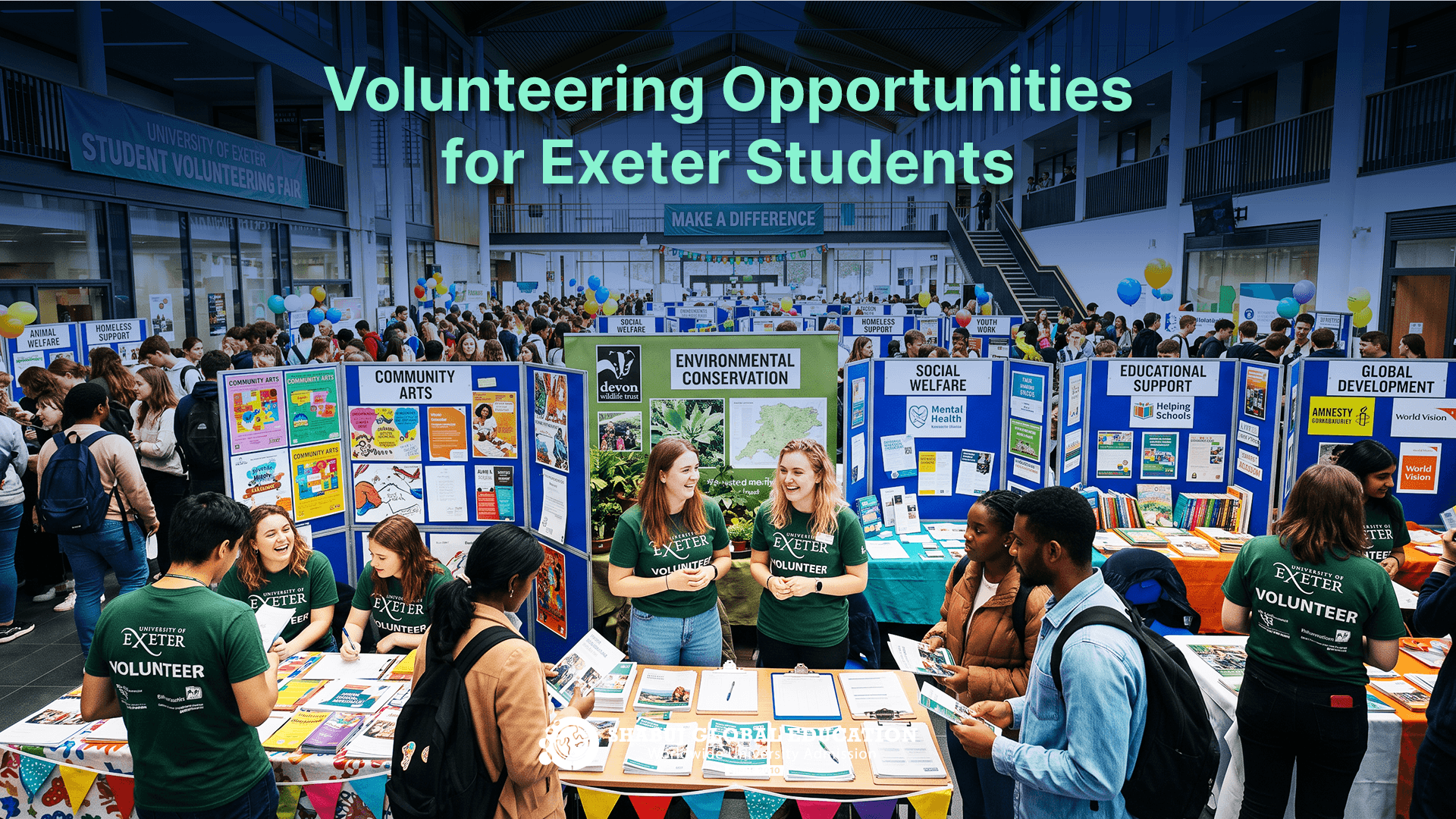
Volunteering Opportunities for Exeter Students

2 minutes of reading time
Discover how students can find volunteering opportunities, build us...
Summary
Discover how students can find volunteering opportunities, build useful skills, support communities and gain experience alongside their university studies.
Apply for a UK Scholarship with Expert Guidance – Contact Us Today
University life is not only about lectures, assignments and exams. Volunteering Opportunities for Exeter Students can help you gain practical experience, meet people and contribute to the local community while studying.
The University of Exeter and its Students’ Guild provide different ways for students to volunteer. From community projects and mentoring to student-led activities, you can choose opportunities that match your interests, skills and available time.
Why Volunteer at Exeter?
Volunteering gives you a chance to do something useful outside your degree. It can also help you build experience that may be valuable when you apply for jobs or internships.
The University of Exeter explains that volunteering can help students develop skills, gain experience, make contacts and give something back. Most voluntary work can also count towards the Exeter Award, subject to the award requirements.
Some practical benefits include:
Build transferable skills through real activities and responsibilities.
Gain experience that you can discuss in future applications and interviews.
Meet new people through student and community activities.
Support local communities by giving your time to useful projects.
Explore interests outside your academic subject.
Strengthen your CV with evidence of activities beyond your degree.
The University also highlights volunteering as a way to gain experience in areas such as journalism, peer management, childcare, teaching and event management through student activities.
If you are already planning to build your wider university experience, you can also learn more about Community Engagement and Sustainability at Exeter to understand how students can connect with the wider community.
Types of Student Volunteering
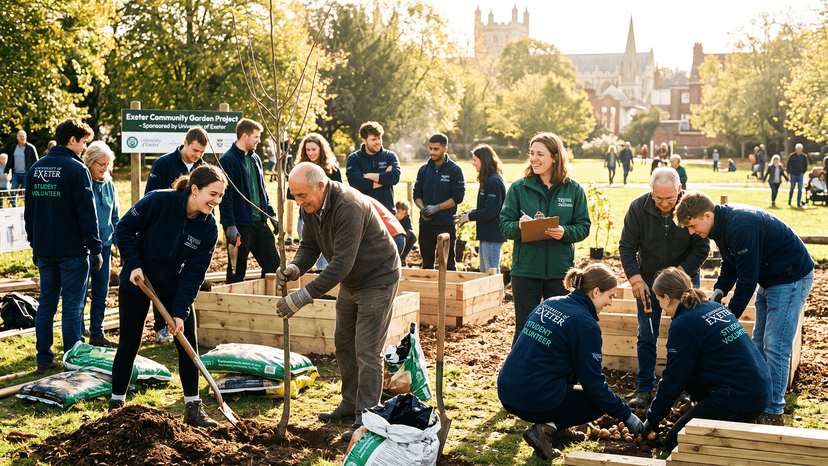
There is no single type of volunteering at Exeter. Students can choose activities based on what they enjoy, what they want to learn and how much time they can give.
Community Volunteering
One option is to volunteer through student-led projects that support people and organisations in the local community.
The Exeter Students’ Guild highlights Exeter Student Volunteers (ESV) as a source of different community volunteering opportunities. Examples have included dog walking, mentoring children and reducing food waste.
These activities can be useful if you want practical experience while doing something directly connected to the local community.
Peer Mentoring
Mentoring is another way students can volunteer.
The University offers peer support opportunities where mentors can support other students through academic or pastoral programmes. Depending on the programme, mentors may lead peer-learning activities, provide one-to-one support or help new students before they arrive. Training is provided for peer support roles.
International students can also consider the International Peer Mentoring scheme. Mentors help new international students settle into university life while developing skills such as leadership, cultural awareness, communication, problem-solving and organisation. The University estimates the commitment at 1–2 hours per week for six weeks for the programme described on its website.
Student Ambassador Activities
Students may also get involved as ambassadors.
The University of Exeter Student Ambassador Scheme allows students to support activities such as campus tours, open days, higher education information fairs, Exeter Scholars sessions and online Unibuddy chats. Ambassadors share their own student experiences and can help young people make decisions about higher education.
This can be particularly useful if you enjoy speaking with people, presenting information or helping prospective students.
Environmental and Community Activities
Volunteering can also involve practical community and environmental activities.
For example, the Exeter Community Garden is managed by volunteers from staff, students and the local community. The University says the garden provides opportunities to share skills and encourages social interaction.
The important point is that students do not have to choose a volunteering role simply because it sounds impressive. Choose something you can realistically participate in and genuinely care about.
Where Exeter Students Can Volunteer
Knowing where to look is one of the most important parts of finding a suitable opportunity.
Students’ Guild
The Exeter Students’ Guild is one of the main places students can explore volunteering and student-led activities. Its current website points students towards Exeter Student Volunteers, Devon Connect and the Exeter Community Garden when volunteer roles are not currently listed directly through the Guild jobs page.
The Guild also supports societies, student groups and other activities where students can take active roles.
University Services
The University itself provides several opportunities for students to gain experience outside their academic work.
Career Zone is particularly useful because it connects volunteering with employability. The University states that work experience and volunteering can contribute towards the Exeter Award, and students can record eligible experience through their Exeter Award profile.
Careers and Volunteering Events
Students should also watch for career events that include volunteering opportunities.
For example, the University has a Part-Time Jobs & Volunteering Fair that brings organisations from different sectors together with students. The 2026 fair is open to University of Exeter students regardless of year, subject or campus, with opportunities designed to enhance undergraduate-level skills.
Not sure which scholarship fits you? Get a Free Consultation with our UK Education Experts.
How to Find Volunteering Opportunities
Finding a volunteering role does not have to be complicated. The key is to check the right places regularly instead of waiting for someone to contact you.
Start with these steps:
Check the Students’ Guild website for current volunteering projects and student activities.
Look at University volunteering and employability pages for opportunities connected with your interests.
Check Career Zone events for fairs and organisations offering volunteering positions.
Look at relevant student societies if you want an opportunity connected to a particular subject or cause.
Follow official student communications because some opportunities are advertised for limited periods.
Check eligibility requirements before applying.
Apply early when an opportunity has a closing date or limited places.
The Guild also advises students that volunteering does not always need to involve a large or long-term commitment. One-off opportunities can be a practical starting point for students who have limited availability.
Skills Students Can Develop
One of the strongest reasons to volunteer is the opportunity to develop skills through real situations.
Depending on the role, Exeter students may develop:
Volunteering activity | Possible skills |
Peer mentoring | Communication, leadership, problem-solving |
Student ambassador work | Presentation, communication, confidence |
Community projects | Teamwork, organisation, responsibility |
Student-led groups | Planning, collaboration, leadership |
Environmental activities | Teamwork, practical skills, community awareness |
Charity or fundraising activities | Organisation, communication, event planning |
The University specifically identifies transferable skills and personal development as important benefits of student activities and volunteering.
However, do not volunteer simply to add another line to your CV. Employers will get more value from an experience you can explain clearly. Be prepared to describe what you did, what problem you helped solve, what responsibility you had and what you learned.
Volunteering Alongside Your Studies
A common concern is whether volunteering will take too much time.
The answer depends on the opportunity. Some roles have a specific commitment, while others are more flexible. For example, the University estimates 1–2 hours per week for six weeks for its International Peer Mentoring programme.
The Exeter Students’ Guild also encourages students not to assume volunteering must be a huge commitment. Students can contribute to sustained activities or volunteer for occasional events when they have more limited availability.
Before joining a project, ask yourself:
How many hours can I realistically give each week?
Will the role require attendance during teaching hours?
Is the commitment weekly, term-time only or one-off?
Do I need to complete training first?
Does the role require an application?
Can I manage the commitment during assessment periods?
A smaller commitment that you can maintain is usually better than joining several projects and struggling to keep up.
How to Get Started
If you are an Exeter student and want to volunteer, start with one area that genuinely interests you.
Step 1: Choose your interest.
Think about whether you prefer mentoring, community work, environmental activities, student events, fundraising or supporting other students.
Step 2: Check official opportunities.
Look at University of Exeter and Students’ Guild information rather than relying only on random social media posts.
Step 3: Check the requirements.
Some opportunities may have specific eligibility rules, application processes or training requirements. For example, the International Peer Mentor scheme welcomes applications from current students and provides training before mentors begin their role.
Step 4: Start with a realistic commitment.
If you are new to volunteering, a short-term or occasional opportunity can help you understand whether you enjoy it.
Step 5: Keep a record of your experience.
Write down your role, responsibilities, hours and the skills you developed. This can make it easier to use the experience in future applications.
Step 6: Consider the Exeter Award.
Eligible students can use qualifying work experience or volunteering towards the Exeter Award. The University states that 35 hours of work experience or volunteering form part of the Award, alongside other requirements.
Support for Bangladeshi Students via SGE
For Bangladeshi students planning to study at Exeter, volunteering can become one part of a wider university preparation plan.
Shabuj Global Education (SGE) helps students navigate the UK application process with support tailored to their study goals. From choosing a suitable course and checking documents to preparing for the UK student visa and getting ready for departure, SGE provides guidance throughout the journey.
The goal is simple: help Bangladeshi students approach their Exeter application with clearer information and practical support, so they can focus on making the most of their university experience after enrolment.
Ready to start your UK journey? Fill out our form and let’s begin your application.
Start Volunteering at Exeter
Volunteering Opportunities for Exeter Students can range from community projects and mentoring to student activities and ambassador roles. The best approach is to choose an opportunity that fits your interests and timetable, check the official requirements and start with a commitment you can maintain.
You do not need to wait until you have lots of free time or professional experience. Start small, gain experience and build from there.
Explore more
Frequently Ask Question



.png&w=256&q=60)