Academic Quality Assurance | Study Abroad – UK
Student Transport and Travel Options for Exeter Students
2 minutes of reading time
Learn about transport and travel options for Exeter students, inclu...
Summary
Learn about transport and travel options for Exeter students, including buses, trains, cycling, walking, parking, car sharing and useful travel resources.
Apply for a UK Scholarship with Expert Guidance - Contact Us Today
Starting university means learning more than just your course. You also need to understand how to travel to campus, move around Exeter, and plan journeys between university locations. Student Transport and Travel Options for Exeter Students can include buses, trains, cycling, walking and, where eligible, car travel.
The University of Exeter provides travel information to help students plan journeys to its Exeter and Cornwall campuses. The university also encourages sustainable travel where possible, particularly public transport, walking and cycling.
Knowing your options before your course begins can make daily travel easier and help you choose the option that suits your timetable, location and budget.
Getting Around Exeter as a Student
Exeter has several transport options that students can use for getting to university and travelling around the city.
The University of Exeter's Exeter campuses are connected to public transport routes, railway stations, walking routes and cycling options. This gives students different ways to reach campus depending on where they live.
For students living in or around Exeter, the best option may depend on the distance from accommodation to campus. Some students may be able to walk or cycle, while others may need to use a bus or train.
The University also provides travel information specifically for local and commuter students. This includes guidance on buses, rail travel, cycling and travelling by car or car share.
If you are planning your wider university experience, you can also read our guide to Campus Facilities and Student Services at the University of Exeter to understand how transport fits into your daily campus life.
Bus and Public Transport Options
Buses are an important part of student travel in Exeter. The University provides information about local bus services, including routes connecting university campuses with other parts of the city.
Line 4 and University Travel
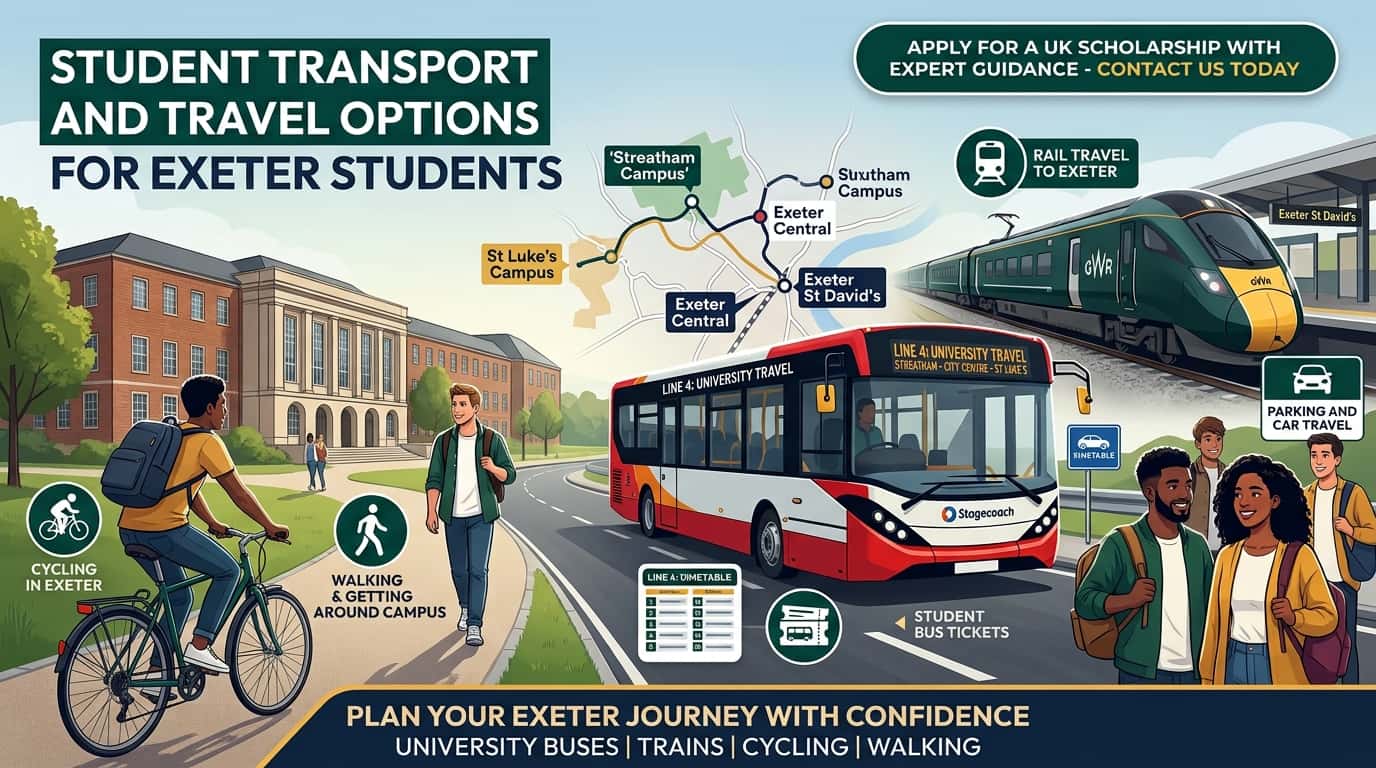
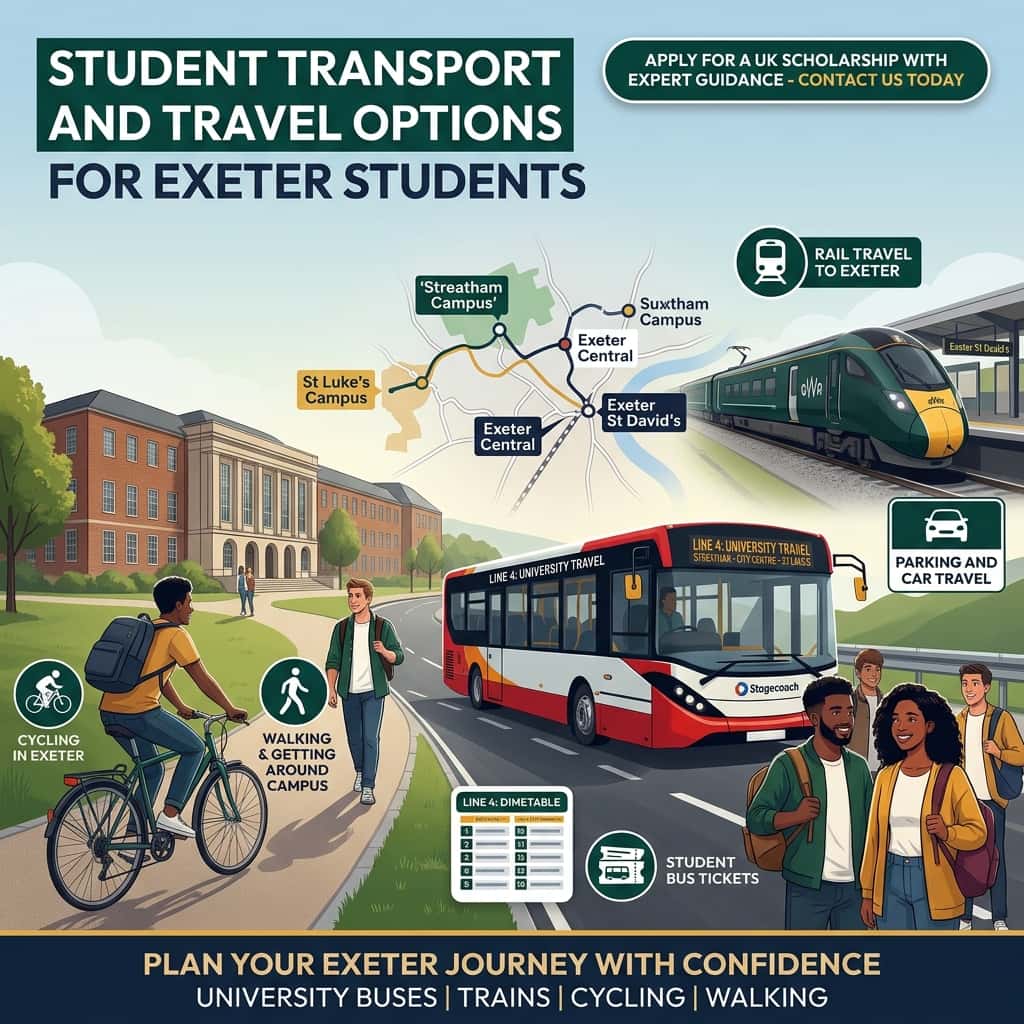
The Line 4 bus is particularly relevant for students travelling between Exeter university locations. It connects areas including:
Exeter St David's railway station
Streatham Campus
Exeter Central
Exeter city centre
St Luke's Campus
Cranbrook
Honiton Road Park and Ride
The service also provides a practical connection between Streatham and St Luke's. Students travelling from St David's can use Line 4 towards the University, while services also connect St Luke's with the city centre and railway stations.
The University currently subsidises Line 4 to support frequent weekday travel between its campuses, St David's railway station, the city centre and Cranbrook.
Students should always check the latest timetable before travelling because routes, frequencies and service arrangements can change.
Night Bus Travel
Students who travel later in the evening can also find night bus information through the University.
The Line 4 night service currently serves Streatham Campus on Saturday nights, running from midnight to 4am. The University also provides information about other night bus routes serving Exeter and surrounding areas.
For late travel, check the latest service information before leaving rather than relying on an old timetable.
Student Bus Tickets
The University provides information about student bus tickets and passes through Stagecoach.
Students who regularly travel by bus may consider a Stagecoach Termrider ticket, while flexible ticket options may be useful for students who do not travel every day.
The University also provides information about Exeter PlusBus and other available travel options. Prices and ticket conditions can change, so students should check the current information before purchasing a pass.
Travelling Between University Locations
Travel between university locations may be necessary for some students, particularly those studying or attending activities across different Exeter campuses.
The University identifies Line 4 and related services as important connections between Streatham Campus and St Luke's Campus. The same network also provides connections with Exeter's railway stations and city centre.
Rail travel can also be useful when reaching campus from another town or city.
According to the University, Exeter St David's is around a 15-minute walk from Streatham Campus, while Exeter Central is around a 20-minute walk. St James station is also within walking distance of the Exeter campuses.
This means students arriving by train may not always need another form of transport for the final part of their journey.
For students travelling from further away, the University recommends checking current rail information and using journey-planning resources before travelling.
Cycling Around Exeter
Cycling can be a practical option for students who live within cycling distance of campus.
The University actively encourages cycling as a sustainable way to travel to and from its campuses. It provides information about bicycle parking and cycling facilities across Streatham, St Luke's and Penryn campuses.
Students bringing a bicycle onto campus should follow the University's rules for the use and parking of bicycles.
The University also provides an interactive map showing bicycle parking locations and shower facilities. Some campuses also have locked bicycle storage facilities.
Students should make sure their bicycle is parked in an appropriate location and secured properly.
Cycling Support for Students
The University provides information about cycling support, including bike checks and cycle confidence activities.
Students can also look out for free bike check sessions organised through campus sustainability activities.
For students studying at Penryn Campus, the University lists secure bike storage, cycle repair facilities and access to showers and changing facilities in relevant campus locations.
Walking and Getting Around Campus
Walking is another practical way to travel, particularly for students living close to campus.
The University states that its Exeter campuses are connected by walking routes. Streatham Campus is also within walking distance of Exeter city centre and the main railway stations.
Walking can be especially useful for the final part of a public transport journey.
For example, students arriving at Exeter St David's can walk to Streatham Campus. Students travelling to St Luke's can also walk from nearby railway stations.
Before your first week, it is useful to check the University's campus maps and plan your walking route. This can help you understand where you need to go before classes begin.
For international students, walking routes can also make it easier to become familiar with Exeter and understand the distance between accommodation, campus and transport points.
Parking and Car Travel
Car travel is available in some circumstances, but students should carefully consider whether they actually need a car.
The University strongly advises Exeter-based students not to bring cars to campus because parking is limited and finding parking around the city can be difficult.
University parking is subject to eligibility requirements and permits. Students should not assume that they can park on campus simply because they are enrolled at the University.
The University explains that students may need to live outside the city or meet specific eligibility criteria to qualify for a parking permit.
Car sharing can be another option for eligible students. The University provides information about travelling by car or car share, including parking permits and electric vehicle charging.
If you are considering bringing a car, check the current University parking information before making arrangements.
Travel Support and Useful Resources
The University of Exeter provides several resources to help students plan journeys.
Useful resources include:
Bus timetables and route information
Real-time bus departure information
Rail journey planning
Cycling information and campus bike maps
Parking and permit guidance
Car-sharing information
Travel advice for commuter students
Travel information for international students arriving in the UK
The University's commuting guidance is particularly useful for students who live away from campus. It brings together information about public transport, rail travel, cycling and car travel.
For international students, the University also provides guidance about travelling to its campuses from major airports. This can be useful when planning your first journey to Exeter or Penryn.
Resource:Stagecoach provides current bus journey planning, ticket information and service updates for students travelling around Exeter and the wider area.
Tips for Planning Student Travel
Good travel planning can make your university routine much easier. Consider these practical steps before your course starts:
Check your accommodation location first. Your distance from campus will affect which transport option works best.
Plan your route before your first class. Test the journey so you know where to get on and off.
Check live travel information. Bus and rail services can change, so use current information on the day.
Compare regular and flexible tickets. If you travel frequently, a student bus pass may be useful. If you travel occasionally, flexible options may be more suitable.
Consider walking or cycling for shorter journeys. This can reduce your dependence on buses and cars.
Check parking eligibility before bringing a car. Do not rely on informal parking arrangements.
Allow extra time for unfamiliar journeys. This is especially important during your first few weeks.
Save important travel resources. Keeping bus, rail and campus travel pages accessible can make daily planning easier.
Check campus-specific information. Travel arrangements can differ between Exeter and Penryn, so make sure you are reading information for the campus you need.
Support for Bangladeshi Students via SGE
Shabuj Global Education (SGE), your trusted partner for studying in the UK, helps Bangladeshi students prepare for their Exeter journey from application to arrival.
Expert Guidance: Choose the right course based on your academic background, career goals and entry requirements.
Application Made Easy: Get support with document preparation, application checks and personal statement guidance.
Visa and Pre-Departure Help: Receive step-by-step guidance for your UK student visa and practical preparation before travelling to the UK.
Ongoing Support: SGE continues to support students as they adjust to university life and work towards their academic and career goals.
For Bangladeshi students, understanding travel arrangements before arrival can make the transition to Exeter more comfortable and organised.
Not sure which UK study option is right for you? Get a Free Consultation with our UK Education Experts.
A Simple Travel Plan for Exeter Students
There is no single transport option that works for every student.
Your best choice will depend on where you live, which campus you attend, how often you travel and whether you need to travel between university locations.
For many students, a combination of walking, cycling, buses and rail travel can provide practical ways to reach campus and move around Exeter.
The most important step is to use current University travel information before starting your journey. Check routes, timetables, eligibility requirements and travel updates rather than relying on older information.
Plan Your Exeter Journey With Confidence
Understanding Student Transport and Travel Options for Exeter Students can make everyday university life easier. From buses connecting the Exeter campuses to walking routes, cycling facilities, rail connections and parking guidance, students have several options to consider.
Plan your regular journeys early, check current travel information and choose the option that fits your location and schedule.
Ready to start your UK journey? Fill out our form and let’s begin your application.
Explore more
Frequently Ask Question