Academic Quality Assurance | Study Abroad – UK
Exam Preparation Tips for Exeter Students
2 minutes of reading time
Explore practical exam preparation tips, effective revision techniq...
Summary
Explore practical exam preparation tips, effective revision techniques, time management strategies, and ways to manage exam stress. These approaches can help students improve their academic performance and achieve better exam results.
Apply for a UK Scholarship with Expert Guidance – Contact Us Today
Preparing for university exams can be challenging, especially when managing coursework, assignments, and personal responsibilities. A clear study plan and effective preparation can improve both performance and confidence.
This guide provides practical exam preparation tips for Exeter students, covering revision planning, time management, stress management, and effective study techniques to help you prepare well and achieve better academic results.
Understanding Exeter's Exam Format
A successful Exeter exam preparation strategy begins with understanding how assessments are structured. The University of Exeter uses various assessment methods depending on the course and module.
These may include:
Written examinations
Online assessments
Essays and coursework
Group projects
Presentations
Practical assessments
Before starting your revision, review your module handbook and assessment information carefully. Understanding the format helps you focus your preparation on the skills being tested.
Students should also pay close attention to:
Assessment Area | Why It Matters |
Exam Structure | Helps you know what to expect |
Marking Criteria | Shows how marks are awarded |
Assessment Weighting | Identifies high-value assessments |
Exam Duration | Improves time planning |
Knowing exactly what is expected is one of the most effective ways to improve exam success at Exeter.
Creating an Effective Revision Schedule
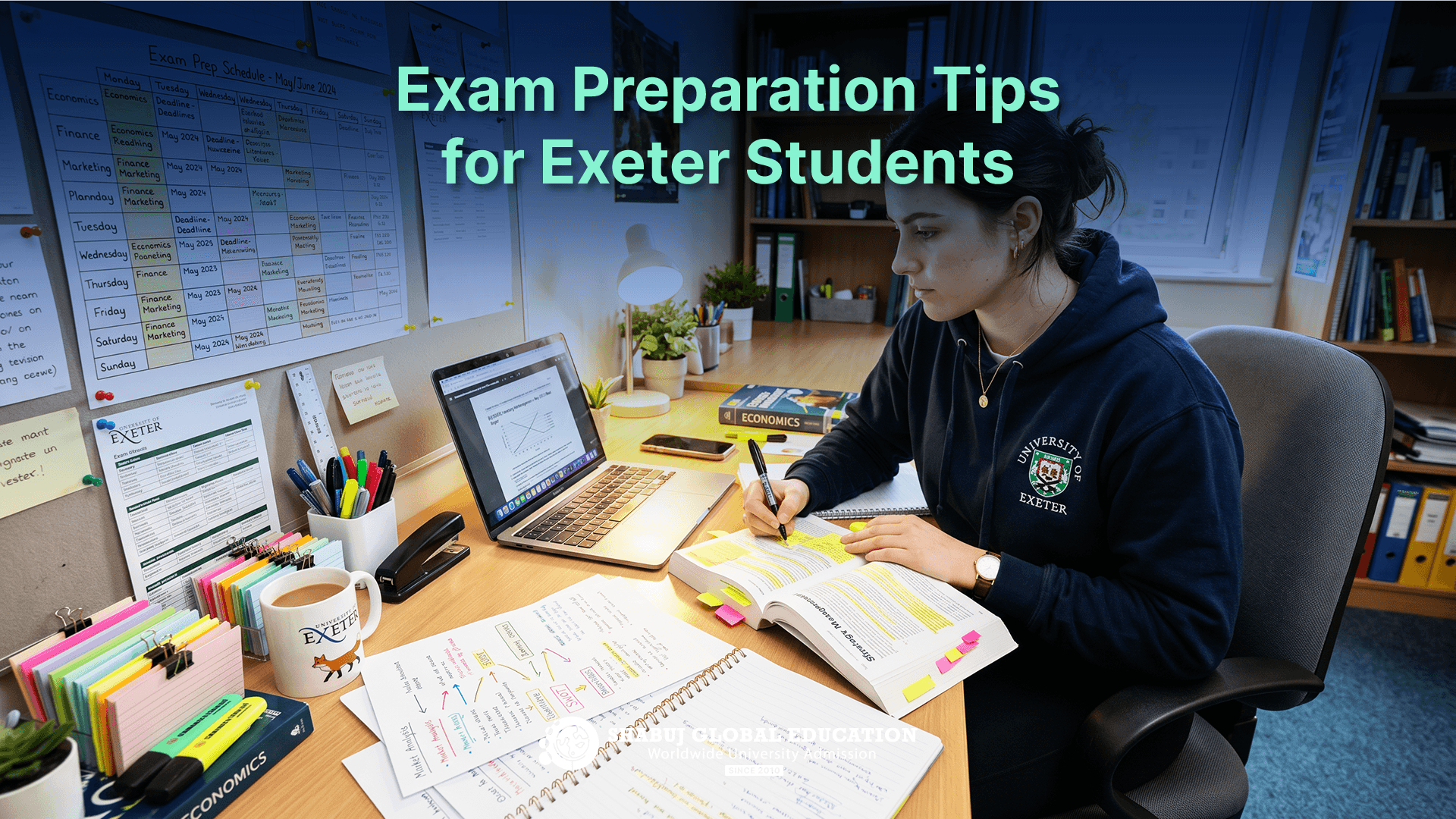
One of the most effective revision tips for university students is to create a realistic study timetable. Avoid leaving all your revision until the last minute. Start preparing several weeks before your exams and spread your study sessions across the available time.
Break Topics into Smaller Sections
Large subjects become easier to manage when divided into smaller topics.
For example:
Week 1: Core concepts
Week 2: Case studies
Week 3: Practice questions
Week 4: Final review
Use Active Revision Techniques
Reading notes repeatedly is rarely enough.
Try:
Flashcards
Mind maps
Self-quizzing
Practice papers
Teaching concepts to others
Research consistently shows that active recall improves long-term retention better than passive reading.
Prioritize Difficult Subjects
Spend extra revision time on topics you find challenging rather than repeatedly reviewing material you already understand.
This balanced approach supports stronger Exeter student academic success during assessment periods.
Using Exeter Learning Resources
Students have access to numerous learning resources that can strengthen their Exeter assessment preparation.
Useful resources include:
Library Resources
The University of Exeter Library provides access to:
Academic journals
Research databases
Digital textbooks
Study spaces
Academic Skills Support
Academic support services help students develop:
Essay writing skills
Critical thinking
Research techniques
Referencing knowledge
Module Materials
Always review:
Lecture slides
Seminar notes
Reading lists
Recorded lectures
These materials are often closely aligned with assessment objectives.
For a broader understanding of assessment policies and regulations, students can also read our guide on Assessment and Academic Policies at Exeter University.
Using official learning resources consistently is one of the most effective study strategies for Exeter students.
Not sure which scholarship fits you? Get a Free Consultation with our UK Education Experts.
Time Management During Exam Season
Strong time management is often the difference between average and excellent results in Exeter University exams.
Follow the 50-10 Rule
A useful technique is:
Study for 50 minutes
Take a 10-minute break
This helps maintain concentration while reducing mental fatigue.
Plan Weekly Goals
Instead of focusing only on daily tasks, create weekly revision goals such as:
Complete one module review
Finish two practice papers
Revise key theories
Weekly goals provide structure without creating unnecessary pressure.
Avoid Multitasking
Switching constantly between social media, emails, and study materials reduces productivity.
During revision sessions:
Silence notifications
Keep study materials organized
Focus on one task at a time
Deep focus usually leads to higher-quality learning in less time.
Common Mistakes Students Make
Many students work hard but still lose marks because of avoidable mistakes.
Starting Revision Too Late
Cramming may help short-term memory, but it rarely supports deep understanding.
Ignoring Assessment Criteria
Students sometimes focus only on content while overlooking the marking scheme.
Always understand:
Learning outcomes
Assessment objectives
Grading expectations
Not Practicing Exam Questions
Knowledge alone is not enough.
Practice helps you:
Improve speed
Structure answers effectively
Build confidence
Identify weak areas
Neglecting Rest and Sleep
Exhaustion negatively affects:
Concentration
Memory
Decision-making
Getting adequate sleep before exams is often more valuable than an extra few hours of late-night revision.
Managing Stress and Maintaining Performance
Stress is common during university assessments, but managing it effectively can improve performance.
Maintain a Healthy Routine
Try to:
Sleep consistently
Stay physically active
Eat balanced meals
Stay hydrated
Small lifestyle habits often have a major impact on academic performance.
Use Relaxation Techniques
Simple methods include:
Deep breathing
Walking outdoors
Stretching exercises
Short mindfulness sessions
Stay Connected
Talking with classmates, friends, or university support services can help you feel less isolated during busy exam periods. Remember, effective exam preparation is not just about studying harder. It also means managing stress, taking care of yourself, and staying focused so you can perform well under pressure.
Exam Day Preparation Checklist
A clear plan for exam day can help reduce stress and prevent avoidable mistakes. Being prepared allows you to focus fully on demonstrating your knowledge and skills.
Before the Exam
Review key concepts rather than trying to learn new material.
Get a good night's sleep to support concentration and memory.
Prepare all required materials in advance.
Confirm the exam time and location.
Eat a balanced meal and stay hydrated.
During the Exam
Read all instructions carefully before starting.
Manage your time effectively across all questions.
Begin with easier questions if that helps build confidence.
Leave sufficient time to review your answers.
Check your work before submitting the exam.
After the Exam
Avoid spending too much time comparing answers with other students.
Reflect on what went well and identify areas for improvement.
Focus on preparing for upcoming assessments rather than dwelling on the completed exam.
Consistent preparation and a calm approach can significantly improve performance in Exeter University exams.
Students interested in improving their revision techniques and study habits can find evidence-based learning advice through Psychology Today, which publishes articles on memory, motivation, and effective studying.
Support for Bangladeshi Students via SGE
Preparing for university exams begins with choosing the right institution and understanding academic expectations from the start. Shabuj Global Education (SGE) helps Bangladeshi students throughout their UK study journey.
Expert Guidance
Receive personalized support in selecting courses and universities that match your academic goals and career plans.
Application and Visa Support
Get assistance with applications, documentation, scholarships, and UK student visa procedures.
Pre-Departure Preparation
Gain valuable guidance on adapting to the UK education system and preparing for university life abroad.
Whether you are planning to study at Exeter University or another UK institution, SGE provides expert support to help you begin your academic journey with confidence.
Final Thoughts
Successful exam preparation requires careful planning, regular revision, effective use of study resources, and healthy wellbeing habits. By following these exam preparation tips for Exeter students, you can feel more prepared, manage assessments confidently, and improve your academic performance.
Ready to start your UK journey? Fill out our form and let’s begin your application.
Explore more
Frequently Ask Question