International Student Support | South Asian Student Guides | Study Abroad – UK
Financial Statements and Accountability in Universities
2 minutes of reading time
This blog explains financial statements and accountability in unive...
Summary
This blog explains financial statements and accountability in universities. It covers income and expenditure reports, balance sheets, budgeting, audits, and financial transparency. The guide helps students understand how universities manage funds responsibly and maintain trust, governance, and institutional stability.
Universities handle significant budgets, including tuition fees, research funding, and operational expenses, making financial transparency and accountability essential.
Financial statements allow universities to show how funds are allocated, managed, and reported in a responsible way, helping to build trust among students, staff, and other stakeholders.
Understanding University Financial Statements
University financial statements are official documents that present the financial performance and overall position of an institution. They are typically prepared on an annual basis and reviewed by auditors to ensure accuracy, reliability, and transparency.
Financial reporting in many institutions follows standards and guidelines from organisations such as the Financial Reporting Council, which promotes transparency, auditing standards, and corporate financial governance.
Typical financial statements include:
Income and Expenditure Statement – Shows income sources and expenses
Balance Sheet – Summarizes assets and liabilities
Cash Flow Statement – Tracks cash inflows and outflows
Notes to Financial Statements – Provides additional details
Auditor’s Report – Confirms accuracy and compliance
These documents allow universities to demonstrate responsible financial management and support governance.
Why Financial Accountability Matters
Financial accountability is essential for universities to maintain trust and operate efficiently. Institutions receive income from tuition fees, government funding, research grants, and donations. Proper financial reporting ensures that these resources are managed and used responsibly.
Key benefits of financial accountability include:
Builds trust with students, staff, and stakeholders
Ensures responsible use of tuition fees
Supports institutional governance
Helps plan future budgets
Ensures compliance with financial regulations
Improves transparency and credibility
Financial Reporting & Transparency in Higher Education
Financial transparency refers to the open disclosure of information related to income, expenditure, and investments. It enables students, staff, regulators, and partners to clearly understand how a university manages its financial resources.
Financial transparency supports:
Governance and oversight
Budget planning and efficiency
Academic program funding
Student services and resources
For more insights on how transparency supports governance, see our article on Transparency Reports in Higher Education.
University Budgeting and Reporting

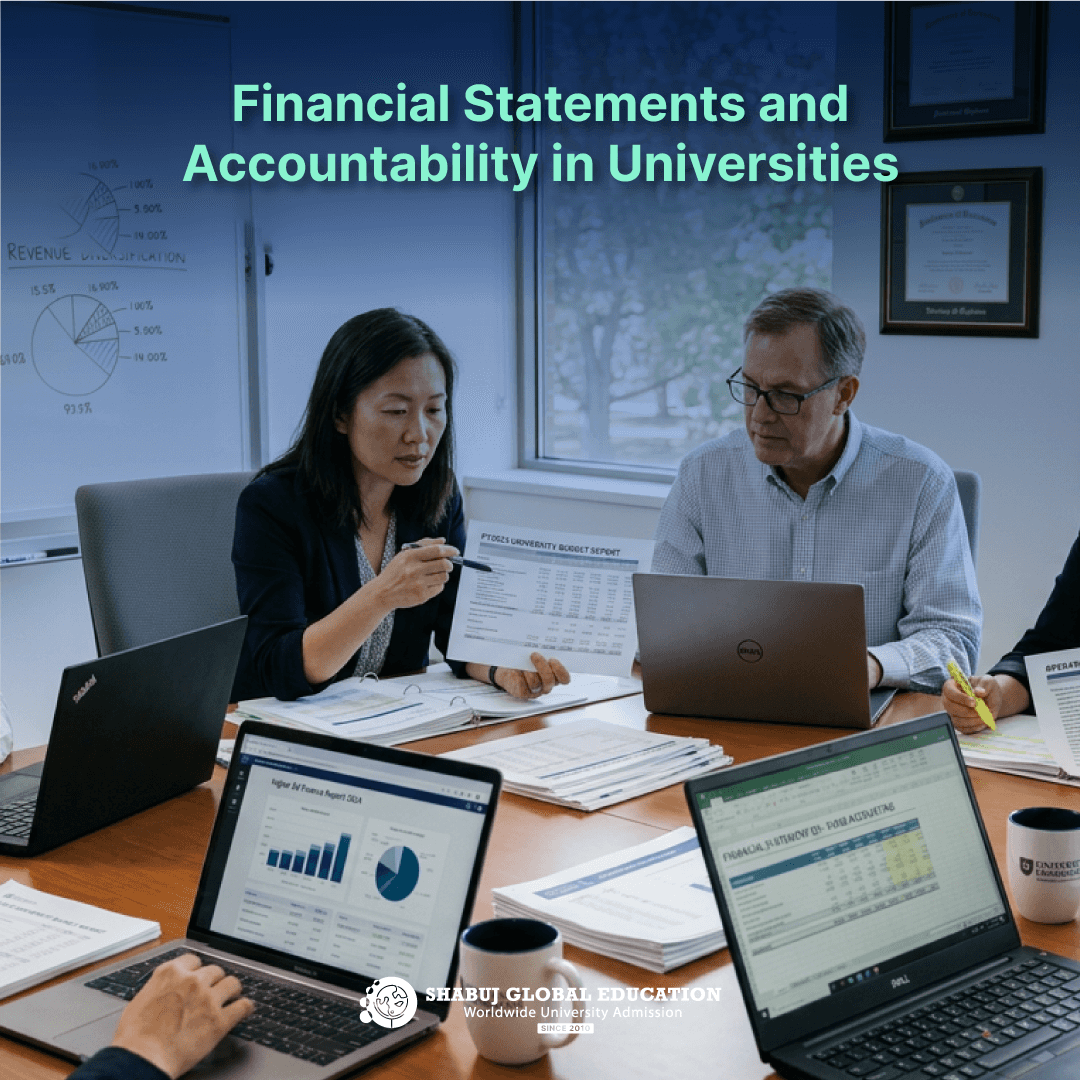
A university financial analyst performing a detailed review of budget allocations and expenditure reports.
University budgeting is closely connected to financial reporting. Budgets are typically prepared at the beginning of the year and then compared with actual expenditures to monitor costs and improve financial efficiency.
Budgeting and reporting help universities:
Plan investments and operational expenses
Improve resource allocation
Maintain financial sustainability
Support academic programs and student services
Financial Governance and Institutional Accountability
Institutional accountability goes beyond reporting. It includes financial policies, internal controls, audits, and governance committees.
Key practices include:
Financial policies and procedures
Internal financial controls
External audits
Risk management processes
Financial oversight committees
Annual financial reporting
These measures ensure that universities operate transparently, responsibly, and sustainably.
Institutions like Bloomsbury Institute London follow structured financial governance and accountability frameworks to maintain operational stability and academic quality.
Master University Finances with SGE Guidance
Bangladeshi students planning to study at Bloomsbury Institute London can get full guidance from Shabuj Global Education (SGE), the official exclusive partner.
SGE provides:
Free application support
Guidance on program selection
Help with documentation
University communication support
Pre-CAS interview preparation
Visa assistance
Step-by-step admission guidance
This ensures a smooth, safe, and fully guided admission process.
If you want to study in the UK with full guidance, contact Shabuj Global Education today to start your admission journey.
Financial Accountability Matters to Students
Financial statements and accountability are essential components of transparent university governance. They show responsible use of resources, support regulatory compliance, and help build trust with students and other stakeholders.
Understanding these processes allows students to see how universities allocate and manage funds to maintain educational quality and long-term institutional sustainability.
Explore more
Frequently Ask Question



.png&w=256&q=60)